A Comprehensive Guide to HVAC Duct Inspection
Doggone Good Heating and Cooling


Discover HVAC duct inspection essentials for Baton Rouge homes. Schedule now for mold prevention, energy savings & optimal airflow!
What Is an HVAC Duct Inspection — and Why Does It Matter for Your Baton Rouge Home?
HVAC duct inspection is the process of examining your home’s duct system to check for leaks, blockages, mold, pests, and structural damage that can hurt your air quality and drive up energy bills.
Here’s what you need to know at a glance:
- What it is: A professional assessment of your ductwork using cameras, airflow meters, and other diagnostic tools
- How often: Every 3-5 years for most homes — sooner if you notice warning signs
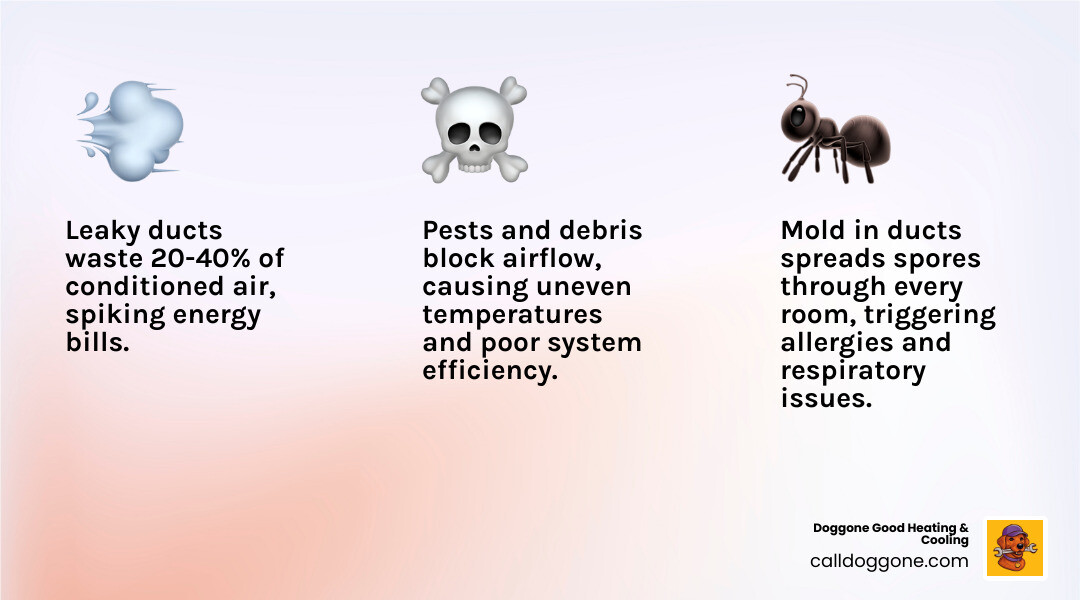
- Why it matters: Leaky or dirty ducts can waste 20-40% of your conditioned air and worsen indoor air quality
- When to act immediately: Musty odors, high energy bills, uneven temperatures, excessive dust, or visible mold near vents
- Who should do it: A certified HVAC professional following NADCA standards
Your home’s ductwork is essentially its respiratory system. Every time your HVAC runs, air travels through those hidden pathways and into every room you live in. When something goes wrong inside those ducts — mold, a disconnected joint, a pest nest, a slow leak — you feel it in your comfort, your health, and your monthly utility costs, even if you never see it directly.
In Baton Rouge, this matters more than in most places. The relentless humidity, long cooling seasons, and warm winters create ideal conditions for mold growth and pest activity inside ductwork. Many homeowners only think about their ducts when something has already gone seriously wrong. By then, what could have been a simple fix has often turned into a costly repair or full replacement.
A routine HVAC duct inspection changes that equation entirely — catching small problems before they become expensive ones.
Why Regular Inspections are Essential for Louisiana Homeowners
Living in the Baton Rouge area, from Zachary to Gonzales, means our HVAC systems work harder and longer than those in most other parts of the country. This constant operation puts a significant strain on your ductwork. Ductwork Inspections & Airflow Testing are not just a luxury; they are a vital part of home maintenance for several reasons.
First and foremost is the issue of indoor air quality (IAQ). Our local humidity is legendary, and when that moist air meets the cool surfaces of your ducts, condensation can occur. Without regular checks, this moisture can lead to mold growth. Air Duct Cleaning & Sanitizing might be necessary if an inspection reveals biological growth, which can cause respiratory issues, allergy flare-ups, and persistent musty odors.
Furthermore, a well-inspected system is an efficient system. When ducts are blocked by debris or leaking air into your attic, your air conditioner has to run longer to keep your home cool. This not only spikes your energy bills but also shortens the lifespan of your expensive HVAC equipment. By identifying a small crack or a loose joint early, we can perform a simple repair that prevents a full-blown system failure down the road.
When to Schedule a Professional HVAC duct inspection
Knowing when to call in the pros can save you a lot of headache. According to industry standards from the National Air Duct Cleaners Association (NADCA) and EPA guidelines, a professional hvac duct inspection should generally be performed every 3 to 5 years. However, in our humid climate, many experts recommend a visual check every 2 years to stay ahead of potential mold or pest issues.
There are also specific life events that should trigger an inspection of your Air Ducts:
- Moving into a new home: You never know what the previous owners (or their pets) left behind.
- Post-renovation: Construction dust, drywall particles, and sawdust are notorious for finding their way into return vents and clogging up the works.
- After a long period of dormancy: If a system has been off for a while, pests may have moved in or lubrication in moving parts may have dried out.
- Seasonal transitions: Including a duct check as part of your spring or fall HVAC tune-up ensures you’re ready for the extreme temperatures ahead.
Signs You Need an HVAC duct inspection Immediately
Sometimes, you don’t need a calendar to tell you there’s a problem. Your home will give you plenty of hints that your Ductwork needs professional attention. If you notice any of the following, don’t wait:
- Musty or “dirty sock” odors: This often indicates mold or bacterial growth inside the dark, damp environment of the ducts.
- Unexplained high energy bills: If your usage hasn’t changed but your bill has skyrocketed, you might be losing 25-40% of your cooled air to leaks in the attic or crawlspace.
- Excessive dust: If you feel like you’re dusting your furniture every single day, your ducts might be pulling in attic insulation or outdoor debris through gaps.
- Uneven room temperatures: If the master bedroom is a freezer but the living room is a sauna, you likely have a crushed flex duct or a disconnected branch.
- Visible debris on registers: Seeing “dust bunnies” or dark streaks on your vent covers is a clear sign of internal buildup.
What to Expect During a Professional HVAC duct inspection
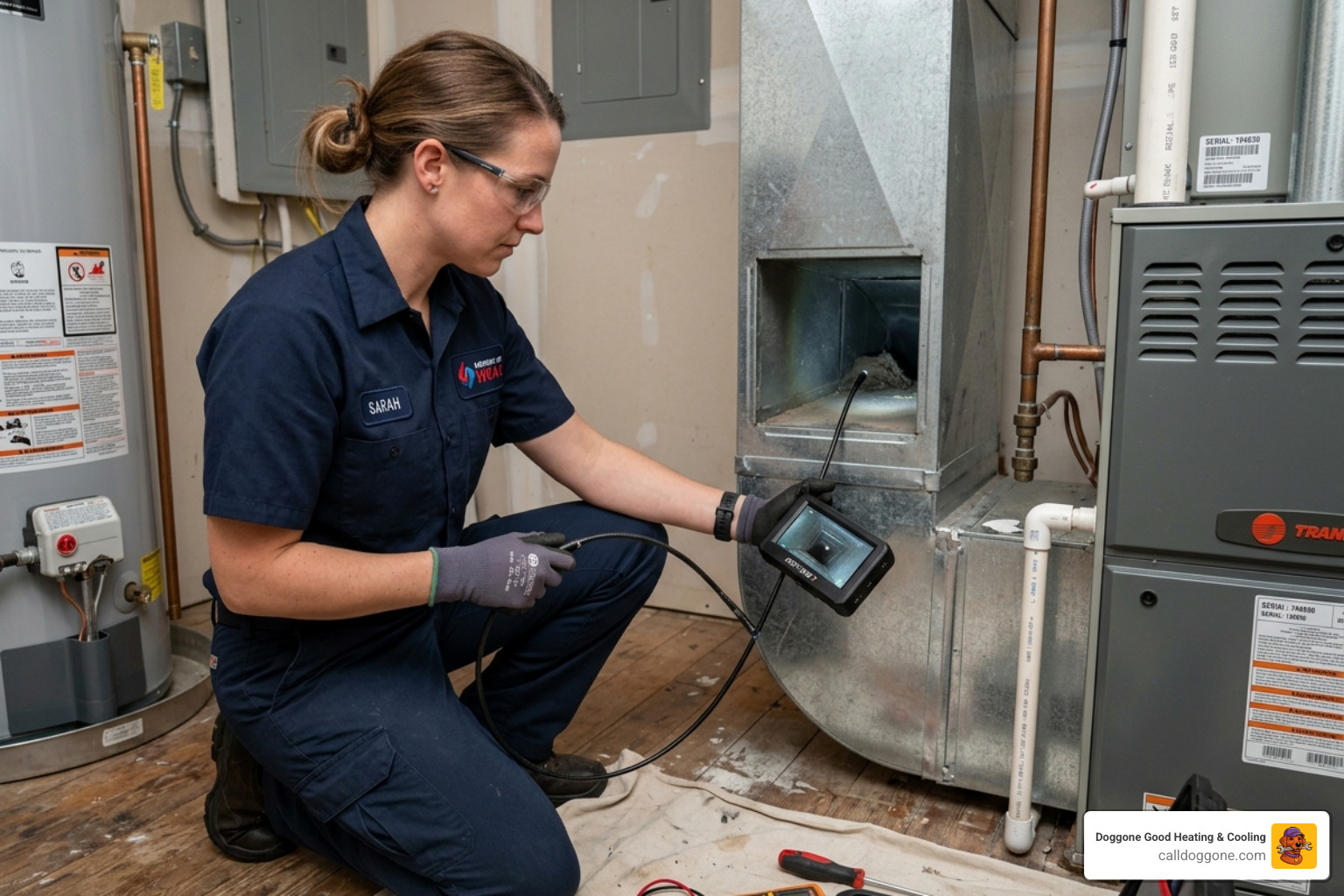
When we arrive for an inspection, we don’t just peek behind a vent cover. A thorough, professional assessment involves several steps to ensure your system is operating at peak performance. We start with a visual assessment of all accessible ductwork in attics, basements, or crawlspaces.
We then use a specialized camera probe to see deep into the twists and turns of your system. This allows us to identify blockages or structural failures without tearing into your walls. We also perform airflow testing and leak detection to see exactly how much air is reaching your living spaces versus how much is escaping. If we find issues, we can discuss Ductwork Repair & Sealing options to get your home back to maximum efficiency. Finally, you’ll receive a detailed report with photos and clear recommendations.
Common Issues Found in Baton Rouge Duct Systems
Our technicians see a wide variety of issues while working in communities like Denham Springs and Prairieville. Because many homes in our area use flexible ductwork or older sheet metal, they are susceptible to specific types of wear and tear.
| Common Issue | Cause | Impact |
|---|---|---|
| Mold/Mildew | High humidity and condensation | Poor IAQ, respiratory issues, odors |
| Pest Infestations | Rodents or insects seeking warmth | Fire hazards, chewed insulation, hygiene risks |
| Air Leaks | Failed tape, loose joints, or age | 20-40% energy waste, uneven cooling |
| Crushed Flex Duct | Heavy items leaning on ducts or poor install | Restricted airflow, hot/cold spots |
| Rusted Sheet Metal | Persistent moisture or plumbing leaks | Structural failure, debris in air stream |
| Failing Insulation | Age or pest damage | Energy loss, condensation on duct exterior |
Ductwork Insulation is particularly important in our region. When insulation fails, the temperature difference between the cold air inside the duct and the hot Louisiana attic air causes “sweating.” This moisture then leads to rusted metal or rotting sheetrock nearby.
Advanced Tools for Accurate Diagnostics
Modern technology has made hvac duct inspection far more accurate than it was a decade ago. We use a suite of high-tech tools to ensure we never have to guess about the state of your system.
- HD Inspection Cameras & Borescopes: These “tiny explorers” can travel deep into your vents, providing a live video feed of exactly what is happening inside.
- Particle Counters: These devices measure the concentration of dust and allergens in your air, helping us quantify your indoor air quality.
- Airflow Meters (Anemometers): By measuring the velocity of air coming out of your registers, we can tell if a room’s discomfort is caused by a duct blockage.
- Thermal Imaging: Infrared cameras allow us to “see” temperature differences. A cold spot on a hot attic wall often points directly to a hidden duct leak.
- Smoke Pencils: These release a tiny, safe trail of smoke that wavers or gets sucked in when held near a suspected leak, providing visual proof of air loss.
Whether we are performing a routine check or a complex Ductwork Installation, these tools ensure the job is done right the first time.
Improving HVAC Efficiency and Energy Savings
Did you know that keeping your ductwork clean and sealed can improve your HVAC system’s function by up to 40%? It’s true. When your ducts are in top shape, your air conditioner doesn’t have to work nearly as hard to achieve your desired thermostat setting.
Through Ductwork Repair & Sealing, we stop the “bucket with a hole in it” syndrome. Many homes in Baton Rouge are effectively paying to cool their attics because of leaky joints. By sealing these gaps with professional-grade mastic or foil tape, we ensure that every bit of air you pay for actually reaches your family. This leads to lower utility bills, consistent comfort in every room, and a smaller environmental footprint for your household.
Frequently Asked Questions About Duct Inspections
How often should I have my ducts inspected in Louisiana?
While the general recommendation is every 3-5 years, the high humidity in the Baton Rouge area makes a visual inspection every 2 years a smarter choice. If you have pets, allergies, or have recently completed a home renovation, you should consider more frequent checks.
Can I perform a DIY duct inspection?
You can certainly perform a basic check by removing your vent covers and using a flashlight and a mirror (or your smartphone camera) to look as far as you can. You can also check for visible leaks or disconnected sections in your attic. However, a DIY check cannot see deep into the system or measure airflow and pressure. For a comprehensive diagnosis, a professional with specialized cameras and meters is necessary.
Does a duct inspection always lead to a cleaning?
Absolutely not. A professional inspection is a diagnostic service, not a sales pitch. At Doggone Good Heating & Cooling, we believe in evidence-based maintenance. If your ducts are clean and structurally sound, we will tell you exactly that. We only recommend cleaning or repairs when we can show you clear evidence—like video footage or pressure data—that there is a problem.
Conclusion
Your home’s comfort depends on more than just the air conditioner sitting outside; it depends on the network of ducts hidden within your walls and attic. In the unique climate of Baton Rouge, staying proactive with an hvac duct inspection is the best way to ensure your family breathes clean air while keeping your energy costs in check.
At Doggone Good Heating & Cooling, we pride ourselves on providing honest diagnostics and reliable service to our neighbors in Prairieville, Zachary, and throughout the region. Whether you’re dealing with strange odors, high bills, or just want peace of mind, our team is here to help. For even greater protection, consider our Pack Perks Membership, which includes regular maintenance to keep your system running like a top all year long.
Don’t let hidden duct issues take a bite out of your budget. Schedule your professional hvac maintenance today and experience the Doggone Good difference!
About the Author
Doggone Good Heating and Cooling
Doggone Good Heating and Cooling — your local HVAC experts in Baton Rouge, LA.
Need HVAC Service?
Get a free estimate or schedule your service today. Our team is ready to help.
Recent Posts


Related Articles
Ready to Get Started?
Prefer to Call?
Talk with a local technician and get clear next steps for your home.
Call Now(225) 230-9784