Beginner’s Guide to Who Should Install Your Carbon Monoxide Detector
Doggone Good Heating and Cooling


Who are the qualified professionals for carbon monoxide detector installation and service? Ensuring your home in Baton Rouge, Prairieville, Denham Springs, Zachary, or Gonzales is safe from the silent threat of carbon monoxide requires knowing the right professional to call.
Who are the qualified professionals for carbon monoxide detector installation and service?
Ensuring your home in Baton Rouge, Prairieville, Denham Springs, Zachary, or Gonzales is safe from the silent threat of carbon monoxide requires knowing the right professional to call. The best choice often depends on the type of CO detector you have or need, and the specific issue you’re facing. Let’s explore the roles of different professionals.
Electricians: For Hardwired and Electrical Systems
If your home utilizes hardwired CO detectors, or combination smoke/CO detectors that are integrated into your home’s electrical system, a licensed electrician is your go-to professional. Hardwired units offer enhanced reliability by drawing power directly from your home’s electricity, often with a battery backup. This ensures continuous operation, even during a power outage.
Electricians are uniquely qualified to:
- Install hardwired CO detectors: They ensure proper and safe connection to your home’s electrical circuits.
- Handle combination units: Many homes opt for devices that detect both smoke and carbon monoxide, requiring electrical expertise for installation and wiring.
- Ensure compliance with local electrical codes: Our electricians in the Baton Rouge area are familiar with all relevant local building and electrical codes, ensuring your installation meets safety standards.
- Troubleshoot electrical issues: If your detector is malfunctioning due to wiring problems or power supply issues, an electrician can diagnose and repair these complex electrical faults.
- Set up interconnected systems: For maximum safety, interconnected systems ensure that if one alarm sounds, all alarms throughout your home are triggered, providing earlier warning to everyone. This requires precise electrical wiring.
The importance of professional installation for hardwired CO detectors cannot be overstated. Incorrect wiring can pose electrical hazards, lead to detector malfunction, or even prevent the unit from working when you need it most.
HVAC Technicians: For Source-Related CO Concerns
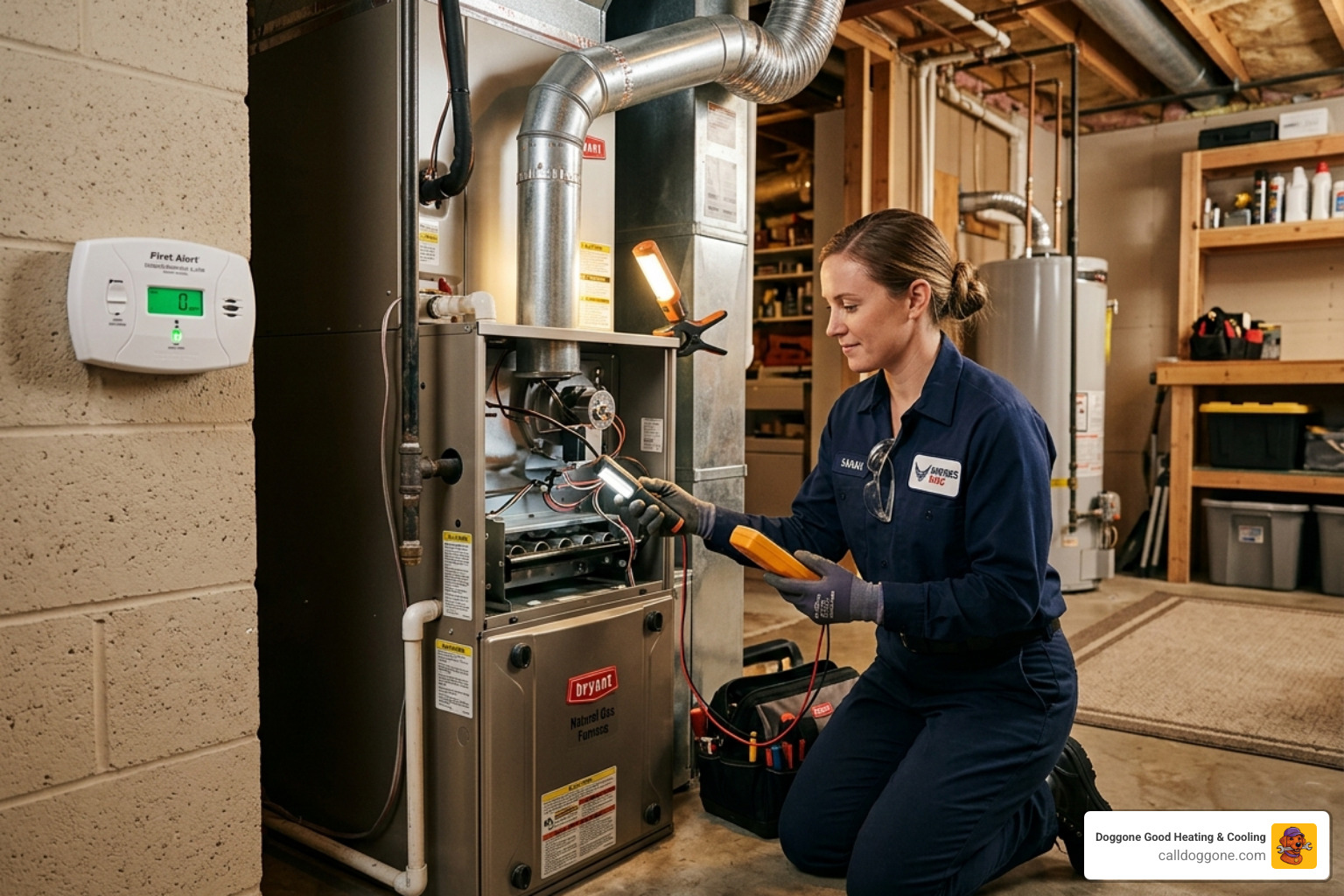
Carbon monoxide is a byproduct of incomplete combustion, often originating from fuel-burning appliances such as furnaces, water heaters, gas dryers, and fireplaces. This is where HVAC technicians play a crucial role. Our team at Doggone Good Heating & Cooling specializes in HVAC systems and understands the potential CO sources within your home.
An HVAC technician is essential when:
- CO detectors are placed near fuel-burning appliances: These detectors are critical for alerting you to potential leaks from your heating system or other gas appliances.
- Diagnosing CO leaks from HVAC systems or other gas appliances: If your CO detector alarms, especially if it’s near a furnace or water heater, an HVAC professional can inspect these units to identify and repair the source of the leak.
- Integrating CO detection with indoor air quality solutions: We can help ensure your home’s ventilation system is working effectively to prevent CO buildup and improve overall indoor air quality.
- Performing routine maintenance and inspection of heating systems: Regular checks of your furnace, boiler, and water heater can prevent CO issues before they start, ensuring these appliances are operating safely and efficiently.
At Doggone Good Heating & Cooling, we not only service your heating and cooling systems but also understand how they interact with your home’s safety devices. We can assess potential CO sources and ensure your detectors are strategically placed for optimal protection. You can learn more about our comprehensive services for your home’s air quality, including Carbon Monoxide Detectors.
Handymen: For Battery-Operated and Basic Replacements
For simpler CO detector needs, a professional handyman can be a suitable option. This typically applies to battery-operated units that do not require complex electrical wiring or integration with other home systems.
A handyman can assist with:
- Installation of battery-operated CO detectors: These units are generally easy to mount and activate, requiring no electrical expertise.
- Simple replacement of existing battery-operated units: If you’re swapping out an old battery-powered detector for a new one, a handyman can efficiently handle the task.
- Mounting detectors in appropriate locations: They can ensure the detector is securely fastened according to manufacturer guidelines and general safety recommendations.
- Basic testing and battery changes: A handyman can perform routine checks and replace batteries, though this is often a task homeowners can manage themselves.
While a handyman can be a cost-effective solution for these basic tasks, it’s important to remember their scope is limited. For any issues involving electrical systems or fuel-burning appliances, a specialized professional is always recommended.
Fire Department: For Immediate Safety Assessment
The fire department’s role regarding CO detectors is not for installation, repair, or routine maintenance. Instead, they are your critical resource for immediate response to an active CO alarm.
If your CO detector goes off, the fire department will:
- Respond immediately: They are equipped to handle emergency situations involving hazardous gases.
- Assess CO levels in the home: Using specialized equipment, they can accurately measure the concentration of carbon monoxide.
- Help locate the source of CO leaks: Their expertise allows them to investigate and pinpoint the origin of the CO, whether it’s an appliance malfunction or another issue.
- Provide guidance on next steps: They will advise you on when it is safe to re-enter your home and what actions you need to take to resolve the CO source.
Always treat an active CO alarm as a potential emergency and call your local fire department (or 911) once you have safely evacuated your home.
When should you contact emergency services for a CO detector alarm?
A sounding carbon monoxide detector can be startling, but knowing the correct response is vital for your safety. If your CO detector alarms, especially persistently, you must act quickly and decisively.
Immediate Action for a Persistent Alarm
The moment your CO detector sounds a continuous, loud alarm, indicating the presence of carbon monoxide, follow these critical steps:
- Evacuate everyone immediately: This includes all family members, pets, and anyone else in the home. Get everyone to fresh air as quickly as possible. Do not delay to gather belongings or investigate the source.
- Do not try to find the source or ventilate the home before evacuating: Opening windows or trying to find the leak inside the house can expose you to higher levels of CO, which is extremely dangerous. Your priority is to get to safety.
- Call 911 or your local fire department from a safe location: Once you are outside and away from the building, use a cell phone or a neighbor’s phone to call emergency services. Do not call from inside your home.
- Do not assume it’s a false alarm: Even if you don’t feel sick, treat every alarm as a real threat. Carbon monoxide poisoning symptoms can be subtle and mimic the flu (headache, dizziness, nausea, fatigue), and exposure can quickly become life-threatening. If anyone is experiencing these symptoms, inform the emergency dispatcher.
Fire Department’s Role in CO Alarms
When you call 911 for a CO alarm, the fire department will dispatch trained personnel to your location. Their role is critical in ensuring your safety and addressing the immediate danger:
- CO level measurement: Fire department personnel are equipped with sensitive CO meters to accurately measure the carbon monoxide levels in your home.
- Source identification: They will carefully investigate to identify the source of the CO leak, which could be a faulty appliance, a blocked flue, or another combustion issue.
- Safety clearance: They will advise you on when it is safe to re-enter your home. Never go back inside until the fire department has given you the all-clear.
- Guidance: They can provide initial recommendations on how to address the CO source, which may involve contacting an HVAC technician, a gas company, or an appliance repair specialist.
The fire department handles the immediate emergency response and safety assessment. They do not typically perform installation or repair services for CO detectors or the appliances causing the CO leak.
What are the key indicators that your carbon monoxide detector needs professional attention?
Your carbon monoxide detector is designed to be a vigilant guardian, but like any electronic device, it has a lifespan and can experience issues. Recognizing the signs that your detector needs professional attention is crucial for maintaining your home’s safety.
Understanding Detector Signals
Different sounds and indicators from your CO detector can signal various issues, from a simple battery change to a critical malfunction.
- Chirping/Beeping Beyond a Low Battery: A common signal is a short chirp every 30 to 60 seconds. This usually means the battery is low and needs to be replaced. However, if you’ve changed the batteries and the chirping persists, it could be signaling an end-of-life warning or a malfunction. This is a clear sign to seek professional help.
- End-of-Life Signal: All CO detectors have a limited lifespan, typically 5-7 years, due to the degradation of their internal sensors. When a detector reaches the end of its life, it will often emit a specific series of beeps or display a digital message like “END” or “ERR.” This is not a malfunction but an indication that the unit needs to be replaced entirely. Ignoring this signal leaves your home unprotected.
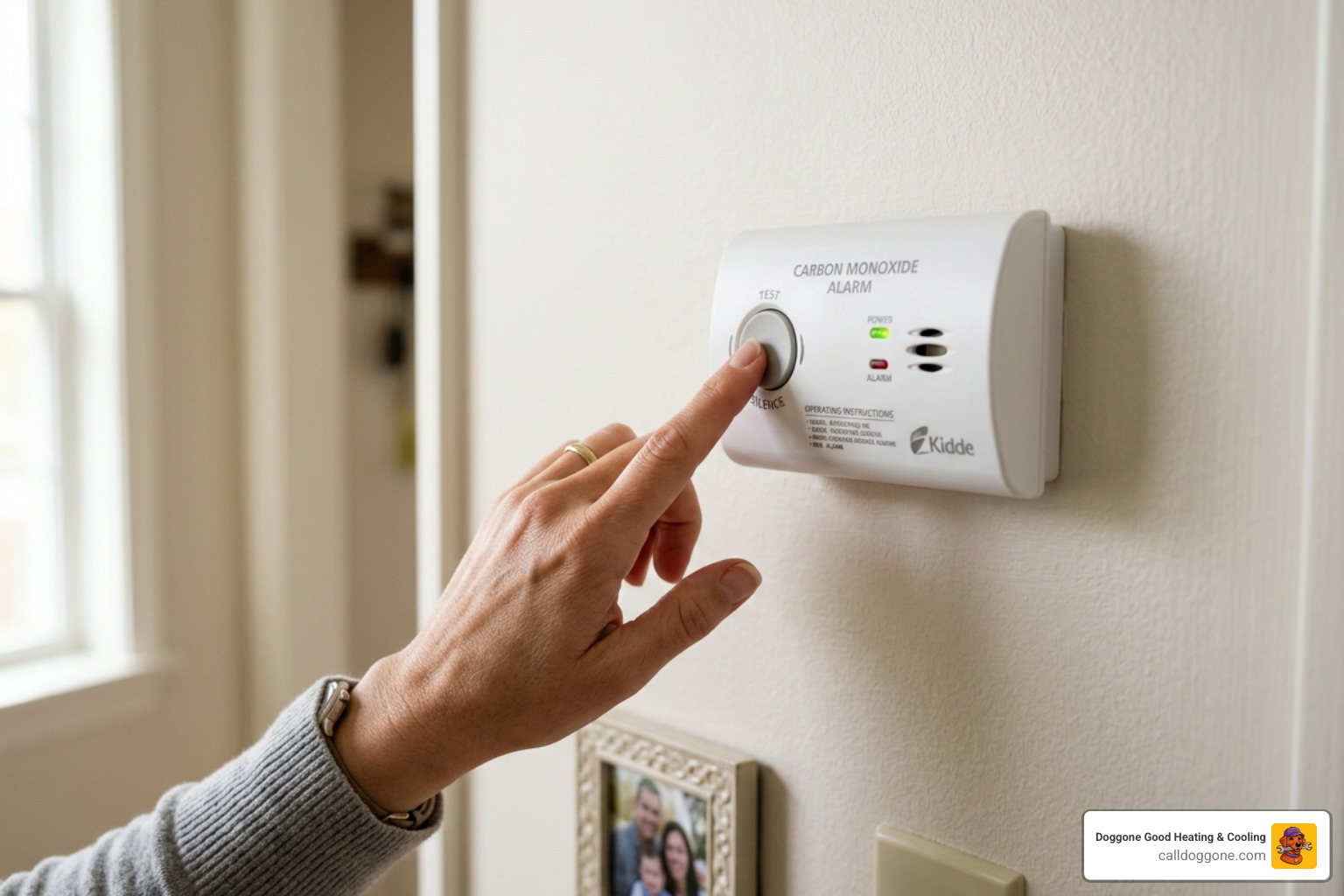
- Failure to Respond to the Test Button: Your CO detector has a test button that you should press monthly to ensure it’s functioning. If you press the button and the alarm doesn’t sound, the detector is not working properly. This could be due to a dead battery, a faulty sensor, or a complete unit failure, all of which require immediate professional attention.
- Frequent False Alarms: While less common with CO detectors than smoke detectors, if your unit is alarming frequently without any apparent CO source, it might indicate a faulty sensor or improper placement. A professional can assess whether the detector is malfunctioning or if there’s an intermittent, low-level CO presence you’re unaware of.
- Physical Damage to the Unit: Any visible damage to your CO detector, such as cracks, missing parts, or signs of tampering, means it should be replaced. A damaged unit cannot be relied upon for accurate detection.
When to Call a Professional for Maintenance or Repair
While you can handle basic maintenance like monthly testing and annual battery replacement, any issue beyond these simple steps warrants professional intervention. Trying to repair a complex CO detector yourself can compromise its effectiveness and, more importantly, your family’s safety.
Professionals, like our team at Doggone Good Heating & Cooling, can:
- Diagnose the exact problem: Whether it’s a faulty sensor, a wiring issue (for hardwired units), or simply an expired unit, we have the expertise to pinpoint the cause.
- Ensure proper replacement: If a unit needs replacing, we can recommend and install a new, reliable detector that meets current safety standards.
- Address underlying issues: For CO alarms related to fuel-burning appliances, we can inspect and repair the source of the leak, ensuring your heating system and other appliances are safe.
CO detectors typically last 5-7 years, while smoke detectors generally last 8-10 years. Always check the manufacture date on your units. When DIY troubleshooting isn’t enough, it’s time to call in the experts. You can find more information about our services for Carbon Monoxide Detection.
How can you ensure you choose a reliable professional for your CO detector needs?
Choosing the right professional for your CO detector services in Baton Rouge, Prairieville, Denham Springs, Zachary, or Gonzales is paramount for your peace of mind and safety. Here’s how to ensure you’re making an informed decision.
Verifying Credentials and Expertise
When entrusting someone with your home’s safety, due diligence is key:
- Licensing and Certification: Always ensure that any electrician or HVAC technician you consider hiring is fully licensed and certified for the specific work they perform. This guarantees they have met industry standards, possess the necessary training, and are knowledgeable about safety protocols. For electrical work, a licensed electrician is non-negotiable. For issues related to your furnace, water heater, or other gas appliances, a certified HVAC technician is essential.
- Experience with CO Detectors: Ask about their specific experience with CO detector installation, troubleshooting, and maintenance. A professional who is familiar with various types of detectors—including battery-operated, hardwired, and combination units—will be better equipped to handle your unique needs.
- Local Knowledge: A reputable local company, like Doggone Good Heating & Cooling, will be intimately familiar with any specific local laws or requirements for CO detector installation and placement in the Baton Rouge area. This ensures your home meets all safety regulations.
Comprehensive Service Offerings
Look for professionals who offer a full spectrum of services related to CO and smoke detectors, rather than just one-off installations. This indicates a deeper commitment to your home’s safety.
Our services typically include:
- Installation: Expert placement and secure connection of new CO detectors, whether they are battery-operated, hardwired, or integrated with your HVAC system.
- Inspection: Thorough checks of existing detectors for functionality, age, correct placement, and adherence to local codes.
- Repair: Diagnosing and fixing issues with malfunctioning units, from electrical faults to sensor problems.
- Maintenance: Providing guidance on testing schedules, battery replacement, and overall detector health to maximize their lifespan and effectiveness.
- Source Assessment: For HVAC technicians, this includes inspecting fuel-burning appliances that could be potential CO sources, ensuring they operate safely and efficiently.
Establishing a Maintenance Schedule
A reliable professional will not only install or repair your detector but also help you establish and adhere to a crucial maintenance schedule. This ensures your CO detectors remain vigilant guardians of your home.
A typical maintenance schedule includes:
- Monthly Testing: You should press the test button on each CO detector monthly to ensure the alarm sounds.
- Annual Battery Replacement: For battery-operated units and the battery backups in hardwired units, replace the batteries at least once a year. A good reminder is to do this when you change your clocks for daylight saving time.
- Unit Replacement: CO detectors have a limited lifespan, typically 5-7 years. Their sensors degrade over time, reducing their effectiveness, even if they appear to be working. A professional can help you track the age of your units and ensure they are replaced before they expire.
When you’re ready to choose a service provider, consider asking these questions:
- “Are you licensed and insured to perform this type of work in Baton Rouge?”
- “Do you have specific experience with hardwired/battery-operated CO detectors?”
- “Are you familiar with the local CO detector regulations in our area?”
- “Do you offer inspection and maintenance services in addition to installation/repair?”
- “Can you help me understand the best placement for CO detectors in my home?”
Frequently Asked Questions about Carbon Monoxide Detectors?
We understand you might have more questions about carbon monoxide detectors and their maintenance. Here are some of the most common inquiries we receive from homeowners in the Baton Rouge area.
How often should carbon monoxide detectors be replaced?
Carbon monoxide detectors typically have a lifespan of 5-7 years. Even if your detector appears to be working fine and passes its monthly test, its internal sensors degrade over time. This degradation reduces its ability to accurately detect carbon monoxide, making it less effective at protecting your home. Always check the manufacturer’s date, usually printed on the back of the unit, and replace your detector according to their recommended timeline, even if it hasn’t signaled an end-of-life warning.
Can I install a hardwired carbon monoxide detector myself?
While the idea of a DIY project can be appealing, we strongly recommend against installing a hardwired CO detector yourself. Hardwired units connect directly to your home’s electrical system, which involves working with household wiring. For safety, to ensure compliance with local electrical codes in Baton Rouge, and to guarantee proper functionality, it is always best to have a licensed electrician perform the installation. They have the expertise to correctly wire the unit, ensure it’s interconnected with other alarms if applicable, and verify that it meets all safety standards.
What maintenance should I perform myself for my CO detector?
As a homeowner, there are several simple yet vital maintenance tasks you can perform to keep your CO detector in good working order:
- Monthly Testing: Press the “test” button on your CO detector once a month. You should hear a loud alarm sound. If it doesn’t sound, replace the batteries immediately or contact a professional if it’s a hardwired unit.
- Annual Battery Replacement: For battery-operated detectors, or for the battery backup in hardwired units, replace the batteries at least once a year. A good practice is to do this when you change your clocks for daylight saving time.
- Keep it Clean: Dust and debris can interfere with a detector’s sensors. Gently vacuum around the detector or wipe it with a soft, damp cloth periodically to keep it clean. Avoid using cleaning sprays or chemicals directly on the unit.
- Replace at End-of-Life: As mentioned, replace the entire unit every 5-7 years, regardless of its apparent functionality. Check the manufacture date on the back of the device.
Performing these routine checks will help ensure your CO detector is ready to protect your family when it matters most.
Conclusion
Choosing the right professional to work on your carbon monoxide detector is a critical decision for your home’s safety in Baton Rouge and the surrounding areas. Whether you need a licensed electrician for hardwired installation, an HVAC technician to assess potential CO sources from your heating system, or a handyman for basic battery-operated unit replacement, understanding their distinct roles is key. Always prioritize licensed and experienced professionals who are familiar with local regulations. Regular maintenance and prompt attention to any detector issues are not just good practices—they are essential for protecting your loved ones from this invisible threat.
Don’t wait until it’s too late – ensure your carbon monoxide detectors are always in top working order. For expert installation, inspection, and maintenance of your carbon monoxide detectors, especially those integrated with your HVAC system, contact Doggone Good Heating & Cooling today. Our certified technicians are ready to help you breathe easier and keep your home safe.
Contact Doggone Good Heating & Cooling for Carbon Monoxide Detector Services
About the Author
Doggone Good Heating and Cooling
Doggone Good Heating and Cooling — your local HVAC experts in Baton Rouge, LA.
Need HVAC Service?
Get a free estimate or schedule your service today. Our team is ready to help.
Recent Posts


Related Articles
Ready to Get Started?
Prefer to Call?
Talk with a local technician and get clear next steps for your home.
Call Now(225) 230-9784