Don’t Sweat the Decision: A Guide to High Efficiency AC Pros and Cons
Doggone Good Heating and Cooling


Compare standard efficiency vs high efficiency AC: SEER2 ratings, energy savings, humidity control & ROI for Baton Rouge homes.
Why the Standard Efficiency vs High Efficiency AC Comparison Matters for Baton Rouge Homeowners
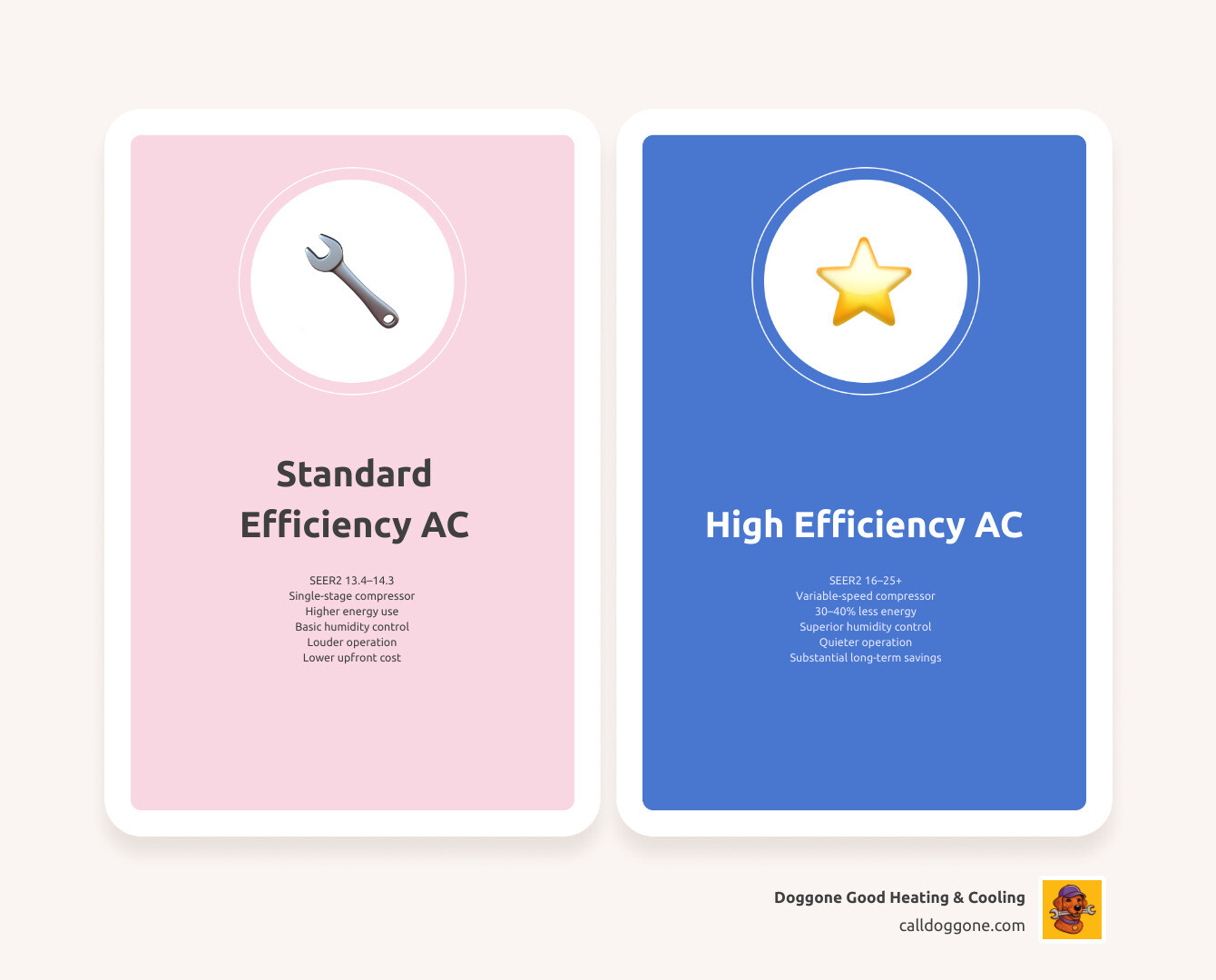
The standard efficiency vs high efficiency ac comparison comes down to a few key differences that affect your comfort, your energy bills, and how well your system handles Baton Rouge’s brutal heat and humidity.
Here’s a quick breakdown:
| Factor | Standard Efficiency AC | High Efficiency AC |
|---|---|---|
| SEER2 Rating | 13.4–14.3 | 16–25+ |
| Compressor Type | Single-stage | Two-stage or variable-speed |
| Monthly Energy Use | Higher | Lower (up to 30–40% less) |
| Humidity Control | Basic | Superior |
| Noise Level | Louder | Significantly quieter |
| Upfront Cost | Lower | Higher |
| Long-Term Savings | Modest | Substantial |
| ENERGY STAR Eligible | Rarely | Often (requires SEER2 15.2+) |
If you live in Baton Rouge, LA, this decision hits differently than it does for homeowners up north. Your air conditioner doesn’t get a break — it runs hard from late spring through early fall, fighting humidity levels that make even moderate temperatures feel unbearable. That kind of workload means the efficiency of your system has a direct, measurable impact on what you pay every month and how comfortable your home actually feels.
Standard efficiency units cost less upfront and get the job done. High efficiency units cost more to install but can significantly cut your energy bills over time — and in a climate like ours, the math tends to favor the upgrade more than it would in a milder region.
The 2023 Department of Energy updates changed the minimum efficiency requirements across the country, including here in the Southeast. So even “standard” units today are more efficient than they used to be — but the gap between standard and high efficiency still matters a lot, especially when your system is running nearly year-round.
This guide walks you through everything you need to know to make a confident decision for your home.
Understanding the Standard Efficiency vs High Efficiency AC Comparison
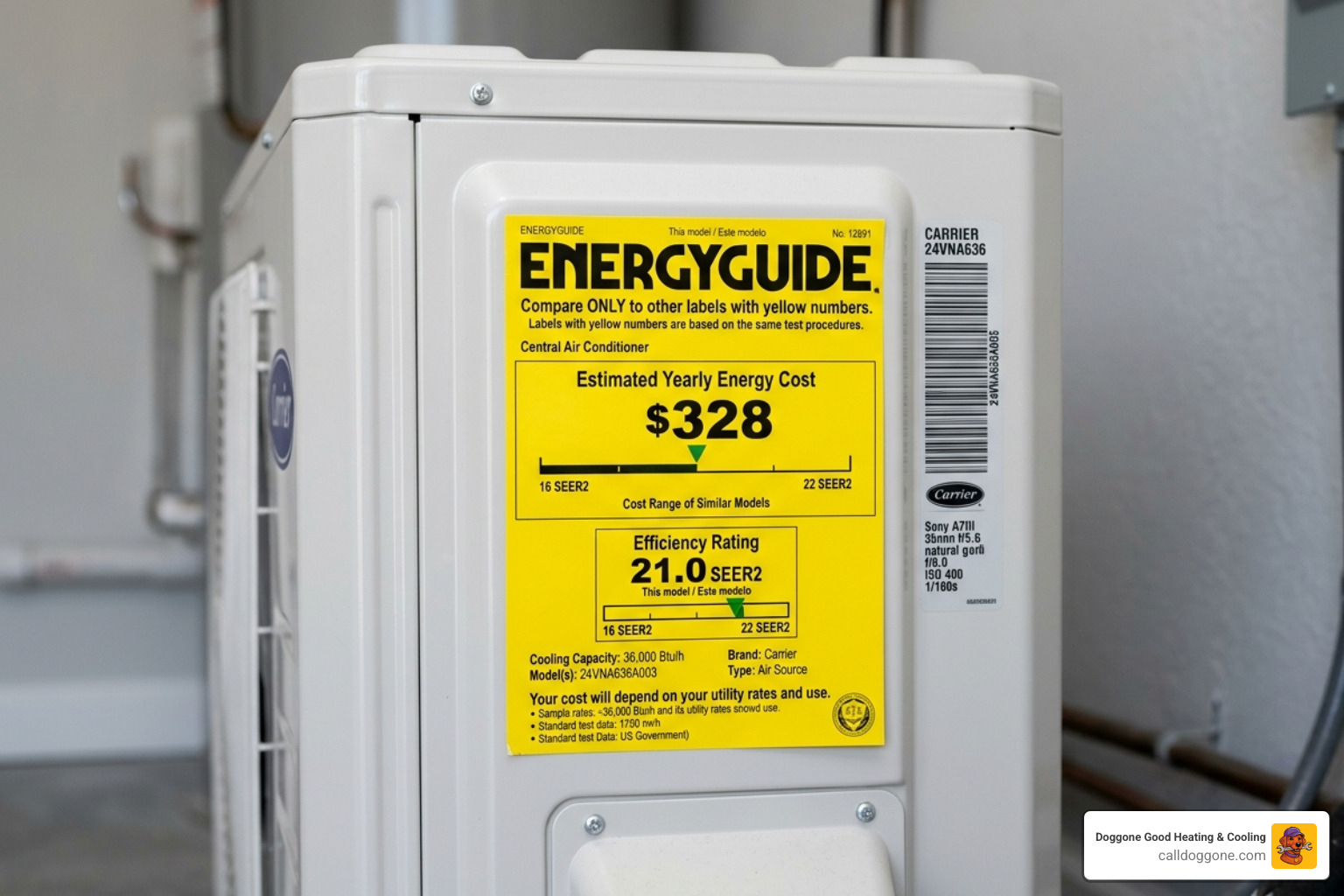
When you start shopping for a new air conditioner in Prairieville or Denham Springs, you’ll immediately see the EnergyGuide label. This yellow tag is your best friend in a standard efficiency vs high efficiency ac comparison. It highlights the SEER2 rating, which is the gold standard for measuring how much cooling you get for every dollar of electricity spent.
SEER2 Thresholds and Regional Requirements
As of April 2026, we are operating under the Department of Energy (DOE) standards that went into effect in 2023. These standards introduced “SEER2,” a more rigorous testing protocol that accounts for the static pressure of your home’s ductwork, making the ratings more realistic for Louisiana homes.
In the Southeast region, which includes Baton Rouge, the minimum allowable efficiency for a new split-system AC is 14.3 SEER2. Anything at this level is considered “standard efficiency.” Once you cross the 16 SEER2 mark, you enter the “high-efficiency” territory. Some ultra-efficient units can even reach 25 SEER2 or higher.
| Efficiency Level | SEER2 Rating | Typical Technology |
|---|---|---|
| Standard | 13.4* – 14.3 | Single-stage compressor, PSC motor |
| Moderate High-Efficiency | 15 – 17 | Two-stage compressor, ECM motor |
| Ultra High-Efficiency | 18 – 25+ | Variable-speed compressor, Inverter-driven |
*13.4 is the minimum for Northern states; Louisiana requires a 14.3 minimum for split systems.
Technological Differences: Single-Stage vs. Variable-Speed
The biggest “under the hood” difference in a standard efficiency vs high efficiency ac comparison is the compressor. Think of your AC compressor like a car engine.
Single-Stage: The “All or Nothing” Approach
Standard efficiency units typically use single-stage compressors. These are either 100% on or 100% off. When your thermostat calls for cooling, the unit kicks on at full blast until the temperature drops, then it shuts off. This leads to “cycling,” which can cause temperature swings and higher energy spikes every time the motor starts up. These units often use older PSC (Permanent Split Capacitor) blower motors, which are less efficient at moving air.
Variable-Speed: The Precision Cruise Control
High-efficiency units utilize variable-speed or inverter-driven compressors. These systems can adjust their output to anywhere from 25% to 100% capacity. Instead of shutting off, they dial back to a lower speed to maintain a perfectly steady temperature.
These units are paired with ECM (Electronically Commutated Motors) blower motors. Research shows that ECM motors can use up to 60% less electricity than standard PSC motors when running at lower speeds. Because they run longer cycles at lower speeds, they are much better at Load Calculations & System Sizing requirements, ensuring every room stays comfortable without the constant “thump” of a system starting and stopping.
Comfort and Performance in the Baton Rouge Humidity
In Louisiana, cooling isn’t just about the temperature; it’s about the “swamp” factor. High-efficiency systems are significantly better at managing the heavy humidity we face in Zachary and Gonzales.
Superior Dehumidification
Because a variable-speed unit runs longer, lower-intensity cycles, it pulls more air over the cold evaporator coils. This gives the system more time to remove moisture from the air. A standard unit that cools the house down in 10 minutes and shuts off often leaves the air feeling “clammy” because it didn’t run long enough to dehumidify.
Noise Reduction and Consistency
High-efficiency units are designed for quiet operation. While a standard unit might roar at 72–76 decibels, a high-efficiency unit with sound blankets and variable speeds can operate as low as 58 decibels—about the level of a quiet conversation. This contributes to a more peaceful home environment, especially if your outdoor unit is located near a bedroom window or a patio. For more tips on managing your home environment, check out our guide on Don’t Sweat the Bill: Smart Ways to Cool Your Louisiana Home.
Long-Term Benefits of a High Efficiency AC Comparison
While the upfront investment for a high-efficiency system is higher, the long-term rewards often outweigh the initial cost, especially when you view your HVAC system as a 15-year investment in your home.
Energy Savings in a High Efficiency AC Comparison
The math is compelling. Upgrading from a 14 SEER standard unit to a 20 SEER high-efficiency unit can save a homeowner between $300 and $400 per year on cooling costs. Over a 10-year period, that’s $4,000 back in your pocket.
High-efficiency units are the cornerstone of Energy Efficiency in modern homes. In fact, some Energy Upgrades That Literally Pay for Themselves start with the AC unit because it is the largest energy consumer in the typical Louisiana household. To maximize these savings, we always recommend looking into How to Score Big on Louisiana Utility Rebates for Cooling.
Financial Incentives and Home Value
Beyond monthly savings, high-efficiency units qualify for significant financial perks:
- Federal Tax Credits: Under the Inflation Reduction Act, homeowners can often claim tax credits for installing ENERGY STAR-certified equipment.
- Resale Appeal: A high-efficiency HVAC system is a major selling point. Modern buyers look for homes with lower operating costs and “green” features.
- Durability: Because variable-speed systems don’t “hard start” as often as single-stage units, there is often less wear and tear on the internal components, potentially extending the system’s lifespan.
Is a High-Efficiency Unit Right for Your Home?
Every home in the Baton Rouge area is unique. What works for a small cottage in Mid-City might not be the best choice for a sprawling new build in Gonzales.
We recommend starting with Energy Audits to see where your home is losing air. If your home has poor insulation or leaky ducts, even the most efficient AC won’t reach its full potential.
Factors to Consider in Your Standard Efficiency vs High Efficiency AC Comparison
- Planned Years in Home: If you plan to move in two years, a standard unit is a smart, budget-friendly choice. If this is your “forever home,” the high-efficiency unit will pay for itself.
- Ductwork Compatibility: High-efficiency systems move air differently. Sometimes, older ductwork needs to be sealed or modified to handle the precision of a variable-speed blower.
- Usage Patterns: Do you keep your thermostat at 68 degrees all summer? If so, your energy bills are likely high enough that the savings from a high-efficiency unit will be substantial.
- System Sizing: It is vital to determine What Size Air Conditioner Do You Need for Your Home? before buying. An oversized high-efficiency unit is just as wasteful as an undersized standard one.
If you’re currently dealing with an aging system, you might be asking, “Should You Repair or Replace an Old Air Conditioner in Baton Rouge?” Generally, if your system is over 10 years old and needs a major repair, the efficiency gains of a new unit make replacement the smarter financial move.
Frequently Asked Questions about AC Efficiency
What is the minimum SEER2 rating required in Louisiana as of 2026?
As of 2026, the federal minimum for the Southeast region (including Louisiana) remains 14.3 SEER2 for split-system air conditioners. For homeowners, this means you cannot legally have a new system installed that falls below this efficiency threshold.
Do high-efficiency AC units require more frequent maintenance?
Not necessarily more frequent, but the maintenance is more specialized. High-efficiency units have advanced electronic boards, sensors, and condensate management systems that need professional eyes. We recommend following a detailed AC Maintenance Checklist to Lower Energy Bills and having a professional tune-up twice a year.
Can I install a high-efficiency condenser with my existing indoor coil?
We strongly advise against this. To achieve the SEER2 rating promised by the manufacturer, the indoor evaporator coil and the outdoor condenser must be a “matched set.” Using an old indoor coil with a new high-efficiency outdoor unit will likely result in poor performance, frequent breakdowns, and a voided warranty.
Conclusion
Choosing between standard and high efficiency doesn’t have to be a headache. At Doggone Good Heating & Cooling, we pride ourselves on being honest, reliable, and locally attuned to the specific needs of Baton Rouge homeowners. Whether you want the straightforward affordability of a standard unit or the whisper-quiet luxury of a high-efficiency system, our team is here to help you find the perfect match.
Ready to lower your bills and upgrade your comfort? Start your journey toward a more comfortable home with our Energy Efficiency solutions or schedule one of our expert Energy Consultations today!
About the Author
Doggone Good Heating and Cooling
Doggone Good Heating and Cooling — your local HVAC experts in Baton Rouge, LA.
Need HVAC Service?
Get a free estimate or schedule your service today. Our team is ready to help.
Recent Posts


Related Articles
Ready to Get Started?
Prefer to Call?
Talk with a local technician and get clear next steps for your home.
Call Now(225) 230-9784