How to Cut Energy Bills in Hot Weather with SEER2 Ratings
Doggone Good Heating and Cooling


Learn how SEER2 ratings affect energy bills in hot weather and discover the best efficiency upgrades for Baton Rouge homes.
How SEER2 Ratings Affect Energy Bills in Hot Weather — What Baton Rouge Homeowners Need to Know
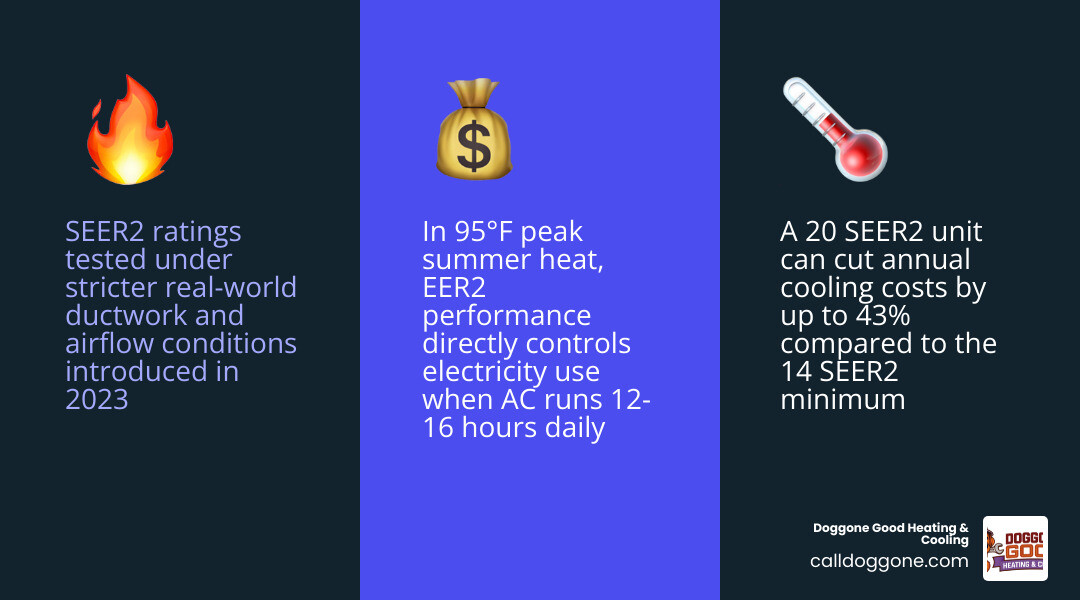
How SEER2 ratings affect energy bills in hot weather comes down to one simple idea: the more efficiently your AC converts electricity into cooling, the less you pay each month — and in Baton Rouge’s brutal summer heat, that difference adds up fast.
Here’s a quick breakdown of how SEER2 efficiency levels compare:
| SEER2 Rating | Efficiency vs. 14 SEER2 | Estimated Annual Cooling Cost (3-ton unit) |
|---|---|---|
| 14 SEER2 (minimum) | Baseline | ~$1,030/year |
| 16 SEER2 | ~15% more efficient | ~$900/year |
| 18 SEER2 | ~20% more efficient | ~$800/year |
| 20 SEER2 | ~43% more efficient | ~$720/year |
If your home is running an older system rated at SEER 8 or 10, the gap is even wider — upgrading to a modern SEER2-rated unit can cut your cooling costs by as much as 50%.
SEER2 replaced the older SEER standard in 2023. The new rating uses stricter testing conditions that better reflect real-world performance in homes with actual ductwork, filters, and airflow resistance. So when you see a SEER2 number on a new unit, it’s a more honest picture of what you’ll actually experience on a 95°F August afternoon in Baton Rouge.
For homeowners in the Southeast — where AC systems can run 12 to 16 hours a day during peak summer — choosing the right SEER2 rating isn’t just a technical detail. It’s one of the biggest levers you have for controlling your monthly utility bill.
What is SEER2 and How Does It Differ From the Original SEER Rating?
To understand how these ratings impact your wallet, we have to look under the hood of how heating and cooling systems are tested.
For decades, the standard SEER (Seasonal Energy Efficiency Ratio) rating was the primary yardstick for central air conditioners and heat pumps. SEER calculated the total cooling output of a system over a typical cooling season divided by the total electric energy input during that same time frame.
However, the Department of Energy realized that old SEER testing had a major flaw: it was conducted in a laboratory under idealized, low-pressure conditions. In the real world, your AC doesn’t sit in a clean lab. It is hooked up to a complex web of ductwork, pushing air through restrictive filters, around tight corners, and into multiple rooms.
This is where the M1 testing standard comes in. Introduced to make efficiency ratings far more accurate, the SEER2 protocol changes how manufacturers measure performance:
- Five Times the Static Pressure: The old SEER test evaluated systems at an external static pressure of just 0.1 inches of water column (w.c.). In contrast, SEER2 testing is conducted at 0.5 inches w.c. This five-fold increase in static pressure represents the actual resistance air encounters in a typical residential duct system.
- Realistic Blower Performance: Because the system has to work much harder to push air against this realistic static pressure, blower motors (specifically electronically commutated motors, or ECMs) must draw more power.
- Lower (But More Accurate) Numbers: Because the testing environment is much tougher, a unit’s SEER2 rating will typically look about 4.5% to 5% lower than its old SEER equivalent. For example, an air conditioner that was rated at 16 SEER under the old system will typically be rated around 15.2 SEER2 today.
This drop in the rating number doesn’t mean the system is less efficient; it simply means the measurement is more honest. When you are looking for Don’t Sweat the Bill: Smart Ways to Cool Your Louisiana Home, relying on SEER2 ensures you aren’t misled by laboratory-only performance metrics.
Why the Shift to SEER2 Matters for Louisiana Homeowners
In Louisiana, where summers are famously long, hot, and incredibly humid, our air conditioning systems work overtime. When the Department of Energy mandated the shift to SEER2, it set higher efficiency baselines across the country.
As we navigate through 2026, these standards are fully integrated into the market. If you are dealing with an aging, inefficient air conditioner, you might notice your monthly utility bills creeping up to eye-watering heights. Recognizing How High Energy Bills Signal HVAC Problems is often the first step toward realizing your old system is simply dragging down your budget.
By upgrading to a system designed to meet modern SEER2 standards, you are investing in technology engineered to handle the physical realities of Southern homes. The advanced blower motors and variable-speed compressors in modern SEER2 units are specifically built to maintain consistent airflow and keep your home comfortable, even when pushing air through long, hot attic duct runs in Prairieville or Denham Springs.
How SEER2 Ratings Affect Energy Bills in Hot Weather for Heat Pumps
While we often think of heat pumps as heating systems, they are actually incredibly efficient air conditioners during the summer months. A heat pump works by transferring heat rather than generating it. In the summer, it absorbs heat from inside your home and pumps it outdoors.
Because of this dual-stage operation, heat pumps are rated using both SEER2 (for cooling efficiency) and HSPF2 (Heating Seasonal Performance Ratio 2) for winter performance.
When it comes to cooling your home, a high SEER2 heat pump provides massive electricity reduction benefits:
- 50% Electricity Reduction: Heat pumps can reduce electricity usage by up to 50% compared to standard electric resistance heating systems, and their advanced cooling technology delivers matching efficiency gains during the peak of summer.
- Variable-Speed Performance: Many high-efficiency SEER2 heat pumps feature multi-stage or variable-speed compressors. Instead of turning fully on and fully off (which drafts massive amounts of electricity), they run continuously at lower, whisper-quiet speeds to maintain a steady temperature.
- Lower Peak Demand: By running at lower speeds, these systems avoid drawing peak electrical currents during the hottest parts of the day, which directly lowers your monthly utility bills.
How SEER2 Ratings Affect Energy Bills in Hot Weather
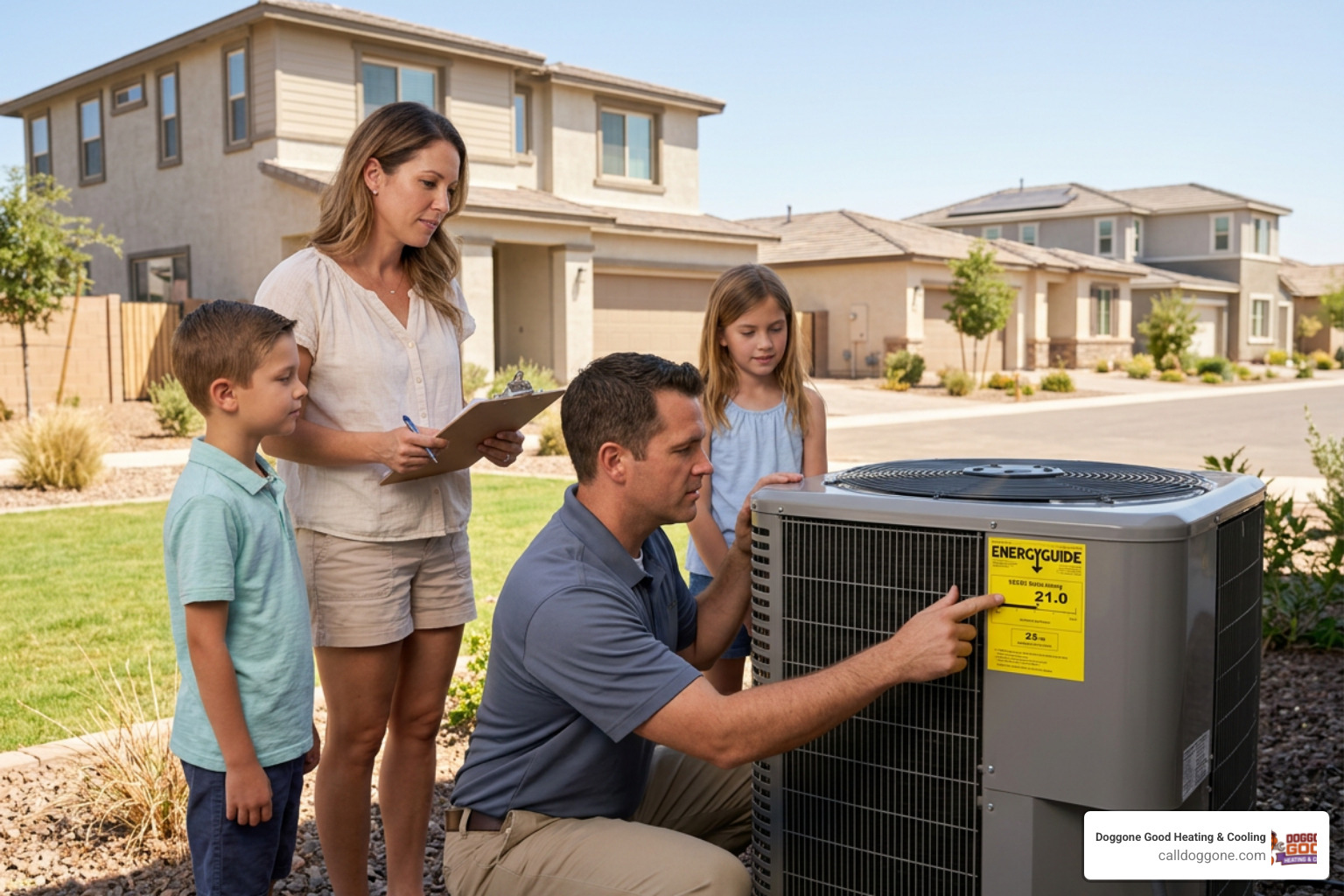
During a typical Louisiana cooling season, your air conditioner is the single largest consumer of electricity in your home. Understanding how seer2 ratings affect energy bills in hot weather requires looking at how a system’s efficiency rating directly dictates its daily power draw.
When outdoor temperatures soar into the 90s and triple digits, a low-efficiency AC unit has to run constantly at maximum capacity to keep up with the heat load. Older, single-stage compressors can only operate at 100% capacity. They turn on, blast cold air at full power, turn off when the thermostat is satisfied, and then turn back on a few minutes later. This constant “short-cycling” is incredibly inefficient, much like driving a car in stop-and-go city traffic.
Modern systems with high SEER2 ratings utilize variable-speed compressors. These systems can adjust their output anywhere from 30% to 100% capacity based on the cooling demand. On a warm but not scorching day, the system might run continuously at 40% capacity, using a fraction of the electricity of a standard unit.
Investing in these high-efficiency systems represents one of those Energy Upgrades That Literally Pay for Themselves over time because the monthly operational savings quickly offset the initial upgrade costs.
Calculating the Savings: How SEER2 Ratings Affect Energy Bills in Hot Weather
Let’s look at how the math actually breaks down for a homeowner in Baton Rouge, Prairieville, or Gonzales.
The percentage of energy savings when upgrading your system is directly tied to the mathematical difference between your old rating and your new rating. The formula for estimating savings is:
$$text{Estimated Savings} = left(1 – frac{text{Old SEER/SEER2}}{text{New SEER2}}right) times 100$$
If you are upgrading from an older, standard system to a high-efficiency system, the operational differences are substantial:
- Upgrading from 14 SEER2 to 18 SEER2: An 18 SEER2 unit is approximately 20% more energy efficient than a baseline 14 SEER2 unit. This means you can expect your cooling-related electricity costs to drop by roughly one-fifth.
- Upgrading from 14 SEER2 to 20 SEER2: A 20 SEER2 unit is approximately 43% more efficient than a 14 SEER2 model. This delivers massive monthly savings during our extended hot seasons.
- Upgrading from an old SEER 8 to a SEER2 15.3: If you are replacing an old, inefficient system from the early 2000s, upgrading to a modern 15.3 SEER2 unit can save you roughly 50% on your monthly cooling bills.
To help visualize these performance tiers, consider this comparison for a typical 3-ton residential system operating in our hot, humid climate:
| Efficiency Tier | SEER2 Range | Compressor Type | Best Suited For | Real-World Savings Potential |
|---|---|---|---|---|
| Budget / Minimum | 13.4 – 14.3 | Single-Stage | Moderate use or rental properties | Baseline |
| Standard / Best Value | 15.0 – 16.5 | Two-Stage | Standard family homes in Baton Rouge | 15% to 20% savings |
| High-Efficiency | 17.0 – 19.0 | Multi-Stage / Variable | Homes with high cooling demands | 20% to 30% savings |
| Ultra-Premium | 20.0+ | Fully Variable-Speed | Maximum comfort and lowest monthly bills | 35% to 43%+ savings |
Peak Load Performance: Why EER2 Matters Alongside SEER2
While SEER2 is a fantastic metric for measuring seasonal average efficiency, it doesn’t tell the whole story for those intense, 100°F+ mid-summer heatwaves. That is where the EER2 (Energy Efficiency Ratio 2) metric becomes critical.
While SEER2 calculates efficiency across a mix of outdoor temperatures ranging from 65°F to 104°F, EER2 measures a system’s steady-state efficiency at a single, brutal peak condition: 95°F outdoor temperature, 80°F indoor temperature, and 50% relative humidity.
- Why EER2 Matters in Louisiana: During July and August in Zachary or Gonzales, outdoor temperatures consistently hover near or above 95°F for hours on end. During these peak load times, your system is operating under maximum stress.
- Humidity Control: High EER2-rated systems are designed to pull maximum heat and moisture out of your indoor air even when the outdoor condenser is baking in the sun.
- Preventing Grid Strain: Systems with high EER2 ratings draw less peak wattage, keeping your local electrical grid stable and protecting you from high-demand utility surcharges.
Minimum SEER2 Requirements and Regional Standards in 2026
The Department of Energy does not treat every state the same. Because cooling demands are vastly different in Maine than they are in Louisiana, the United States is divided into three distinct regulatory regions: the North, the Southeast, and the Southwest.
Louisiana sits squarely in the Southeast region, which has much stricter cooling standards due to our severe summer weather.
As of 2026, the minimum efficiency standards for new installations in our region are:
- Split-System Air Conditioners: Must meet a minimum of 14.3 SEER2 (which is roughly equivalent to the old 15 SEER standard) for systems under 45,000 BTU/h.
- Split-System Heat Pumps: Must meet a nationwide minimum of 14.3 SEER2 and 7.5 HSPF2.
- Packaged Systems: Must meet a minimum of 13.4 SEER2.
If you are looking to make an upgrade, understanding these regional baselines is incredibly important, especially when you want to learn How to Score Big on Louisiana Utility Rebates for Cooling. Installing a system that merely meets the bare legal minimum won’t always qualify you for the most lucrative incentives.
Federal Tax Credits and Incentives for High-Efficiency Upgrades
To encourage homeowners to look beyond the baseline minimums, federal and local programs offer substantial financial incentives for high-efficiency upgrades. Under the Inflation Reduction Act, you can take advantage of significant tax credits and rebates:
- Federal Energy Efficient Home Improvement Credit (Section 25C): Homeowners can claim a federal tax credit of up to $2,000 per year for qualifying high-efficiency heat pumps that meet Energy Star’s highest efficiency standards.
- Central Air Conditioner Credits: Qualifying split-system air conditioners (typically requiring 16 SEER2 or higher) can qualify for up to $600 in federal tax credits.
- Local Utility Rebates: Entergy Louisiana and other local utility providers in the Baton Rouge area often offer instant or mail-in rebates for upgrading to high-efficiency systems, which can shave hundreds of dollars off the net cost of your installation.
Real-World Factors That Influence Your Actual Energy Savings
While buying a system with a high SEER2 rating is a great start, the number printed on that yellow EnergyGuide label is a potential rating, not a guarantee. Several real-world factors dictate whether your system actually achieves its rated efficiency once installed in your home.
The most critical factor is your home’s thermal envelope and the condition of your ductwork. You could buy the most advanced, ultra-premium 22 SEER2 system on the market, but if your home has leaky ducts or poor attic insulation, those savings will vanish.
- Duct Leakage: The average residential duct system loses 20% to 30% of its conditioned air through loose joints, cracks, and poor seals. This is the equivalent of buying a gallon of milk and pouring two glasses straight down the drain.
- Home Insulation: Without proper attic and wall insulation, outdoor heat will constantly migrate into your living space, forcing your AC to run longer and work harder.
- System Sizing: A system must be sized perfectly for your home’s unique footprint using a professional Manual J load calculation. If an HVAC unit is oversized, it will short-cycle constantly, ruin your humidity control, and wear out its components prematurely. If it is undersized, it will run continuously without ever cooling your home.
To ensure your system is set up for success from day one, make sure you know How to Keep Your AC Running Efficiently All Summer.
Why Proper Installation and Maintenance Dictate Real-World SEER2 Performance
A high-efficiency air conditioner is a finely tuned machine. Unlike older, simpler systems that were highly forgiving of minor installation errors, modern SEER2 systems rely on precise refrigerant charges, balanced airflow, and clean electrical connections to hit their efficiency targets.
- Airflow Restrictions: If your ductwork is too small or restrictive, static pressure will rise, forcing your high-efficiency blower motor to consume significantly more electricity than intended.
- Incorrect Refrigerant Charge: Being off by just a few ounces of refrigerant can drop a system’s operating efficiency by 10% to 15% and put unnecessary strain on the compressor.
- The Power of Prevention: Regular maintenance is the single best way to protect your investment. Dirt on your outdoor condenser coils or indoor evaporator coils acts as an insulator, blocking heat transfer and forcing the system to run longer.
To keep your system running at peak performance, it helps to understand The Hidden Perks of Keeping Your Louisiana AC Maintained. Following a structured AC Maintenance Checklist to Lower Energy Bills ensures that no small issues spiral into costly, efficiency-draining problems down the road.
Frequently Asked Questions About AC Efficiency
What is considered a good SEER2 rating for a hot and humid climate like Baton Rouge?
For most homeowners in the Baton Rouge, Prairieville, and Denham Springs areas, the “sweet spot” for a new system is between 16 and 18 SEER2.
Systems in this range offer an exceptional balance of upfront value and long-term operating savings. Crucially, units in this tier often feature two-stage or variable-speed compressors, which are incredibly effective at removing the heavy humidity common to our region.
While ultra-premium systems (20+ SEER2) offer the absolute lowest monthly bills, they often come with a longer payback period, making the 16 to 18 SEER2 range the ideal standard for most local families.
Can I upgrade just my outdoor unit to improve my SEER2 rating?
No, you cannot simply swap out your outdoor condenser unit and expect to achieve high-efficiency SEER2 performance.
An air conditioning system is a matched set. The outdoor condenser must be paired with a compatible indoor evaporator coil and blower motor that are specifically certified by the Air-Conditioning, Heating, and Refrigeration Institute (AHRI).
If you connect a new SEER2 outdoor unit to an old, mismatched indoor coil, the system will not operate at its rated efficiency, you will likely void the manufacturer’s warranty, and you risk damaging the new compressor.
Does a higher SEER2 rating mean my home will cool down faster?
No. A system’s SEER2 rating measures its efficiency, not its speed or raw cooling power.
Cooling capacity is measured in BTUs (British Thermal Units) or tons. A 3-ton, 14 SEER2 system and a 3-ton, 20 SEER2 system have the exact same cooling capacity.
The difference is that the 20 SEER2 system will use significantly less electricity to deliver that same amount of cooling. In fact, because high-efficiency variable-speed units are designed to run longer at lower speeds, they deliver a much steadier, more consistent flow of cool air rather than the sudden blasts of cold air typical of older, single-stage units.
Conclusion
When the summer heat settles over Louisiana, your air conditioner is your home’s primary line of defense. Understanding how seer2 ratings affect energy bills in hot weather gives you the knowledge you need to make smart, budget-friendly decisions for your home’s comfort and long-term energy savings.
At Doggone Good Heating & Cooling, we are dedicated to providing honest, reliable, and locally attuned HVAC services to our neighbors across Baton Rouge, Prairieville, Denham Springs, Zachary, and Gonzales. Whether you need a comprehensive energy-efficiency consultation, a precision system replacement, or a seasonal tune-up, our team is here to help you maximize your home comfort.
To keep your system running at peak efficiency year-round without breaking the bank, consider signing up for our affordable Pack Perks Membership. If you’ve ever wondered about the value of preventative care, check out our guide on The Real Deal on Whether HVAC Memberships Actually Save You Money to see how regular care keeps your system running like new.
Ready to take control of your summer utility bills? Explore our Doggone Good Heating & Cooling Energy Efficiency Services or check out our Pricing page today to schedule your consultation!
{"@context": "https://schema.org", "@graph": [{"@type": "Article", "headline": "SEER2 Ratings and Energy Bills | Doggone Good HVAC", "description": "Learn how SEER2 ratings affect energy bills in hot weather for Baton Rouge homes. Compare AC efficiency and savings—call Doggone Good today!", "author": {"@type": "Person", "name": "Arthur Lancaster"}, "publisher": {"@type": "Organization", "name": "Doggone Good Heating & Cooling", "logo": {"@type": "ImageObject", "url": "https://calldoggone.com/wp-content/uploads/2025/04/menu-logo.png"}}, "datePublished": "2026-06-17T02:48:34+00:00", "dateModified": "2026-06-17T02:49:01.187876", "mainEntityOfPage": {"@type": "WebPage", "@id": "https://calldoggone.com/blog/how-to-cut-energy-bills-in-hot-weather-with-seer2-ratings/"}, "image": "https://images.bannerbear.com/direct/4mGpW3zwpg0ZK0AxQw/requests/000/148/519/808/5nDZ3xmVezbbeDxOzy2qpdWj9/e3c3aeaee22aae6cc06a7fb388ff31992284f6cf.jpg"}, {"@type": "FAQPage", "mainEntity": [{"@type": "Question", "name": "How do SEER2 ratings affect energy bills in hot weather?", "acceptedAnswer": {"@type": "Answer", "text": "Higher SEER2 ratings mean an AC converts electricity into cooling more efficiently, so it uses less energy and lowers monthly cooling costs. In hot places like Baton Rouge, where AC systems may run 12 to 16 hours a day in peak summer, those savings can add up quickly."}}, {"@type": "Question", "name": "How much can Baton Rouge homeowners save with a higher SEER2 AC unit?", "acceptedAnswer": {"@type": "Answer", "text": "For a 3-ton unit, the article estimates annual cooling costs of about $1,030 for 14 SEER2, $900 for 16 SEER2, $800 for 18 SEER2, and $720 for 20 SEER2. Homes upgrading from older SEER 8 or SEER 10 systems to modern SEER2-rated units may cut cooling costs by as much as 50%."}}, {"@type": "Question", "name": "What is SEER2 and how is it different from SEER?", "acceptedAnswer": {"@type": "Answer", "text": "SEER2 replaced the older SEER standard in 2023 and uses stricter testing conditions that better reflect real-world AC performance. Unlike the older lab-based SEER test, SEER2 accounts more accurately for conditions such as ductwork, filters, airflow resistance, and static pressure."}}, {"@type": "Question", "name": "Why does SEER2 matter for homeowners in the Southeast?", "acceptedAnswer": {"@type": "Answer", "text": "SEER2 matters in the Southeast because air conditioners often run for long hours during extreme summer heat. Choosing the right SEER2 rating is one of the biggest ways homeowners can control monthly utility bills."}}, {"@type": "Question", "name": "What does the SEER rating measure for an air conditioner?", "acceptedAnswer": {"@type": "Answer", "text": "The original SEER rating measured the total cooling output of an air conditioner or heat pump over a typical cooling season divided by the total electric energy used during that time. SEER2 uses a similar efficiency concept but applies more realistic testing standards."}}]}]}About the Author
Doggone Good Heating and Cooling
Doggone Good Heating and Cooling — your local HVAC experts in Baton Rouge, LA.
Need HVAC Service?
Get a free estimate or schedule your service today. Our team is ready to help.
Recent Posts


Related Articles
Ready to Get Started?
Prefer to Call?
Talk with a local technician and get clear next steps for your home.
Call Now(225) 230-9784