How to Prep Your Bayou Home for Cooler Weather
Doggone Good Heating and Cooling


Prep your Bayou home for winter: fall heating preparation for Louisiana homeowners with HVAC tips, weatherizing & pro inspections. Save 30% on energy!
Why Fall Is the Right Time to Think About Heating in Baton Rouge, LA
Fall heating preparation for Louisiana homeowners is one of the most overlooked steps in keeping your home comfortable and your energy bills manageable through the cooler months.
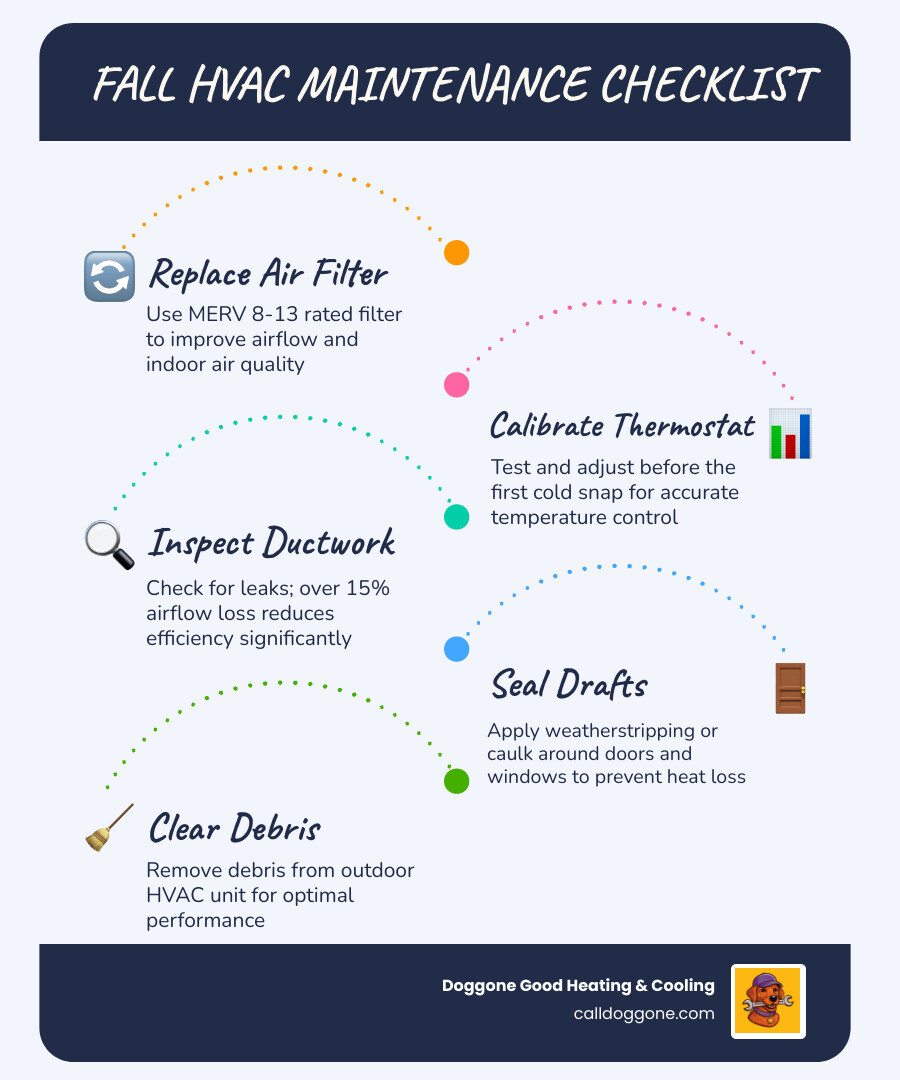
Here’s what you need to do before the temperatures drop in Baton Rouge:
- Replace your air filter with a MERV 8-13 rated filter
- Schedule a professional heating system inspection (October-November)
- Test and calibrate your thermostat before the first cold snap
- Check your ductwork for leaks — anything above 15% airflow loss hurts efficiency
- Seal drafts around doors and windows with weatherstripping or caulk
- Clear debris from around your outdoor HVAC unit
- Test your heat pump’s reversing valve or check your furnace’s ignition system
Louisiana’s climate is unlike most of the country. Baton Rouge homeowners spend six to seven months running the air conditioner, which means the heating system often sits idle for a long time. When temperatures finally dip, that neglected system is suddenly asked to perform — and that’s when problems show up.
Skipping fall prep doesn’t just risk a breakdown. It can push your energy consumption up by as much as 30% and leave your home with uneven heating, poor air quality, and a shortened system lifespan.
The good news? A little preparation in October and November goes a long way.
Why Fall Heating Preparation for Louisiana Homeowners is Essential
In South Louisiana, we are famous for our “second summers.” It’s common to be running the AC in late October while carving pumpkins. However, this extended cooling season puts a massive amount of strain on your HVAC system. By the time the first real cold front rolls through Prairieville or Denham Springs, your system has been working overtime for half a year.
Combating the “Idle System” Syndrome
When a heating system sits idle in our 70%+ relative humidity, it becomes a breeding ground for biological growth. Dust settles on the heat exchanger, and moisture can lead to corrosion. If you wait until a freezing night in January to turn on your heater for the first time, you might be greeted by a burning smell (which is often just dust, but can be something worse) or, even worse, no heat at all.
Efficiency and Your Wallet
Did you know that inadequate maintenance can increase your home’s energy consumption by up to 30%? In 2026, with energy costs always on the mind, that’s a significant chunk of change. Regular Heating Maintenance ensures that every component is lubricated, cleaned, and tightened. When your system doesn’t have to struggle to move air or ignite a burner, it uses less power.
Protecting Indoor Air Quality
Our humid climate accelerates coil and duct contamination. Fall is a peak time for allergens in Louisiana, and a dirty HVAC system will simply recirculate those particles throughout your home. Comprehensive HVAC Maintenance includes cleaning the components that directly impact the air you breathe, ensuring your family stays healthy even when the windows are buttoned up tight for winter.
Essential Steps for Fall Heating Preparation for Louisiana Homeowners
Preparing for the “winter” (or what we call winter here in Zachary) involves more than just flipping a switch. We recommend a systematic approach to ensure nothing is missed.
1. The Critical Filter Swap
This is the single most important DIY task. During peak operation, air filters should be inspected every 30 days. For the best balance of air quality and system protection, we recommend filters with a MERV rating between 8 and 13. A clogged filter restricts airflow, which is a leading cause of Why Your Heater is Blowing Cold Air. If the air can’t move across the heat exchanger, the system may overheat and shut down as a safety precaution. If you’re unsure about the frequency, check out our guide on How Often Should You Change Your HVAC Air Filter in Winter.
2. Thermostat Calibration and Testing
Don’t wait for a freeze to find out your thermostat is misreading the room temperature. Test it in early November. Switch it to “heat” and set it a few degrees above the current room temperature. You should hear the system kick on within a minute or two. If it doesn’t, or if the temperature in the house doesn’t match the reading on the screen, it may need recalibration or a battery replacement.
3. Duct Inspection and Cleaning
Duct leakage rates above 15% represent a measurable loss in efficiency. In many older homes in Gonzales and Baton Rouge, ducts can become disconnected or develop holes. This results in you paying to heat your attic or crawlspace instead of your living room. A visual inspection can catch major issues, but professional duct sealing is often required to get that airtight performance back.
Heat Pumps vs. Gas Furnaces: Specific Fall Heating Preparation for Louisiana Homeowners
Louisiana homes typically use one of two systems: an electric heat pump or a gas furnace. Each requires a different focus during fall prep.
Heat Pump Considerations
Heat pumps are incredibly efficient in our mild climate, but they are complex. One of the most critical checks is the reversing valve. This component is what allows the system to switch from “cooling mode” to “heating mode.” Since it hasn’t been used since last winter, it can sometimes get stuck.
We also check the defrost cycle. In Louisiana, it’s rare to have heavy ice, but high humidity combined with near-freezing temps can cause the outdoor coils to frost over. The defrost cycle melts this ice so the system can keep working. For more details on these systems, see our Heat Pumps page or learn about Heat Pump Maintenance.
Gas Furnace Considerations
If you have a gas furnace, safety is the priority. We perform ignition testing to ensure the burners light reliably. A yellow or flickering pilot light is a major warning sign; it should be a steady blue. A yellow flame can indicate incomplete combustion, which could lead to carbon monoxide leaks. We also inspect the heat exchanger for any cracks that could allow dangerous gases into your home’s airflow. Choosing between these two? Read Heat Pump vs Furnace: What Works Best to see how they compare in our region.
Weatherizing Your Bayou Home for Maximum Efficiency
Your HVAC system doesn’t work in a vacuum. If your home is “leaky,” your heater will work twice as hard to maintain comfort. Weatherization is the process of creating a thermal barrier that keeps the heat in and the damp Louisiana cold out.
Sealing the Envelope
Start with the “hand test.” On a breezy day, move your hand around the edges of windows and doors. If you feel a draft, it’s time for new weatherstripping or a bead of caulk. For homes with raised floors (pier and beam), common in parts of Baton Rouge, ensure that the floor insulation is intact and moisture-impermeable.
Attic Insulation Standards
Many older Louisiana homes have R-19 insulation, which is no longer the standard for efficiency. We recommend topping off your attic insulation to R-38. If you can see your floor joists in the attic, you likely don’t have enough insulation. Adding more is one of the highest-ROI improvements you can make.
Assistance Programs
For eligible homeowners, programs like Louisiana’s Weatherization Assistance Program (WAP) can help. As of 2025/2026, income eligibility for a one-person household is approximately $31,300, and for a two-person household, it is $42,300. These programs prioritize the elderly and families with children to ensure everyone stays safe and warm.
Learn more about Keeping Your Home Comfortable Year-Round in South Louisiana to see how weatherization and HVAC prep work together.
Professional Inspections vs. DIY Maintenance Tasks
We love a proactive homeowner! There are several things you can safely do yourself to get ready for fall.
The DIY Checklist:
- Clear the Area: Ensure there is at least a 24-inch clearance around your outdoor unit. Remove dead leaves, overgrown grass, and any summer toys or garden tools.
- Visual Duct Check: Look for obvious gaps or hanging ducts in the attic.
- Safety Alarms: Test your smoke and carbon monoxide detectors. Winter is the peak season for house fires and CO issues.
- Ceiling Fans: Reverse your fans to rotate clockwise. This pushes warm air that has risen to the ceiling back down into the living space.
The Professional Checklist: Some tasks require the specialized tools and training of a licensed technician. These include:
- Refrigerant Levels: Checking for leaks and ensuring the charge is correct (requires EPA 608 certification).
- Heat Exchanger Inspection: Using specialized cameras to look for microscopic cracks in the furnace.
- Electrical Connections: Tightening all terminals and checking for frayed wiring that could cause a fire.
- Amperage Draws: Measuring the blower motor’s power draw to predict potential failure.
By scheduling Seasonal Preventative Maintenance, you ensure that the technical side of your system is handled, while you focus on the easy stuff. If something is already broken, don’t wait—get a Heating Repair scheduled before the rush.
Preparing for Unpredictable Louisiana Weather Extremes
If there is one thing we know about living in the Baton Rouge area, it’s that the weather doesn’t follow the rules. We can have a tropical storm in late October followed by a “Blue Norther” that drops temperatures 40 degrees in four hours.
Storm Preparedness
Even in the fall, severe thunderstorms can bring power surges. We highly recommend installing whole-home surge protection to protect the sensitive circuit boards in modern HVAC units. If a storm does blow through, perform a “post-storm check” before turning your system back on. Check for debris lodged in the outdoor fan or signs of flooding near the unit.
Sudden Cold Snaps
In Louisiana, we often see “short cycling,” where a system turns on and off too frequently (more than 8 times per hour). This is often caused by a dirty system struggling with a sudden temperature drop. Being proactive with your maintenance prevents these emergency calls. For more tips on handling our unique winters, check out our Best Winter HVAC Maintenance Tips.
If your system fails during an extreme weather event, we offer 24/7 HVAC Repair to keep your family safe.
Frequently Asked Questions about Louisiana Winter Prep
What are the best thermostat settings for a Louisiana winter?
Efficiency doesn’t have to mean shivering! We recommend setting your thermostat to 68°F when you are home and active. When you are sleeping or away from the house, you can save significantly by lowering the setting by 8-10°F. Most people actually sleep better in a cooler room (around 60-65°F), and this small change can drastically reduce your utility bill. Using a programmable or smart thermostat makes this automatic. While we often talk about Spring HVAC Tune-Up Benefits, the same logic applies to winter: smart settings equal smart savings.
How often should I service my heating system in Baton Rouge?
You should have your HVAC system professionally serviced twice a year: once in the spring for the air conditioning and once in the fall for the heating. This ensures that the components specific to each mode are checked before they are needed. Regular service is often a requirement to keep your manufacturer’s warranty valid. If your system is reaching the end of its life, a fall inspection is the perfect time to discuss a new Heating Installation.
What warning signs indicate I need immediate heating repair?
Don’t ignore the “little things.” If you hear rattling, screeching, or booming noises, shut the system off and call us. Other signs include uneven heating (one room is a sauna while the other is an icebox), a sudden spike in your energy bill, or a yellow pilot light on your furnace. If your system is old and these repairs are becoming frequent, it might be time to consider a Heating Replacement to avoid being left in the cold.
Conclusion
Preparing your home for the cooler months doesn’t have to be a “dog” of a chore. By taking a few proactive steps in October and November, you can ensure your home remains a cozy sanctuary regardless of what the Louisiana weather throws our way.
At Doggone Good Heating & Cooling, we pride ourselves on being the local experts who understand the specific needs of Baton Rouge, Prairieville, and the surrounding communities. From the high humidity to our unpredictable temperature swings, we’ve seen it all.
For the ultimate peace of mind, consider our Pack Perks Membership. It’s our way of making sure your system stays in top shape year-round with priority service and regular maintenance. Whether you need a simple tune-up or a full Residential Heating overhaul, we are here to provide honest, reliable, and locally attuned service.
Give us a whistle today, and let’s make sure your home is ready for the bayou’s cooler side!
About the Author
Doggone Good Heating and Cooling
Doggone Good Heating and Cooling — your local HVAC experts in Baton Rouge, LA.
Need HVAC Service?
Get a free estimate or schedule your service today. Our team is ready to help.
Recent Posts


Related Articles
Ready to Get Started?
Prefer to Call?
Talk with a local technician and get clear next steps for your home.
Call Now(225) 230-9784