Step-by-Step Guide to Zone Control
Doggone Good Heating and Cooling


Discover zone control: optimize HVAC efficiency, eliminate hot/cold spots, save 30% on bills in Baton Rouge homes. Learn installation & benefits!
Why Zone Control Is the Smarter Way to Heat and Cool Your Baton Rouge Home
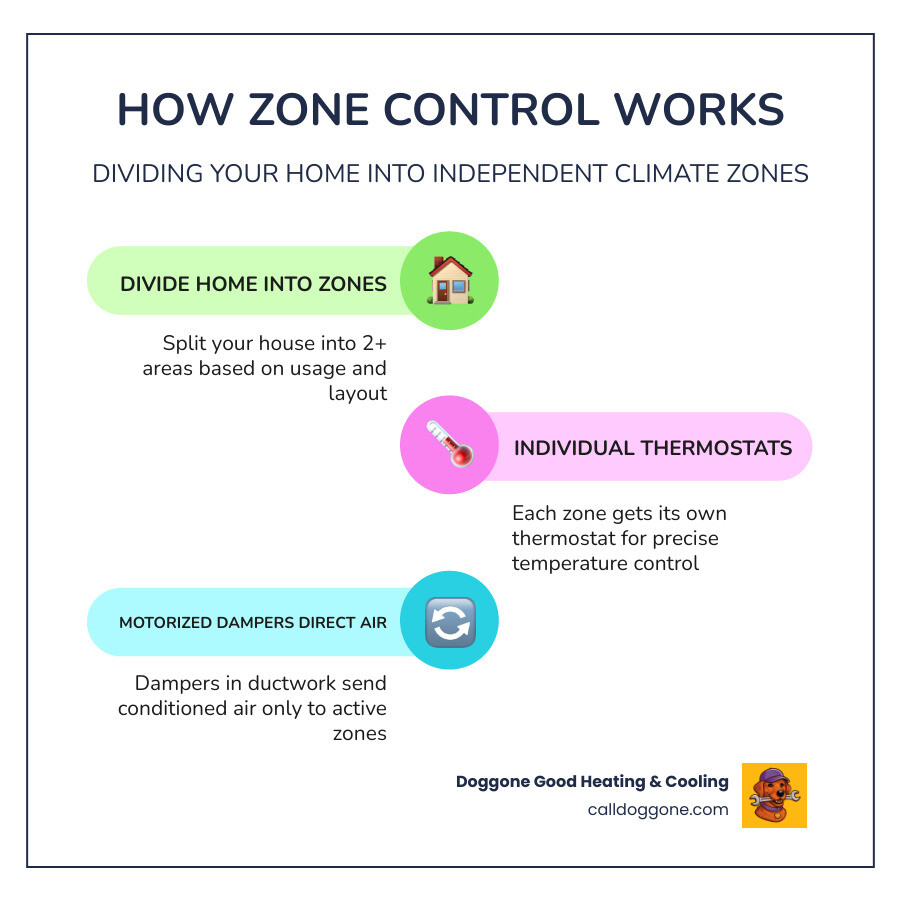
Zone control is an HVAC approach that divides your home into separate areas — each with its own thermostat and independent temperature settings. Instead of one thermostat trying to keep your whole house comfortable, a zone control system uses motorized dampers in your ductwork and a central control panel to send conditioned air only where it’s actually needed.
Here’s a quick summary of what zone control does:
- Divides your home into 2 or more independently controlled temperature zones
- Uses motorized dampers in your ductwork to direct or restrict airflow by zone
- Responds to individual thermostats in each zone, not just one central location
- Reduces energy waste by conditioning only the rooms in use
- Can be added to most existing HVAC systems without replacing your equipment
If you’ve ever noticed your upstairs baking while the downstairs stays cool, or fought over the thermostat with someone in another room, you already understand the problem zone control solves. In Baton Rouge, where the heat and humidity can be punishing for months at a time, that kind of uneven comfort isn’t just annoying — it means your system is working harder than it needs to, running up your energy bills in the process.
The good news is that zone control technology has been around for over 50 years, it works with most home HVAC setups, and the HVAC zoning market is growing fast — valued at USD 3.5 billion in 2024 and expected to nearly double by 2033, driven by homeowners who are done settling for one-size-fits-all comfort.
This guide walks you through everything you need to know about zone control: how it works, what’s involved in installing it, and whether it’s the right move for your home.
What is a Zone Control System and How Does It Work?

At its core, a zone control system is the “traffic controller” for your home’s air. Think of your standard HVAC system like a light switch that turns on every single bulb in the house at once. It’s effective, but wildly wasteful. Zone Control Systems change that by giving you a separate switch for every room—or “zone.”
The magic happens through a sophisticated feedback loop. When a thermostat in a specific room (let’s say the master bedroom) detects that the temperature has drifted from your preferred setting, it sends a signal to a central control panel. This panel is the “brain” of the operation. It identifies which zone is calling for air and opens the corresponding motorized dampers—which are essentially valves inside your metal ductwork.
Simultaneously, the panel keeps the dampers closed for the rooms that are already at the right temperature. This airflow redirection ensures that your air conditioner or furnace isn’t wasting effort on empty guest rooms or the basement while you’re trying to sleep comfortably upstairs.
Common applications for zoning include:
- Multi-story homes: Where heat naturally rises, leaving the top floor sweltering.
- Large windows: Rooms with southern exposure that heat up quickly in the Louisiana sun.
- Bonus rooms: Finished spaces over garages that often lack proper insulation.
- Finished basements: Which stay naturally cooler and rarely need the same amount of AC as the main floor.
- Occupancy patterns: Keeping the home office cool during the day while letting the rest of the house stay a bit warmer.
How Zone Control Improves Energy Efficiency
The impact on your utility bills can be dramatic. By only conditioning the spaces you are actually using, you can slash your heating and cooling expenses by up to 30%. In a climate like Baton Rouge, where the AC runs almost year-round, those savings add up fast.
Because the system doesn’t have to work to cool the entire square footage of your home every time a single room gets warm, the overall runtime of your HVAC unit is reduced. This targeted cooling means less wear and tear on your compressor and blower motor, potentially extending the life of your entire system.
Retrofitting Zone Control into Existing HVAC Systems
One of the biggest myths we encounter is that you need a brand-new AC unit to get zoning. In reality, Baton Rouge Zone Control Systems can often be retrofitted into your existing ductwork.
As long as your ducts are accessible and in good condition, we can install the motorized dampers and the control panel without tearing out your furnace or air handler. It’s a smart way to upgrade your home’s comfort and value without the cost of a full system replacement.
Key Components of HVAC Zoning Technology
To understand how these systems provide such precise comfort, it helps to look at the individual parts that make it happen. A successful Zone Control Systems Installation & Repair project relies on the harmony of four main components:
- The Control Panel: The central hub that receives signals from thermostats and tells the dampers and HVAC unit what to do.
- Motorized Dampers: These are installed inside your ducts. They open and close automatically to guide the air.
- Thermostats: You’ll have one for every zone. These can be standard, programmable, or smart WiFi-enabled models.
- Sensors: Supply air sensors monitor the temperature of the air leaving your unit to ensure it doesn’t get too hot or too cold, protecting your equipment from damage.
The Role of Motorized Dampers in Zone Control
If the control panel is the brain, the motorized dampers are the muscles. These “airflow valves” are the physical gatekeepers of your comfort. When a zone reaches its target temperature, the damper rotates to a closed position.
Modern dampers are designed for precision control. Some systems use “ESP” (Electronic Static Pressure) technology, which allows closed dampers to “bleed” a tiny amount of air if the pressure in the ducts gets too high. This prevents that annoying whistling sound you might hear in older, poorly designed systems and keeps the airflow smooth and quiet.
Thermostat Options for Modern Zoning
The beauty of zone control in 2026 is the flexibility in how you manage it. You aren’t stuck with one brand or type of thermostat. Most modern zoning panels are “universal,” meaning they can work with almost any thermostat on the market.
- Smart Thermostats: These allow you to adjust the temperature of the upstairs bedrooms from your smartphone while you’re still downstairs finishing dinner.
- WiFi-Enabled Options: These can “learn” your family’s habits, automatically lowering the AC in the home office once you’ve finished your workday.
- Wireless Sensors: If you have a particularly large room, you can use remote sensors to ensure the temperature is balanced across the entire space, not just where the thermostat is mounted.
Major Benefits of Installing a Zoning System
Why bother with all this technology? The benefits go far beyond just stopping “thermostat wars” between family members.
| Feature | Single-Zone System | Multi-Zone System |
|---|---|---|
| Temperature Consistency | Hot/cold spots common | Even, customized comfort |
| Energy Efficiency | Lower (cools whole house) | Higher (cools specific areas) |
| Utility Bills | Higher monthly costs | Up to 30% lower costs |
| Equipment Life | More frequent cycling | Reduced runtime/wear |
| Humidity Control | Limited to whole-house | Precision control per zone |
Beyond the table, there’s the benefit of indoor air quality. Because zoning allows for better airflow management, it can be integrated with humidity control systems—essential for the Baton Rouge humidity—to ensure that every room feels crisp and dry, rather than clammy.
Solving Common HVAC Problems with Zone Control
Do you have that one room that is always five degrees warmer than the rest of the house? Or a “bonus room” that feels like a sauna in July? These are classic “hot and cold spots” that a single thermostat simply can’t fix.
Zone control solves this by treating those problem areas as their own climate territories. Instead of over-cooling the downstairs just to make the upstairs tolerable, the system sends a dedicated stream of cold air exactly where the heat is concentrated.
Debunking Common Myths About Zoning
Myth 1: It’s only for new homes. False! While it’s easier to install during construction, we retrofit zoning into existing homes all the time.
Myth 2: It will damage my AC unit. Only if installed poorly. When we include a bypass damper or use smart panels that manage static pressure, zoning actually protects your equipment by preventing it from “short cycling” or freezing up.
Myth 3: It’s too complex to maintain. Most zoning systems are virtually maintenance-free. Aside from changing your thermostat batteries and your standard annual HVAC tune-up, the dampers and panels are designed to last for decades.
Planning and Maintaining Your Zoned Home
Getting the most out of zone control starts with a good plan. We don’t just walk in and start cutting ducts. We perform a floor plan analysis to understand how air moves through your home.
How Many Zones Does Your Home Need?
Most homes in our area find the “sweet spot” with 2 to 3 zones. Usually, this means one zone per floor. However, your lifestyle matters too. If you have a home gym that gets incredibly hot or a guest wing that stays empty three weeks out of the month, those might deserve their own zones.
We also look at “zone weighting.” This involves calculating how much air each zone needs based on sun exposure and room size to ensure the system stays balanced and efficient.
Maintenance Requirements for Long-Term Performance
To keep your system running like a well-oiled machine, we recommend a few simple steps:
- Seasonal Checks: Have a professional ensure the dampers are moving freely during your spring and fall tune-ups.
- Sensor Calibration: Occasionally, temperature sensors may need a quick recalibration to ensure they are reading the room correctly.
- Battery Replacement: If you use wireless thermostats or sensors, keep a fresh set of batteries in them to avoid communication gaps with the control panel.
Conclusion
Investing in zone control is about more than just numbers on a utility bill; it’s about taking control of your home’s comfort. In the Baton Rouge area, where the weather can be unpredictable and the humidity is a constant companion, having a system that adapts to your life is a game-changer.
At Doggone Good Heating & Cooling, we pride ourselves on providing honest, reliable service to our neighbors in Baton Rouge, Prairieville, Denham Springs, Zachary, and Gonzales. Whether you’re looking to solve a stubborn hot spot or want to maximize your home’s energy efficiency, our team is here to help with 24/7 emergency response and our affordable Pack Perks Membership to keep your system in top shape.
Ready to stop the thermostat wars and start saving? More info about Zone Control Systems is just a click away. Let us help you make your home “doggone good” all year round!
About the Author
Doggone Good Heating and Cooling
Doggone Good Heating and Cooling — your local HVAC experts in Baton Rouge, LA.
Need HVAC Service?
Get a free estimate or schedule your service today. Our team is ready to help.
Recent Posts


Related Articles
Ready to Get Started?
Prefer to Call?
Talk with a local technician and get clear next steps for your home.
Call Now(225) 230-9784