The Easiest Way to Repair Condensate Pump
Doggone Good Heating and Cooling


Learn condensate pump repair: spot issues, DIY fixes, clear clogs & know when to call pros in Baton Rouge. Fast HVAC tips!
Why Condensate Pump Repair Matters for Baton Rouge Homeowners
Condensate pump repair is the process of diagnosing and fixing the small but critical device that removes water produced by your HVAC system — and in Baton Rouge’s notoriously humid climate, a failing pump can quickly turn into a flooded utility room, mold growth, or a complete system shutdown. If your AC or high-efficiency furnace has stopped working, or you’ve noticed water pooling near your unit, a faulty condensate pump is often the culprit.
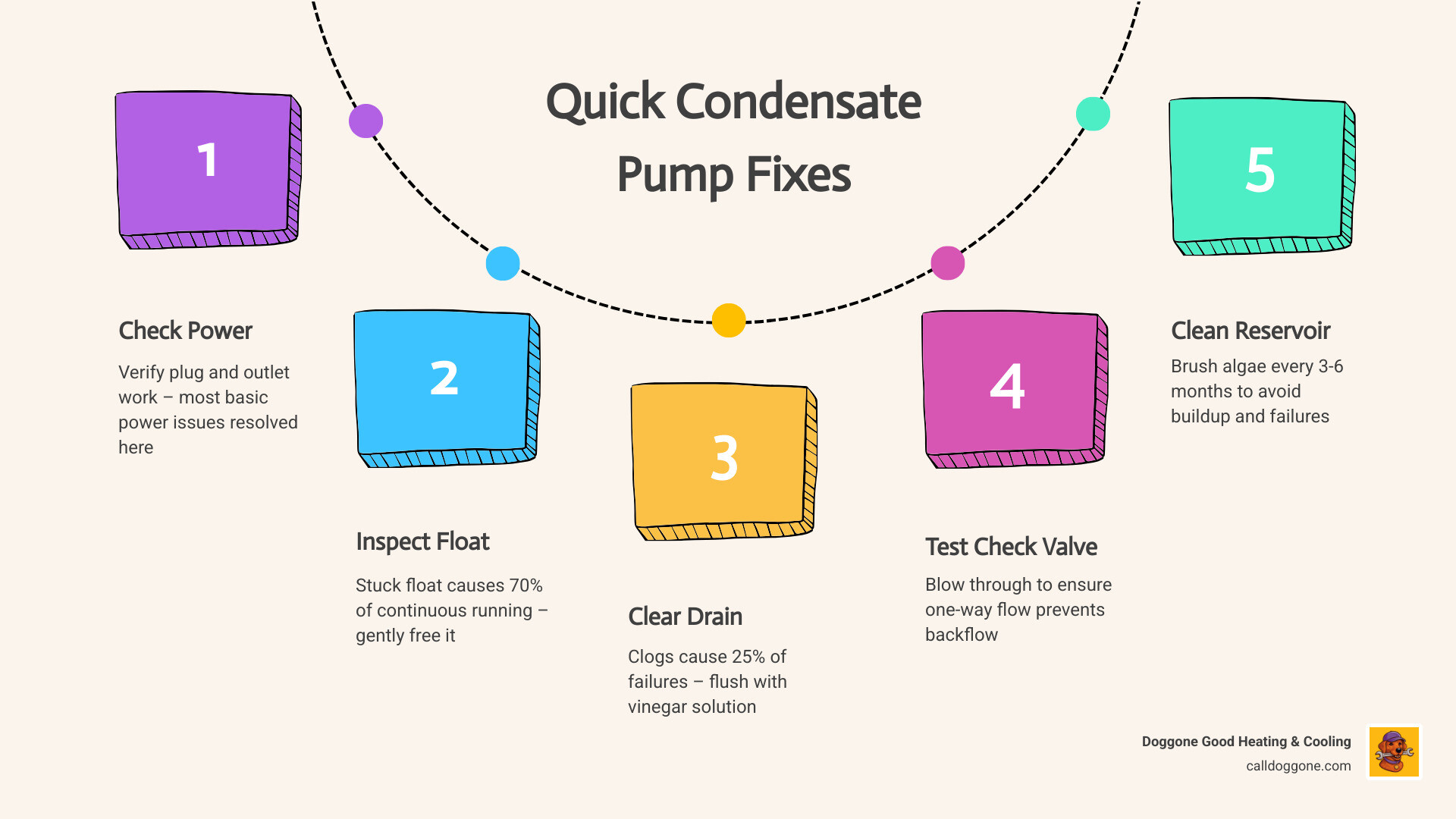
Here’s a quick overview of what to check and do:
- Check the power — Make sure the pump is plugged in and the outlet is working
- Inspect the float switch — A stuck float switch causes roughly 70% of continuous-running pump issues
- Clear the drain line — Clogs account for about 25% of pump failures and can often be flushed with vinegar
- Test the check valve — Blow through it to confirm it only allows one-way airflow
- Clean the reservoir — Use a soft brush and mild solution every 3–6 months to prevent algae buildup
- Replace if needed — If the motor hums but doesn’t pump water, or the pump is over 7–10 years old, replacement is often the smarter call
- Call a pro — Electrical faults, motor burnout, or repeated failures after DIY fixes are signs to bring in a licensed HVAC technician
The good news? About 90% of condensate pump issues are caused by preventable problems like clogs and minor electrical failures — and regular maintenance prevents roughly 85% of failures altogether. Most DIY fixes take under an hour and cost little to nothing in supplies.
That said, Baton Rouge’s heat and humidity push HVAC systems harder than most, meaning condensate pumps here deal with higher-than-average moisture loads year-round. Catching problems early is especially important in this region.
Keep reading for a full step-by-step repair and maintenance guide — or if you’d rather have a professional handle it, Doggone Good Heating & Cooling is ready to help.
Identifying the Need for Condensate Pump Repair
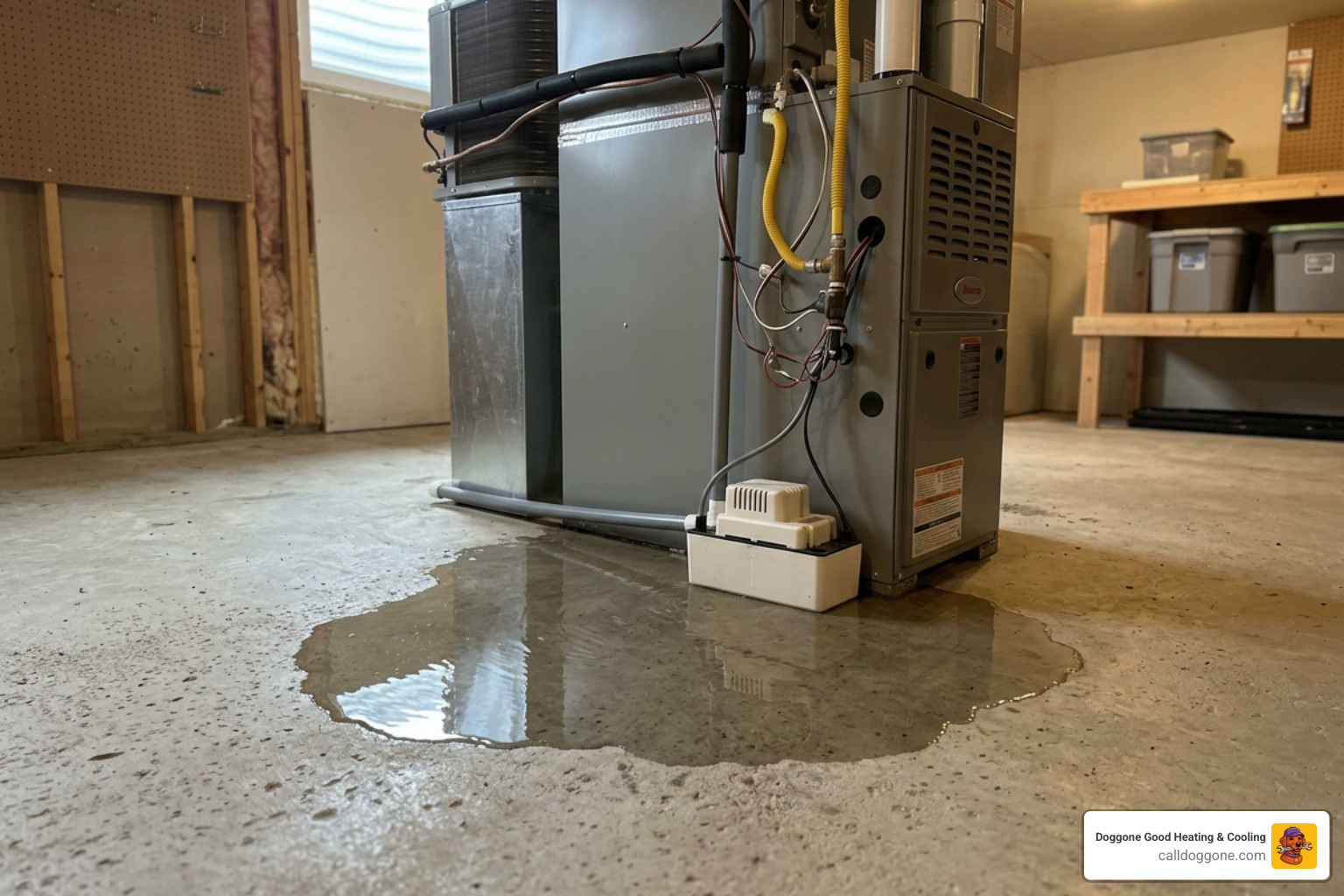
In the middle of a sweltering July in Prairieville or Zachary, your air conditioner works overtime to pull moisture out of the air. This moisture (condensate) drips into a pan and, if your home isn’t set up for a gravity drain, it flows into a small plastic box known as the condensate pump. When that pump fails, you’ll know it—usually by the puddle forming on your floor.
A failed pump isn’t just a mess; it’s a safety risk. Most modern systems are equipped with a safety float switch. When the pump reservoir overflows, this switch triggers a hvac repair emergency by shutting down your entire AC or furnace to prevent further water damage. If your thermostat is blank or the system won’t kick on, the pump is one of the first places we look during hvac services residential calls.
Beyond the obvious water pooling, keep an eye out for musty odors. Stagnant water in a dirty pump reservoir is a breeding ground for algae and mold, which can eventually impact your indoor air quality. In high-efficiency furnaces, this pump is also responsible for handling acidic condensate, making timely condensate pump repair essential to prevent the internal components of your furnace from rusting.
Common Signs of Failure
How do you know if your pump is on its last legs? Listen for a humming motor that doesn’t seem to be moving any water. This often indicates a seized impeller or a motor that has burnt out from overwork. Conversely, a pump that is running continuously is a major red flag—usually, this means the float is stuck in the “up” position or the drain line is so clogged that the water has nowhere to go.
If you see an overflowing reservoir despite hearing the motor run, you likely have a blockage. Ignoring these signs can lead to mold growth that spreads through your utility area. For our hvac services light commercial clients in Baton Rouge, a failed pump can even lead to ceiling damage if the unit is located in a crawlspace or attic.
Troubleshooting and Maintenance Guide
Before you assume you need a brand-new unit, a little DIY troubleshooting can often save the day. Start with the basics: check the power supply. It sounds simple, but sometimes the vibration of the HVAC system can wiggle a plug loose, or a tripped circuit breaker might be the only thing standing between you and a cool home.
If the power is fine, the next step is a thorough reservoir cleaning. Over time, dust and HVAC “sludge” (a mix of algae and debris) settle in the bottom of the tank. This muck can weigh down the float or clog the intake. Regular cleaning is a core part of condensate drain cleaning pump repair. We recommend using a vinegar solution to break up algae, and many homeowners find success using algae tablets during the humid summer months to keep the lines clear.
By staying on top of hvac services, you can ensure the check valve—that little piece that prevents water from flowing back into the pump once it’s been pushed out—is working correctly. If this valve fails, the pump will cycle too frequently, leading to premature motor wear.
DIY Steps for Condensate Pump Repair
If you’re ready to tackle a condensate pump repair yourself, follow these steps:
- Safety First: Always shut off the power to both the pump and your HVAC system before touching any components.
- Flush the Reservoir: Carefully remove the motor top from the tank. Dump out any standing water and scrub the reservoir with a soft brush and warm, soapy water.
- Test the Float: Gently lift the plastic float. It should move freely up and down. If it sticks, clean the pivot point. If it’s cracked or waterlogged, it’s time for a replacement.
- Inspect the Motor: While the power is off, check if the motor fan or impeller can spin freely by hand. If it feels gritty or stuck, debris might be lodged inside.
- Check the Wiring: Look for any frayed wires or loose connections. If you’re unsure about electrical work, this is where additional services from a pro become necessary.
Clearing Clogs During Condensate Pump Repair
Clogs are the most common reason for a pump to run nonstop. If the discharge line (the PVC tubing leading outside) is blocked, the pump will struggle to empty the tank.
To clear a clog:
- Disconnect the Tubing: Unplug the PVC or vinyl tubing from the pump’s discharge port.
- Use Suction or Pressure: A wet/dry vac is a great tool here. Place the vacuum hose over the end of the drain line outside your home to suck out any algae “snakes” or blockages.
- Flush with Vinegar: Once clear, pour a 50/50 mix of water and white vinegar through the line to kill any remaining mold or bacteria.
- Verify Backflow Prevention: Ensure your check valve is clear of debris so water doesn’t drain back into the reservoir once the pump stops.
When to Call for Professional HVAC Service
While many pump issues are DIY-friendly, some situations require a licensed expert. If you notice electrical faults—like a burning smell or a pump that keeps tripping the breaker—stop immediately. These are signs of a short circuit or motor burnout.
Condensate pumps typically have a 7–10 year lifespan. If your pump is approaching a decade of service and starts failing frequently, constant repairs are often less cost-effective than a full replacement. During your regular hvac maintenance, we can check the “lift” and flow rate of your pump to ensure it’s still sized correctly for your system.
If you find yourself in an hvac emergency where the system has shut down and you can’t get the water to drain, it’s time to call in the pros.
| Repair Indicator | Replacement Indicator |
|---|---|
| Stuck float switch | Motor hums but doesn’t spin |
| Algae or dirt in reservoir | Cracked or leaking plastic housing |
| Clogged discharge line | Pump is over 10 years old |
| Loose power cord | Repeated electrical breaker trips |
| Dirty check valve | Cost of parts exceeds 50% of a new unit |
Frequently Asked Questions about Condensate Pumps
What causes a condensate pump to run continuously?
A stuck float switch is the cause in about 70% of cases. When the float gets stuck in the “up” position due to algae or debris, the motor thinks the tank is full and never shuts off. A clogged drain line (25% of cases) is the other major culprit; the pump runs but can’t actually move the water out.
How often should I clean my HVAC condensate pump?
In Baton Rouge, we recommend a visual inspection every 3 months and a deep cleaning every 6 months. Because of our high humidity, algae grows much faster here than in drier climates. Adding a few drops of bleach or a vinegar solution to the reservoir monthly can help prevent clogs between deep cleans.
Can a faulty pump cause my air conditioner to stop working?
Yes! Most pumps are wired to a safety overflow switch. If the pump fails and the water level gets too high, the switch breaks the “R” wire circuit to your thermostat, shutting down the AC to prevent your home from flooding. If your AC is dead and the pump reservoir is full of water, you’ve found your problem.
Conclusion
A little attention goes a long way when it comes to condensate pump repair and maintenance. By keeping your reservoir clean and your drain lines clear, you can avoid the headache of a flooded utility room or a sudden AC shutdown in the middle of a Louisiana heatwave.
At Doggone Good Heating & Cooling, we’re proud to provide honest, reliable service to our neighbors in Baton Rouge, Gonzales, and Denham Springs. Whether you need a quick fix or a full hvac services replacement, our team is here to keep your home comfortable and dry. Don’t let a small pump cause a big problem—give us a call today!
About the Author
Doggone Good Heating and Cooling
Doggone Good Heating and Cooling — your local HVAC experts in Baton Rouge, LA.
Need HVAC Service?
Get a free estimate or schedule your service today. Our team is ready to help.
Recent Posts


Related Articles
Ready to Get Started?
Prefer to Call?
Talk with a local technician and get clear next steps for your home.
Call Now(225) 230-9784