Ultimate Guide to Ductwork Inspection
Doggone Good Heating and Cooling


Schedule your ductwork inspection today! Detect leaks, boost efficiency & IAQ in humid Baton Rouge homes. Expert tips & services.
What Is a Ductwork Inspection — and Do You Need One in Baton Rouge?
A ductwork inspection is a professional assessment of the air distribution system in your home — checking for leaks, blockages, damage, mold, and other issues that quietly drain your comfort and drive up your energy bills. If you live in Baton Rouge, LA, your ducts are working overtime against heat, humidity, and everything in between.
Here’s what you need to know at a glance:
- What it is: A thorough evaluation of your home’s duct system — joints, seals, insulation, airflow, and structural integrity
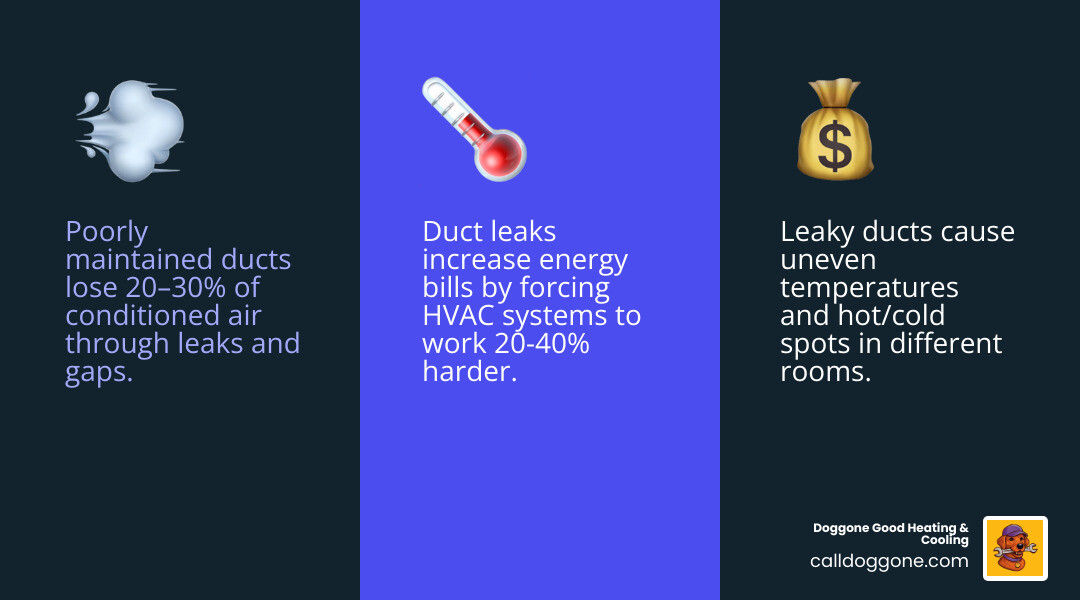
- Why it matters: Homes with poorly maintained ducts can lose 20–30% of heated or cooled air through leaks and gaps
- How often: Every two years for most homes; annually if your system is older or you have allergies, pets, or recent renovations
- Who does it: A licensed HVAC technician using tools like cameras, pressure testers, and airflow meters
- What happens after: You get a report with findings — repairs, sealing, cleaning, or replacement recommendations based on what’s found
For Baton Rouge homeowners, this isn’t just routine maintenance. Louisiana’s high humidity, long cooling seasons, and sudden cold snaps put serious stress on ductwork year-round. A small crack or poorly sealed joint doesn’t stay small for long in this climate — moisture gets in, mold follows, and your HVAC system starts working twice as hard to keep up.
The good news: catching duct problems early is almost always cheaper and simpler than dealing with the fallout later. One small crack left unrepaired can eventually mean full duct replacement — or worse, a premature HVAC system failure.
This guide walks you through everything — warning signs, what a professional inspection involves, what tools are used, and how to decide between repair, sealing, or replacement after the inspection is done.
Why a Professional Ductwork Inspection is Essential for Your Baton Rouge Home
Think of your ductwork as the circulatory system of your home. Just as your heart needs clear arteries to pump blood efficiently, your HVAC unit needs clear, sealed Ductwork to distribute conditioned air. In the humid environment of April 2026, keeping this “circulatory system” healthy is vital for several reasons.
Preventing Energy Loss
The average home loses approximately 20 to 40 percent of the air that circulates through leaking ducts. When your ducts have gaps or holes, you are paying to cool your attic or crawl space rather than your living room. A professional ductwork inspection identifies these “invisible” leaks, ensuring your conditioned air actually reaches its destination.
Extending System Lifespan
When air escapes through leaks, your HVAC system has to run longer and work harder to maintain the temperature set on your thermostat. This constant strain leads to premature wear and tear on sensitive components. By ensuring your ducts are airtight, you reduce the workload on your unit, potentially adding years to its lifespan.
Improving Indoor Air Quality and Humidity Control
In Baton Rouge, leaky ducts don’t just let cold air out; they let humid, unconditioned air in. This can lead to a surge in indoor humidity levels, making your home feel “sticky” even when the AC is running. Furthermore, leaks in unconditioned spaces can pull in dust, insulation fibers, and allergens. Proper Ductwork Insulation and sealing are your first line of defense against poor indoor air quality.
Common Signs You Need a Ductwork Inspection Immediately
Most of your ductwork is hidden behind walls or in the ceiling, making it easy to ignore. However, your home will often “tell” you when something is wrong. If you notice any of the following, it’s time to call in the pros.
Uneven Temperatures and “Hot Spots”
Do you have one bedroom that feels like a sauna while the kitchen is freezing? Uneven temperature distribution is a classic sign of restricted airflow or disconnected Air Ducts. A blockage or a fallen duct section can prevent air from reaching specific zones of your home.
Excessive Dust and Musty Odors
If you find yourself dusting your furniture every two days, your ducts might be pulling in debris from your attic through cracks. Similarly, if a “musty” or “earthy” smell greets you every time the fan kicks on, it could indicate mold growth or pest activity within the system.
Strange Noises and High Bills
While some expansion and contraction noises are normal, loud rattling, whistling, or banging sounds often signal loose connections or structural damage. When combined with a sudden, unexplained spike in your utility bills, these symptoms usually point to a need for professional Duct Sealing.
Identifying Air Leaks and Blockages During a Ductwork Inspection
During a thorough check, we look for more than just holes. We look for:
- Weak Airflow: Even if the air is cold, if it’s barely “puffing” out of the register, there’s an obstruction or a major leak.
- Visual Damage: Kinked flexible ducts or crushed sections (often from someone stepping on them in the attic).
- Disconnected Joints: Sections that have simply slipped apart over time.
- Pest Evidence: Rodent droppings or nesting materials, which can create health hazards and physical blockages.
Addressing these issues through Ductwork Repair & Sealing can restore your home’s comfort almost instantly.
How Environmental Factors in Louisiana Impact Your Ducts
Our local climate is particularly harsh on duct systems. High humidity leads to condensation on the outside of metal ducts. If the insulation is thin or damaged, this moisture can cause rust or promote mold growth. Additionally, many homes in our area have oversized AC units; if these units cycle too quickly, they fail to dehumidify the air properly, leaving your ducts damp and prone to deterioration. Professional Duct Insulation is essential here to prevent the “sweating” that leads to these long-term issues.
What to Expect During a Professional Ductwork Inspection Process
When we arrive for a ductwork inspection, we don’t just glance into your vents with a flashlight. A professional assessment is a data-driven process designed to find what the naked eye misses.
Step 1: Visual Assessment
We begin by inspecting all accessible ductwork in attics, crawl spaces, or basements. We look for obvious signs of trouble like sagging lines, disconnected joints, and damp insulation.
Step 2: Internal Camera Inspection
Using high-definition borescopes or robotic cameras, we can see deep inside your duct system. This allows us to find internal blockages, mold colonies, or pest nests without tearing into your walls.
Step 3: Pressure and Leakage Testing
This is where the science comes in. By using specialized fans and pressure gauges, we can measure exactly how much air is escaping your system. We look at “static pressure” to see if your HVAC fan is struggling against resistance. This helps us provide Ductwork Inspections & Airflow Testing reports that quantify your system’s efficiency.
Advanced Tools Used for a Thorough Ductwork Inspection
To get the most accurate results, we utilize a variety of high-tech tools:
- Smoke Pencils: These release a small, harmless stream of “smoke” that wavers or gets sucked in when held near a leak, making air movement visible.
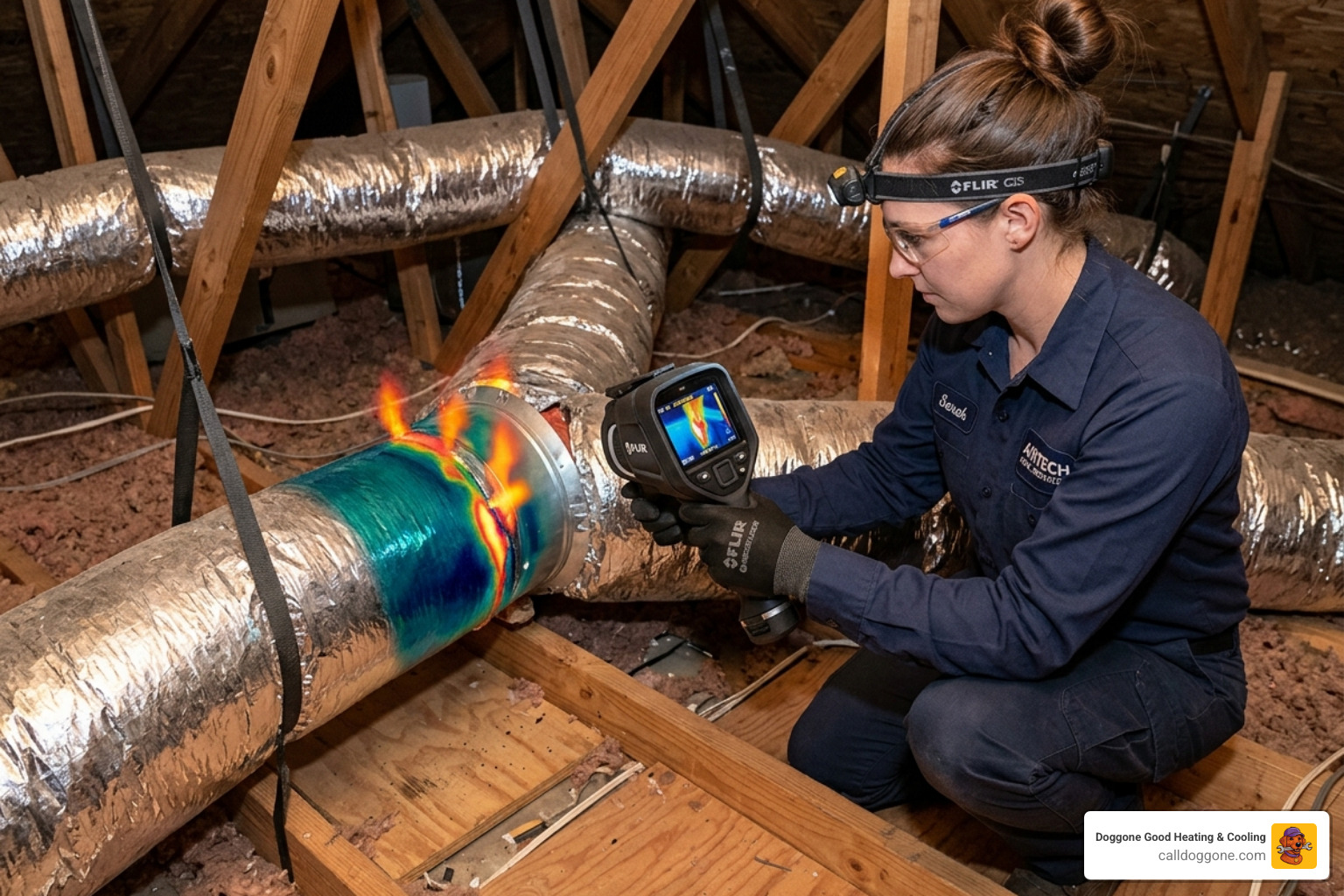
- Thermal Imaging: Infrared cameras show temperature differences, highlighting where cold air is leaking into a hot attic.
- Moisture Meters: These detect hidden dampness that could lead to mold.
- Particle Counters: These measure the concentration of dust and allergens in your air, which can be part of a broader Air Duct Cleaning & Sanitizing evaluation.
Addressing Issues Found: Repair, Sealing, or Replacement?
Once the inspection is complete, we have to decide on the best course of action. Not every problem requires a full overhaul.
| Issue Found | Recommended Solution | Why? |
|---|---|---|
| Minor leaks at joints | Duct Sealing | Mastic sealant or UL-rated foil tape provides a permanent, airtight seal for small gaps. |
| Crushed or fallen sections | Ductwork Repair | Replacing specific damaged sections restores airflow without the cost of a full system. |
| Excessive mold or 20+ year age | Ductwork Replacement | Old ducts (15-25 years) lose structural integrity; replacement is often more cost-effective than constant repairs. |
| Thin or missing wrap | Insulation Upgrade | Prevents condensation and energy loss in unconditioned spaces. |
For older homes in Prairieville or Zachary, a full Ductwork Installation might be the best way to modernize your HVAC efficiency. While ductwork typically has a lifespan of 15 to 25 years, the extreme Louisiana heat can accelerate the breakdown of flexible duct materials.
Frequently Asked Questions about Ductwork Maintenance
How often should I schedule a professional ductwork inspection?
We recommend a professional ductwork inspection every two years. However, you should consider more frequent checks if you have pets that shed, family members with severe allergies, or if you have recently completed a major home renovation, as construction dust can quickly clog your system.
Can homeowners perform a basic DIY duct inspection?
Yes, you can do a “quick check” yourself! Turn your HVAC system on and walk through your home. Feel for weak airflow at the registers and listen for whistling sounds. You can also pop off your vent covers and use a flashlight to look for heavy dust buildup or standing water. However, keep in mind that a DIY check can’t see behind walls or measure pressure loss like a professional can.
How do leaky ducts affect my HVAC system’s lifespan?
Leaky ducts cause your system to “short cycle” or run for excessively long periods. This puts immense strain on the compressor and blower motor. Over time, this leads to frequent repairs and can cause your entire system to fail years earlier than it should. Keeping your ducts clean and sealed can improve your HVAC system’s function by up to 40%.
Conclusion
Your home’s comfort depends on more than just a high-quality AC unit; it depends on the health of your air distribution system. A professional ductwork inspection is the most effective way to ensure you aren’t wasting money or breathing in contaminants. At Doggone Good Heating & Cooling, we bring local Baton Rouge expertise and a commitment to honest, reliable service to every job.
Whether you’re in Denham Springs, Gonzales, or right here in the heart of Baton Rouge, we’re ready to help you optimize your home’s efficiency. For total peace of mind, consider our Pack Perks Membership, which includes preventative maintenance to keep your system running “paws-itively” perfect year-round.
Don’t let leaky ducts steal your comfort. Contact us today for professional Ductwork Inspections & Airflow Testing and experience the difference that expert care makes.
About the Author
Doggone Good Heating and Cooling
Doggone Good Heating and Cooling — your local HVAC experts in Baton Rouge, LA.
Need HVAC Service?
Get a free estimate or schedule your service today. Our team is ready to help.
Recent Posts


Related Articles
Ready to Get Started?
Prefer to Call?
Talk with a local technician and get clear next steps for your home.
Call Now(225) 230-9784