AC Troubleshooting: When Your Unit Can’t Keep Up With the Humidity
Doggone Good Heating and Cooling


Discover why is my ac running but not cooling in humid Baton Rouge. Troubleshoot thermostat errors, dirty filters, leaks & more—DIY tips + pro help!
When Your AC Runs All Day But Your Baton Rouge Home Won’t Cool Down
Why is my ac running but not cooling is one of the most common — and most frustrating — problems homeowners face during a Baton Rouge summer. The system kicks on, air moves through the vents, the unit hums along outside, and yet an hour later the house is still hot and sticky. In a city where summer humidity regularly makes 95°F feel like 110°F, a running-but-not-cooling AC isn’t just uncomfortable — it’s a real problem.
Here are the most common reasons your AC is running but not cooling:
- Thermostat set incorrectly — fan set to “ON” instead of “AUTO,” or mode set to “HEAT” instead of “COOL”
- Dirty or clogged air filter — blocks airflow to the evaporator coil, causing the system to run without cooling
- Frozen evaporator coils — ice buildup stops heat transfer even while the system appears to run normally
- Low refrigerant from a leak — refrigerant is a closed-loop system; low levels always mean a leak
- Dirty or blocked outdoor condenser unit — debris, cottonwood, and grime choke heat release outdoors
- Failed capacitor — allows the fan to spin but prevents the compressor from engaging
- Leaky ductwork — the U.S. Department of Energy estimates homes lose 20 to 30 percent of conditioned air through duct leaks
- Undersized or aging system — AC units over 10 to 15 years old struggle to keep up with peak summer heat loads
- Heat pump stuck in heating mode — a stuck reversing valve sends warm air instead of cool
Most of these issues have a clear cause and a clear fix — but a few require a licensed technician to handle safely and legally, especially anything involving refrigerant.
Why Is My AC Running But Not Cooling My Baton Rouge Home?
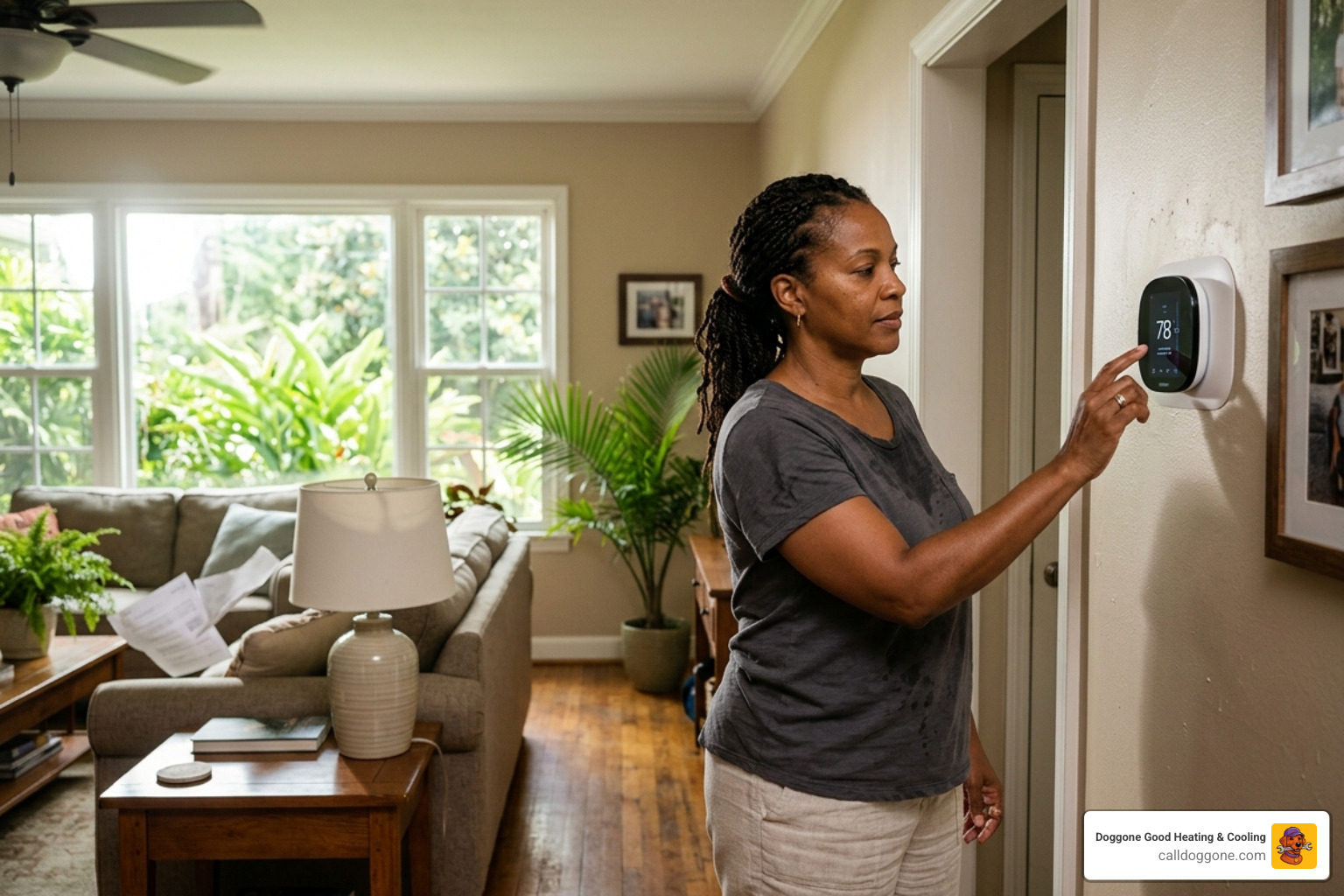
When we see the calendar flip to April 2026, we know the “Big Sweat” is just around the corner in South Louisiana. If your system is humming but the temperature on the wall isn’t budging, the first thing we recommend is a quick logic check. Sometimes the simplest oversight can make it seem like your system has failed when it’s actually just following the wrong orders.
Start by looking at your thermostat. It sounds basic, but “mode” errors are incredibly common. Ensure the system is set to “COOL” and the temperature is at least five degrees below the current room temperature. Another silent culprit is the fan setting. If your fan is set to “ON” instead of “AUTO,” the blower will run 24/7, even when the outdoor compressor isn’t cooling. This moves air, but once the cooling cycle ends, it just blows unconditioned, humid air back into your rooms.
For a deeper dive into these initial checks, you can read more on Why Is My AC Running But Not Cooling? Explained.
Why is my AC running but not cooling due to thermostat errors?
Beyond simple settings, the hardware itself can fail. In our experience serving areas from Prairieville to Denham Springs, we find that dead batteries are a leading cause of “unresponsive” systems. If your display is blank or flickering, start with fresh AA or AAA batteries.
Placement also matters more than you might think. If your thermostat is located in a drafty hallway, near a sunny window, or right above a heat-producing lamp, it will get a “false” reading. It might think the house is 80°F when it’s actually 72°F, or vice versa, leading to a system that runs constantly without ever reaching the comfort level you desire. For more on these common glitches, check out the Top Reasons Your AC Is Not Cooling Properly.
Why is my AC running but not cooling because of airflow restrictions?
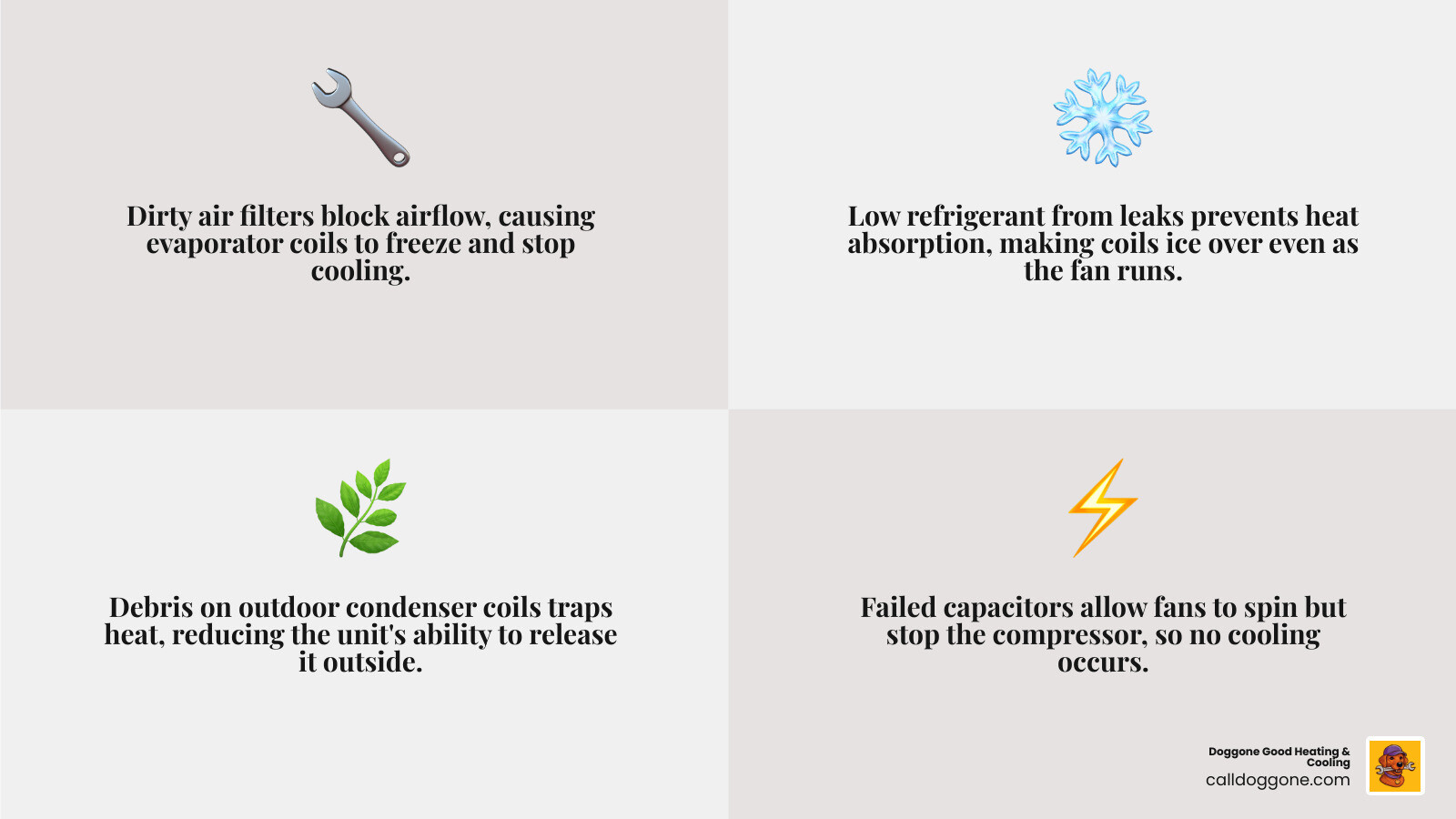
Airflow is the lifeblood of your HVAC system. If air can’t get in, cold air can’t get out. The #1 cause of service calls in Baton Rouge is a dirty air filter. A filter clogged with dust, pet dander, and pollen acts like a gray felt blanket, suffocating your system.
We recommend checking your filter every 30 days during the peak of summer. Using a filter with a MERV rating that is too high (like MERV 13+) can actually restrict airflow too much for some residential blowers, leading to the same problems as a dirty filter. Stick to MERV 8 or 11 unless a professional advises otherwise. Also, take a walk around your home. Ensure that furniture, rugs, or curtains aren’t blocking your return or supply registers. For a full list of maintenance steps, see our AC Maintenance Checklist to Lower Energy Bills.
Mechanical and Electrical Failures in the Outdoor Unit
While the indoor unit moves the air, the outdoor condenser unit is responsible for dumping the heat from your home into the outside air. If this unit isn’t working perfectly, your AC will blow air that is room temperature or only slightly cool.
Common outdoor issues include:
- Dirty Condenser Coils: In places like Gonzales and Zachary, pollen and cottonwood debris can coat the outdoor coils. This prevents the refrigerant from releasing heat. A gentle rinse with a garden hose (after turning off the power) can often help, but deep grime requires a professional HVAC Repair visit.
- Failed Capacitor: This is a small cylindrical component that provides the “jolt” of electricity needed to start the compressor and fan. If you hear a humming sound from the unit but the fan isn’t spinning, a bad capacitor is the likely suspect.
- Contactor Issues: Sometimes, local pests like ants are attracted to the electrical fields in your outdoor unit. They can get stuck in the contactor, preventing the electrical connection and stopping the compressor from starting.
Refrigerant Leaks and Frozen Coils: The Silent Cooling Killers
If you see ice on the copper lines leading to your unit—even when it’s 95°F outside—you have a major problem. Frozen evaporator coils occur when the temperature of the coil drops below freezing, causing the humidity in the air to turn to ice. This happens for two main reasons: restricted airflow (dirty filters) or low refrigerant.
It is a common myth that refrigerant “wears out” or needs “topping off” like gas in a car. Refrigerant circulates in a sealed loop. If it’s low, you have a leak. Continuing to run a system that is low on refrigerant can permanently damage the compressor, which is the most expensive part of your system. Signs of a leak include a faint hissing noise or bubbling sound near the lines. Because refrigerant is a hazardous chemical, EPA regulations require a certified technician for Residential Air Conditioning Repair.
System Age, Sizing, and Ductwork Integrity
Sometimes, the issue isn’t a broken part, but the system’s design or age. Most AC units have a lifespan of 10 to 15 years. As they age, they lose efficiency and struggle to keep up with the extreme humidity of the Baton Rouge area. If your unit is over a decade old and runs all day without reaching the setpoint, it may simply be reaching the end of its useful life. You can explore your options in our guide on Should You Repair or Replace an Old Air Conditioner in Baton Rouge?.
Sizing is another factor. An undersized unit will work fine in May but fail to keep up in July. Conversely, an oversized unit will “short cycle,” turning on and off so quickly that it never has a chance to remove the humidity from the air, leaving you feeling cool but “clammy.”
Finally, don’t ignore the ducts. The Energy Department estimates that typical duct systems lose 20 to 30 percent of conditioned air through leaks and poor connections. If you’re paying to cool your attic instead of your living room, your AC will run constantly.
DIY Maintenance and Knowing When to Call a Technician
Before you pick up the phone, there are a few things you can safely check yourself. However, knowing your limits can save you from a much larger repair bill.
| Task | DIY or Professional? | What to Do |
|---|---|---|
| Filter Change | DIY | Replace every 1-3 months. |
| Thermostat Settings | DIY | Ensure it’s on “Cool” and “Auto.” |
| Circuit Breaker | DIY | Reset once if tripped; call if it trips again. |
| Cleaning Debris | DIY | Clear leaves/grass 2 feet around outdoor unit. |
| Frozen Coils | Both | Turn off AC to thaw; call pro to find the cause. |
| Refrigerant Leak | Professional | Requires EPA certification to handle. |
| Capacitor/Electrical | Professional | High voltage risk; requires testing tools. |
| Strange Noises | Professional | Hissing, clanging, or buzzing needs a pro. |
If you’ve checked your filter and thermostat and the air is still warm, it’s time to look for the Signs Your HVAC System Needs Professional Service.
Frequently Asked Questions
Should I turn off my AC if it is running but not cooling?
Yes. If your AC is running but the air coming out of the vents is warm, or if you see ice on the lines, turn it off immediately. Running a malfunctioning system puts immense strain on the compressor. If the coils are frozen, the system needs to be off to allow them to thaw before a technician can even begin a proper diagnosis.
Why does my AC cool fine in the morning but struggle in the afternoon?
This is often a sign of a “capacity” issue or a dirty condenser. In the morning, the heat load on your house is low. As the sun beats down in the afternoon, an undersized system or one with dirty coils can no longer keep up with the rising temperature. It could also indicate that your home’s insulation or ductwork is allowing too much heat gain during peak hours.
Can a dirty air filter cause my evaporator coils to freeze?
Absolutely. This is actually the most common cause of frozen coils. When the filter is clogged, not enough warm air passes over the cold evaporator coil. Without that heat to absorb, the coil temperature drops below freezing, and the condensation on the coil turns into ice. This ice then acts as an insulator, preventing any further cooling from happening.
Conclusion
Living in Baton Rouge means our air conditioners are some of the hardest-working appliances we own. When you find yourself asking “why is my ac running but not cooling,” remember that quick action can prevent a small fix from turning into a total system replacement. Whether it’s a simple filter swap or a complex refrigerant leak, addressing the problem early is the best way to keep your home comfortable and your energy bills manageable.
At Doggone Good Heating & Cooling, we pride ourselves on being the honest, reliable choice for our neighbors in Prairieville, Denham Springs, and beyond. From 24/7 emergency response to our affordable Pack Perks Membership, we’re here to ensure your home stays a sanctuary from the Louisiana heat. If your system is struggling to keep up with the humidity, don’t wait for it to fail completely. Contact us today for expert Residential Air Conditioning Repair in Baton Rouge.
About the Author
Doggone Good Heating and Cooling
Doggone Good Heating and Cooling — your local HVAC experts in Baton Rouge, LA.
Need HVAC Service?
Get a free estimate or schedule your service today. Our team is ready to help.
Recent Posts


Related Articles
Ready to Get Started?
Prefer to Call?
Talk with a local technician and get clear next steps for your home.
Call Now(225) 230-9784