Leaky Ducts are Energy Vampires and Here is How to Stop Them
Doggone Good Heating and Cooling


Discover how properly maintained ducts improve HVAC efficiency. Stop energy vampires in Baton Rouge—seal leaks, cut bills 30%!
Your Ducts Are Costing You Money Every Single Day
How properly maintained ducts improve HVAC efficiency is something every Baton Rouge homeowner should understand — because right now, your duct system may be quietly draining 20 to 30 percent of every dollar you spend on heating and cooling straight into your attic or crawlspace.
Here is a quick answer:
Properly maintained ducts improve HVAC efficiency by:
- Sealing air leaks — stopping conditioned air from escaping before it reaches your rooms
- Improving airflow — reducing static pressure and friction so your blower works less
- Reducing system strain — preventing your equipment from running longer cycles to compensate for losses
- Maintaining air temperature — keeping cool or heated air at the right temperature as it travels through ducts
- Improving indoor air quality — removing contaminants that build up inside ducts and recirculate through your home
In Baton Rouge, where your AC runs hard for most of the year against relentless heat and humidity, leaky or dirty ducts do not just waste energy — they shorten the life of your entire HVAC system. According to the U.S. Department of Energy, a typical duct system loses 25 to 40 percent of the heating or cooling energy produced by your furnace, heat pump, or air conditioner. That is not a minor inefficiency. That is a major drain on your comfort and your wallet.
The good news is that most duct problems are fixable — and the savings from fixing them can be significant.
How Properly Maintained Ducts Improve HVAC Efficiency
When we talk about HVAC performance in May 2026, many homeowners focus on the SEER2 rating of their outdoor unit. While that is important, the Air Ducts are the “highways” that deliver that expensive, conditioned air to your living room. If those highways have potholes and cracks, it doesn’t matter how fast the car is—the delivery will be late and inefficient.
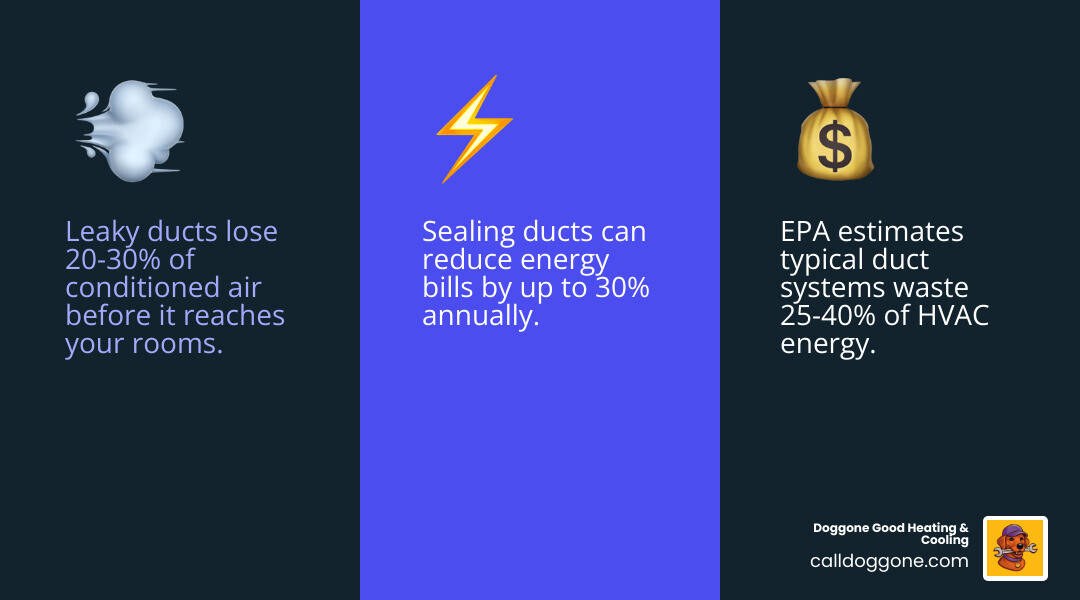
The EPA estimates that in a typical house, about 20 to 30 percent of the air that moves through the duct system is lost due to leaks, holes, and poorly connected ducts. This results in higher utility bills and difficulty keeping the house comfortable, regardless of the thermostat setting. By addressing these leaks, you ensure that the air you paid to cool actually reaches its destination. Properly sealed ducts can increase overall system efficiency by up to 20%, which is like getting a massive discount on your monthly energy usage just by fixing what you already own.
How properly maintained ducts improve HVAC efficiency by reducing system strain
Think of your HVAC system like a long-distance runner. If the runner has to breathe through a straw, their heart has to work much harder to move oxygen. In your home, the blower motor is the heart of the system. When ducts are leaky or clogged with debris, the system has to run for much longer cycles to reach the desired temperature.
This constant “overwork” leads to premature wear and tear. Instead of your unit lasting 15 to 20 years, a system struggling with poor Ductwork might start failing much sooner. By maintaining the ducts, you reduce the number of start-stop cycles and the total run time, which directly extends the equipment’s longevity.
How properly maintained ducts improve HVAC efficiency through better airflow
Airflow is governed by physics—specifically static pressure and friction loss. When dust, pet hair, or construction debris builds up inside your ducts, it reduces the effective diameter of the pipe. This increases friction, making it harder for the air to move.
Professional Ductwork Inspections & Airflow Testing can identify where these “bottlenecks” are occurring. A clean, well-designed duct system maintains balanced pressure. This means the amount of air being pulled out of your rooms (return air) matches the amount of air being pushed in (supply air). When this balance is achieved, your HVAC system operates at its peak engineered performance, using the least amount of electricity possible.
The Anatomy of Efficient Ductwork: Design and Insulation
Efficiency isn’t just about cleanliness; it’s about where the ducts live and how they are built. In our humid Louisiana climate, the location of your ductwork plays a massive role in how much energy is lost to the environment.
| Feature | Ducts in Unconditioned Spaces (Attic/Crawlspace) | Ducts in Conditioned Spaces (Dropped Ceilings/Basements) |
|---|---|---|
| Energy Loss Potential | High (25-40% loss) | Low (Minimal loss) |
| Temperature Impact | Extreme (Attics can reach 150°F) | Stable (Matches home temperature) |
| Maintenance Need | Critical Sealing & High R-Value Insulation | Standard Sealing |
| Efficiency Rating | Lower | Much Higher |
To combat the heat in an attic, Ductwork Insulation is mandatory. Without proper Duct Insulation, the cool air inside the duct absorbs the heat from the attic before it ever reaches your bedroom. This is called conduction loss, and it’s a major reason why some rooms in Baton Rouge homes always feel warmer than others.
Key Elements of Proper Ductwork Design
If you are considering a Ductwork Installation, design is your best friend. A “trunk and branch” system uses a large central duct with smaller branches, while a “radial” configuration sends individual ducts to each room. Both have their merits, but the goal is always the same: the shortest, straightest path possible.
Key design factors include:
- Correct Sizing: Ducts that are too small whistle and restrict air; ducts that are too large reduce air velocity, leaving rooms feeling “stuffy.”
- Return Air Capacity: Many older homes in Prairieville or Denham Springs don’t have enough return vents. If the air can’t get back to the AC unit, the system can’t “breathe.”
- Neutral House Pressure: Proper design ensures that your home isn’t “leaking” air to the outside through windows and doors because of pressure imbalances.
Signs Your Baton Rouge Home is Losing Energy Through Ductwork
How do you know if your ducts are acting like energy vampires? You don’t always need a microscope to find the signs. Some are very obvious if you know where to look.
- Inconsistent Temperatures: If your kitchen is an ice box but your master bedroom is a sauna, your ductwork likely has a delivery problem.
- Excessive Dust: Do you find yourself dusting your furniture every two days? Leaky return ducts can pull in dust and insulation fibers from your attic and blast them into your living space.
- Noisy Ducts: Rattling, whistling, or “booming” sounds often indicate loose connections or undersized ducts struggling to handle the air volume.
- High Energy Bills: If your utility costs are rising but your usage habits haven’t changed, those energy vampires are likely at work in the attic.
- Weak Airflow: If you hold your hand up to a vent and barely feel a breeze, it’s time for Ductwork Inspections & Airflow Testing.
Professional Maintenance: Sealing, Cleaning, and Testing
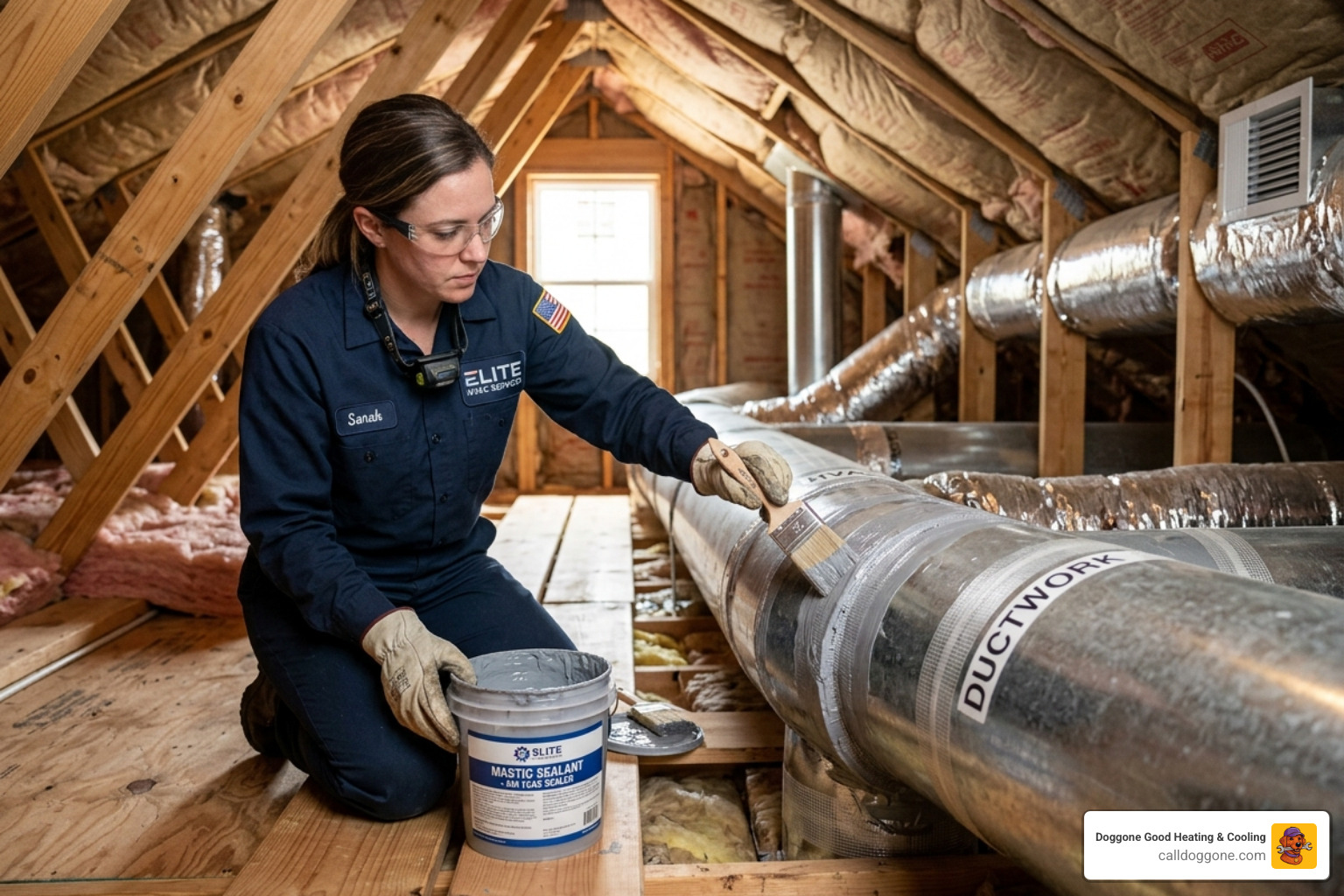
While some homeowners try the DIY route with “duct tape,” we have a secret: duct tape is actually terrible for ducts. It dries out and falls off in the Louisiana heat. Professionals use mastic sealant, a gooey, fiber-reinforced paste that creates a permanent, airtight seal.
Ductwork Repair & Sealing is one of the most cost-effective upgrades you can make. Once the leaks are stopped, Air Duct Cleaning & Sanitizing removes the “pollen and dust reservoirs” that have built up over the years. This doesn’t just improve efficiency; it significantly boosts your Indoor Air Quality (IAQ), which is a lifesaver for allergy sufferers in Zachary and Gonzales.
Frequently Asked Questions about Duct Efficiency
How often should I have my ducts cleaned? Generally, every 3 to 5 years is the sweet spot. However, if you have pets, have recently finished a home renovation, or suffer from severe allergies, you might want to schedule it more frequently.
What is the difference between sealing and cleaning? Cleaning removes the debris inside the ducts to improve airflow and health. Sealing closes the gaps in the duct walls to stop air from escaping. You need both for maximum efficiency.
Can I seal my own ducts? You can seal the visible joints near your air handler, but the most significant leaks are often hidden deep in the attic or behind walls. Professionals use specialized tools like blower doors to find the leaks you can’t see.
What is static pressure testing? It is essentially a “blood pressure” test for your HVAC system. It measures how much resistance the blower motor is fighting against. High static pressure is a silent killer for AC compressors.
Conclusion
At Doggone Good Heating & Cooling, we’ve seen how a little bit of duct maintenance can transform a home’s comfort. Whether you are in Baton Rouge, Prairieville, or Denham Springs, your Ductwork is the unsung hero of your comfort system.
By stopping the “energy vampires” from sucking the life out of your utility budget, you can enjoy a cooler home, lower bills, and the peace of mind that your HVAC system will keep running through the hottest Louisiana summers. Don’t let your conditioned air—and your hard-earned money—escape into the attic. Give your ducts the attention they deserve and start reaping the rewards of a truly efficient home.
About the Author
Doggone Good Heating and Cooling
Doggone Good Heating and Cooling — your local HVAC experts in Baton Rouge, LA.
Need HVAC Service?
Get a free estimate or schedule your service today. Our team is ready to help.
Recent Posts


Related Articles
Ready to Get Started?
Prefer to Call?
Talk with a local technician and get clear next steps for your home.
Call Now(225) 230-9784