The Ultimate Guide to Not Forgetting Your HVAC Filter Replacement
Doggone Good Heating and Cooling


Discover how often should you change your HVAC air filter in Baton Rouge. Learn schedules, pet tips, signs & replacement guide for better IAQ!
Why Knowing How Often Should You Change Your HVAC Air Filter Can Save You Money and Headaches
How often should you change your HVAC air filter depends on your filter type, home size, and lifestyle — but here’s a quick reference to get you started:
| Filter Type | Typical Replacement Interval |
|---|---|
| Fiberglass (1-inch) | Every 30 days or less |
| Pleated (1-inch) | Every 60–90 days |
| Pleated (4-inch) | Every 6 months |
| High-capacity (5-inch) | Up to 12 months |
| HEPA | Every 6–12 months |
Bottom line: Most homeowners should replace their filter every 30 to 90 days. If you have pets, allergies, or run your system heavily — like most folks do during a Baton Rouge summer — lean toward the shorter end of that range.
Here in Baton Rouge, your HVAC system isn’t just a convenience. Between the relentless summer heat, thick humidity, and pollen seasons that seem to never quit, your system runs hard for most of the year. And the one small part that takes the biggest hit? Your air filter.
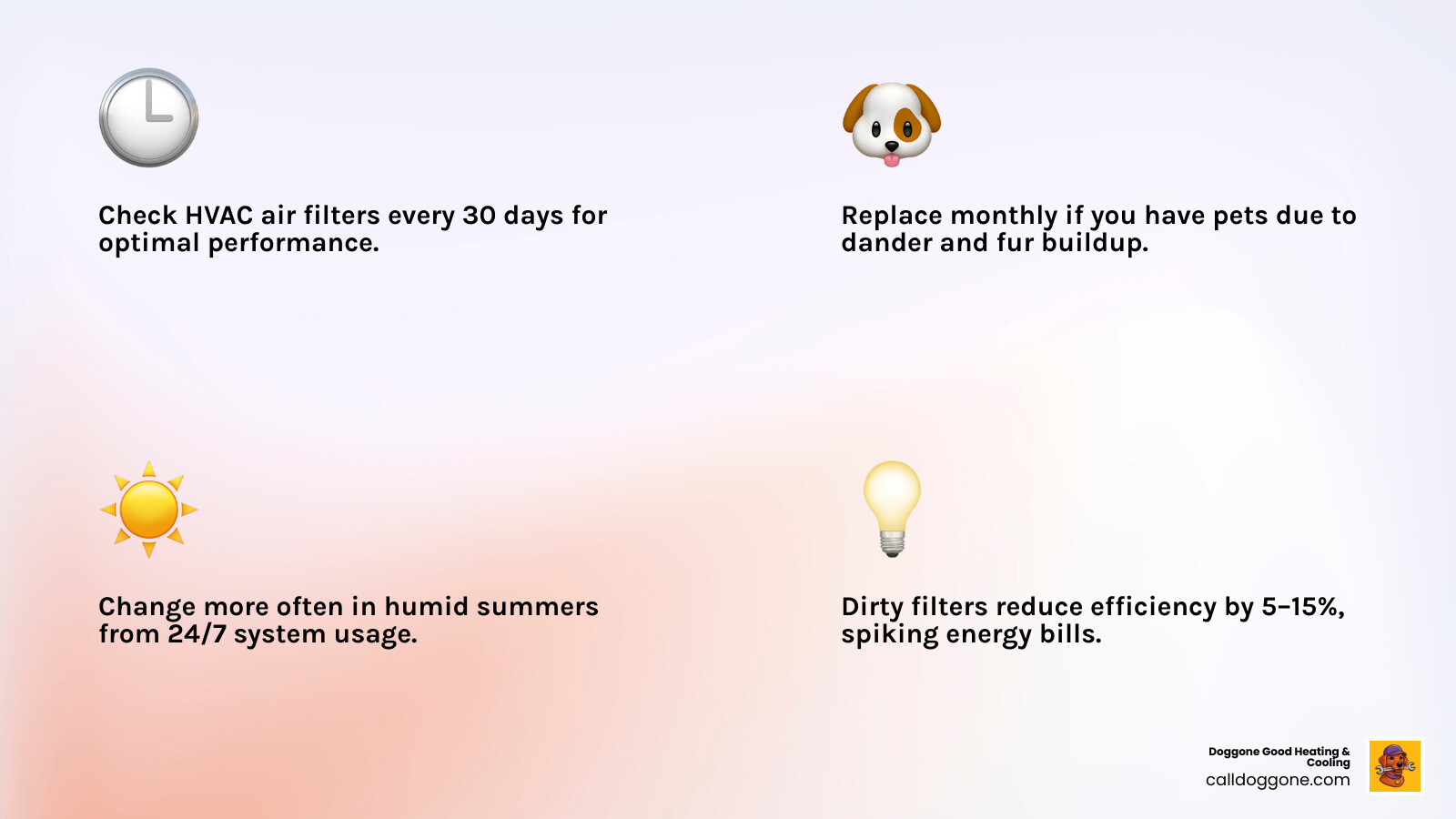
A clogged filter doesn’t just hurt your indoor air quality. It forces your system to work harder, drives up your energy bills, and can shorten the life of your equipment. According to the U.S. Department of Energy, simply replacing a dirty filter can improve your system’s efficiency by 5–15%. That’s a meaningful difference on your monthly utility bill — and it takes about five minutes to fix.
Most homeowners know they’re supposed to change the filter. Few do it on schedule. This guide will show you exactly when to change it, how to check it, and what happens if you let it go too long.
How Often Should You Change Your HVAC Air Filter?
The question of how often should you change your hvac air filter isn’t always answered with a single number. Think of it like the oil in your car; if you’re driving through a dust storm every day, you’re going to need a change much sooner than someone who only drives on Sundays.
As of May 2026, the general consensus among HVAC professionals is that a “check-up” should happen every 30 days. However, the actual replacement depends heavily on the material of the filter itself.
The 30-Day Rule for Fiberglass
If you are using those basic, thin fiberglass filters (the ones you can practically see through), you really shouldn’t push them past 30 days. These are designed to catch large “boulders” of dust to protect the equipment, but they don’t do much for your lungs, and they clog up fast. In a busy home in Prairieville or Gonzales, these can actually become “full” in as little as three weeks.
The 90-Day Standard for Pleated Filters
Most modern homes use 1-inch pleated filters. These have more surface area because of the “folds” in the fabric, allowing them to trap more particles without immediately suffocating your air handler. Under average conditions, these last about 90 days. However, “average” is a rare thing in Louisiana. If it’s the peak of summer, that 90-day window often shrinks to 45 or 60 days.
1-inch vs. 4-inch Thickness
The thickness of your filter is a major factor in its lifespan. A 1-inch filter has a limited amount of “media” (the material that catches the dust). A 4-inch or 5-inch thick media filter has a massive amount of surface area. While a 1-inch filter might need a swap every two months, a 4-inch filter can often last six months, and a 5-inch high-capacity filter can sometimes go a full year.
Just keep in mind that you can’t just shove a 4-inch filter into a 1-inch slot. Your system needs to be specifically designed or modified to hold these thicker filters. If you’re wondering if your system can handle an upgrade, it’s worth asking during your next service visit. For more on local timing, check out How Often Should You Service Your HVAC in Louisiana?
How often should you change your HVAC air filter with pets?
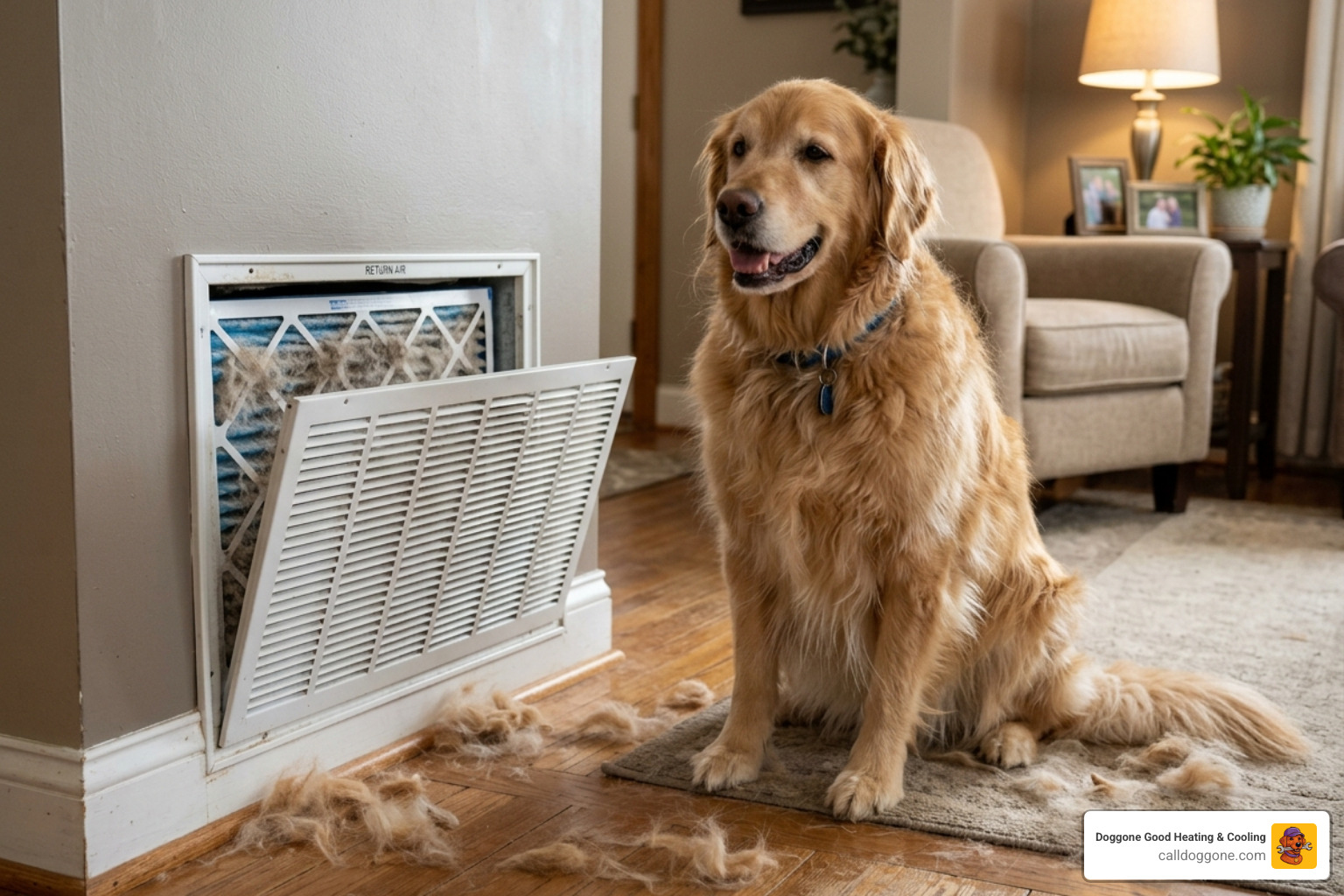
We love our furry friends in Baton Rouge and Denham Springs, but they are absolute “filter-killers.” One dog or cat can add a significant amount of hair and dander to your indoor air. Research suggests that a single pet can reduce a filter’s lifespan by 30 days.
If you have multiple pets, we recommend inspecting your filter every 30 days regardless of what the package says. Pet hair tends to mat across the surface of the filter, creating a “blanket” that blocks airflow much faster than standard household dust. This is a critical part of maintaining your Indoor Air Quality and keeping your home smelling fresh instead of like a wet golden retriever.
How often should you change your HVAC air filter during Baton Rouge summers?
Our summers are legendary, and not always in a good way. When the heat index hits triple digits in July and August, your air conditioner is likely running 18 to 24 hours a day.
More run-time means more air is being pulled through that filter. If your system runs twice as much in the summer as it does in the spring, your filter will get dirty twice as fast. During these peak usage months, we suggest a “monthly swap” policy. It’s the cheapest insurance you can buy for your AC. Regular Air Conditioning Maintenance is vital here, but the filter is the part you can handle yourself to keep things moving.
Key Factors That Influence Your Filter’s Lifespan
Aside from the calendar, several lifestyle factors dictate when it’s time for a fresh filter:
- Home Size: In a smaller home, the HVAC system moves less total air, but it also has a smaller filter. Conversely, large homes in Zachary or Prairieville move huge volumes of air. If your home is large and you have a single return vent, that filter is working overtime.
- Occupancy Levels: A house with five people creates more “human dust” (skin cells, hair, lint) than a house with one person. More feet on the carpet means more kicked-up dust.
- Allergy Sensitivities: If someone in your family suffers from asthma or severe allergies, you shouldn’t wait for the filter to be “clogged.” You want it to be fresh to ensure it’s capturing the maximum amount of pollen and mold spores. High-efficiency Air Filtration is a game-changer for allergy sufferers.
- Recent Construction: If you’ve recently remodeled your kitchen or had work done on your home, your filter is likely full of drywall dust and sawdust. Check it immediately after any home project. If the dust has already settled in your vents, you might even consider Air Duct Cleaning & Sanitizing to clear the slate.
How to Tell if Your Filter Needs Replacing Right Now
Not a fan of keeping a calendar? You can always rely on a visual inspection.
The best way to tell if a filter is “done” is the Light Test. Take the filter out and hold it up to a bright light or a sunny window.
- Can you see light passing through clearly? It’s probably still got some life in it.
- Is the light blocked or very dim? It’s clogged with microscopic debris and needs to go.
Other “Right Now” signs include:
- Dusty Surfaces: If you feel like you’re dusting your furniture every two days, your filter isn’t doing its job.
- Reduced Airflow: If the air coming out of your vents feels “weak,” a dirty filter is the most common culprit.
- Musty Odors: When a filter gets damp from our Louisiana humidity and stays dirty, it can start to smell like a locker room.
- Dirty Vents: If you see “cobwebs” of dust forming on the metal slats of your supply vents, your Ductwork is trying to tell you something.
The Consequences of Neglecting Your Air Filter
It’s easy to think, “It’s just a bit of dust, what’s the harm?” But that dust is the natural enemy of your HVAC system.
When a filter is clogged, the blower motor has to work twice as hard to pull air through the restricted material. This causes a massive spike in energy usage—often between 5% and 15%. Beyond the bill, this extra strain can cause the motor to burn out prematurely.
Even worse, restricted airflow can lead to frozen evaporator coils. Your AC needs a steady stream of warm indoor air to keep the refrigerant from getting too cold. If the air is blocked by a dirty filter, the coils can drop below freezing, turning into a block of ice. This can lead to water damage as the ice melts and, in some cases, can destroy your compressor.
Following an AC Maintenance Checklist to Lower Energy Bills is a great way to stay on top of this, and if you have a heat pump, Heat Pump Maintenance requires the same attention to airflow.
Step-by-Step Guide to Inspecting and Replacing Your Filter
Ready to swap it out? It’s a simple DIY task that anyone can do.
- Turn the Power Off: For safety, turn your HVAC system off at the thermostat. You don’t want the fan to kick on while the filter is out, as it could suck debris directly into the motor.
- Locate the Filter: Most filters are located in a “return air” vent on your wall or ceiling, or in a slot on the side of the furnace/air handler itself.
- Note the Size: Look at the side of the old filter. You’ll see numbers like “20x20x1.” You must replace it with the exact same size. A filter that is too small will let dirty air bypass it, while one that is too large won’t fit at all.
- Check the Direction: This is the most important step! Look for an arrow on the frame of the filter. This arrow must point toward the HVAC unit (the direction the air is flowing). Installing it backward can actually restrict airflow and reduce the filter’s effectiveness.
- Secure the Cover: Pop the new filter in, replace the grate or cover, and turn the system back on.
If you ever feel uncomfortable doing this or if your filter is located in a hard-to-reach attic, our HVAC Services include filter checks. Our Residential HVAC Services are designed to make your life easier, not harder!
Frequently Asked Questions About Filter Maintenance
Can I clean and reuse a disposable air filter?
In a word: No. Disposable filters (fiberglass and pleated) are made of paper and synthetic fibers that are designed to be “one and done.” Trying to vacuum them or wash them with a hose will ruin the integrity of the fibers and likely lead to mold growth. If you want a reusable option, you need to purchase a specific “washable” filter, though these generally have lower MERV ratings and aren’t as effective at catching small particles.
Does a higher MERV rating mean I can change the filter less often?
Actually, the opposite is often true. A higher MERV (Minimum Efficiency Reporting Value) rating means the filter has smaller holes to catch smaller particles. Because it’s catching more stuff, it can actually clog up faster than a cheap filter. If you move from a MERV 8 to a MERV 13, keep a close eye on it for the first month to see how it handles your home’s dust load.
How often should you change your HVAC air filter in winter?
While we don’t use our heaters as much as our ACs in Baton Rouge, the filter still needs attention. If you are running a furnace or heat pump, the air is still circulating. We usually recommend checking every 60 days in the winter. For a deeper dive into the cold months, read How Often Should You Change Your HVAC Air Filter in Winter?
Conclusion
Changing your HVAC filter is the simplest, most effective way to protect your home’s comfort and your wallet. Whether you’re in Zachary, Denham Springs, or right here in Baton Rouge, staying on top of this small task ensures your system can handle whatever the Louisiana weather throws at it.
At Doggone Good Heating & Cooling, we believe in honest, reliable service that treats you like a neighbor. If you’re tired of trying to remember when you last changed your filter or you want a professional to take the whole maintenance load off your plate, ask us about our Maintenance Programs. Our Pack Perks members enjoy regular tune-ups where we handle the dirty work for you.
Don’t let a $15 filter lead to a major repair. Keep the air flowing and your home comfortable with regular HVAC Maintenance. Give us a whistle if you need a hand!
About the Author
Doggone Good Heating and Cooling
Doggone Good Heating and Cooling — your local HVAC experts in Baton Rouge, LA.
Need HVAC Service?
Get a free estimate or schedule your service today. Our team is ready to help.
Recent Posts


Related Articles
Ready to Get Started?
Prefer to Call?
Talk with a local technician and get clear next steps for your home.
Call Now(225) 230-9784