Don’t Let Humidity Dampen Your Spirits or Your AC This Spring
Doggone Good Heating and Cooling


Master spring AC maintenance for humid climates: Prep your Baton Rouge system, fight mold, boost efficiency & conquer Louisiana humidity!
Why Spring AC Maintenance for Humid Climates Can Make or Break Your Baton Rouge Summer
Spring AC maintenance for humid climates is one of the most important things a Baton Rouge homeowner can do before summer arrives — and Louisiana’s relentless humidity is exactly why standard national maintenance advice often falls short here.
Here’s a quick look at the essential spring AC maintenance steps for humid climates:
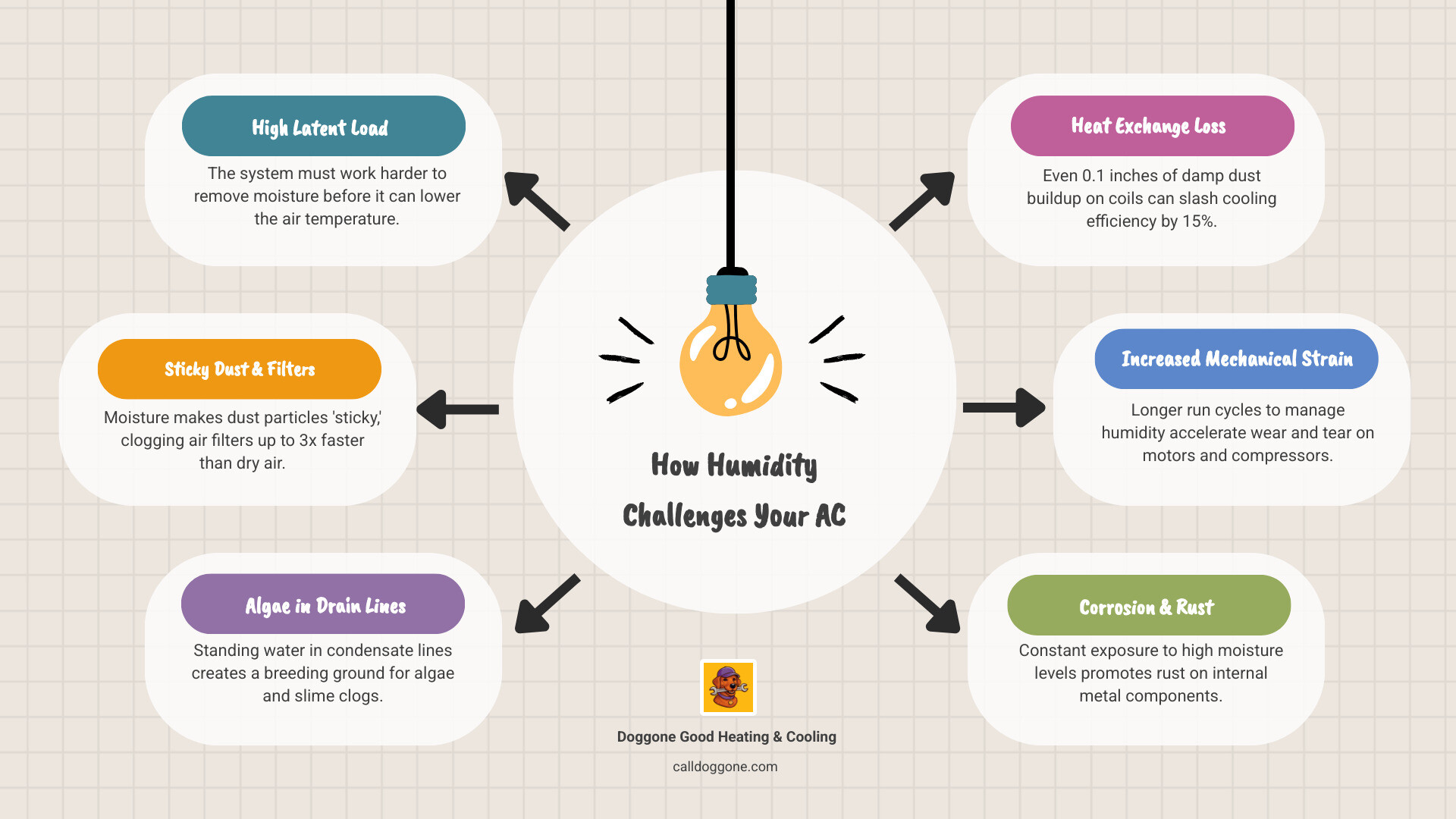
- Replace air filters monthly — humidity makes dust sticky, clogging filters up to 3x faster than in dry climates
- Flush the condensate drain line — algae can clog drain lines in as little as 60-90 days in humid environments
- Clean the outdoor condenser unit — clear 2 feet of clearance and rinse fins gently with a garden hose
- Inspect evaporator coils — even 0.1 inches of buildup can reduce cooling capacity by 5-15%
- Monitor indoor humidity — target 40-50% relative humidity using a digital hygrometer
- Set the thermostat fan to “Auto” — the “On” setting blows moisture from coils back into your home
- Schedule a professional tune-up before May — appointment slots fill fast once the heat hits
Louisiana averages around 74% relative humidity, and that number climbs even higher in summer. Your AC isn’t just cooling the air — it’s fighting a constant battle against moisture. That dual workload, managing both sensible heat (temperature) and latent load (moisture removal), puts far more strain on your system than most homeowners realize.
When spring arrives in Baton Rouge, it doesn’t ease in gently. Warm, wet air floods in, pollen saturates the atmosphere, and your AC unit — which may have been sitting relatively idle — suddenly needs to perform at a high level. If it hasn’t been properly maintained, that transition can mean dirty coils, clogged drain lines, restricted airflow, and eventually, a breakdown on the hottest day of the year.
The good news? A focused spring maintenance routine built specifically for humid conditions can prevent most of those problems before they start.
Why Spring AC Maintenance for Humid Climates is Non-Negotiable
Living in Baton Rouge, Prairieville, or Gonzales means accepting that humidity is a constant neighbor. However, while we might just feel a bit “sticky,” our air conditioners are under immense physical stress. In our region, the average relative humidity stays around 74% year-round, often peaking above 90% during the summer months. This high moisture content creates a “latent load” that forces your system to run longer cycles just to wring the water out of the air.
Without proper Louisiana Humidity vs Your AC: A Survival Guide, your equipment’s lifespan can take a serious hit. While a well-maintained system might last 15 years, a neglected unit in a humid climate may start failing after just 8 to 10 years. The constant moisture promotes mold growth on internal components and accelerates rust on metal parts.
Furthermore, humidity makes your home feel warmer than it actually is. When indoor humidity rises above 55-60%, the air feels heavy and “clammy,” often prompting homeowners to crank the thermostat down. This leads to higher energy bills and increased system strain. By performing spring ac maintenance for humid climates, you ensure your system is efficient enough to manage both the heat and the moisture, keeping your home comfortable without breaking the bank.
Essential Maintenance Steps to Prepare Your Baton Rouge AC for Summer
Preparing for a Louisiana summer requires more than just a quick filter swap. Because our air is so thick with moisture, the “gunk” that accumulates inside your system is different from what a homeowner in a dry climate might see.
The Condensate Drain Line: Your AC’s Plumbing
In a humid climate, your AC can pull between 5 to 20 gallons of water out of the air every single day. All that water has to go somewhere, and that “somewhere” is the condensate drain line. In the humid South, algae, mold, and “sludge” can grow inside these PVC pipes with alarming speed. In fact, algae can completely plug a drain line within 60 to 90 days if left untreated.
A clogged drain line is responsible for roughly 30% of all service calls in humid regions. When the line clogs, water backs up into the drain pan. If you’re lucky, a safety float switch will trigger and shut down your system to prevent a flood. If you’re unlucky, you could face thousands of dollars in water damage to your floors or ceilings.
As part of your Residential Air Conditioning Maintenance, we recommend a monthly vinegar flush. Pouring one cup of distilled white vinegar into the drain line’s access port helps kill organic growth before it becomes a blockage.
Evaporator Coils and Heat Exchange
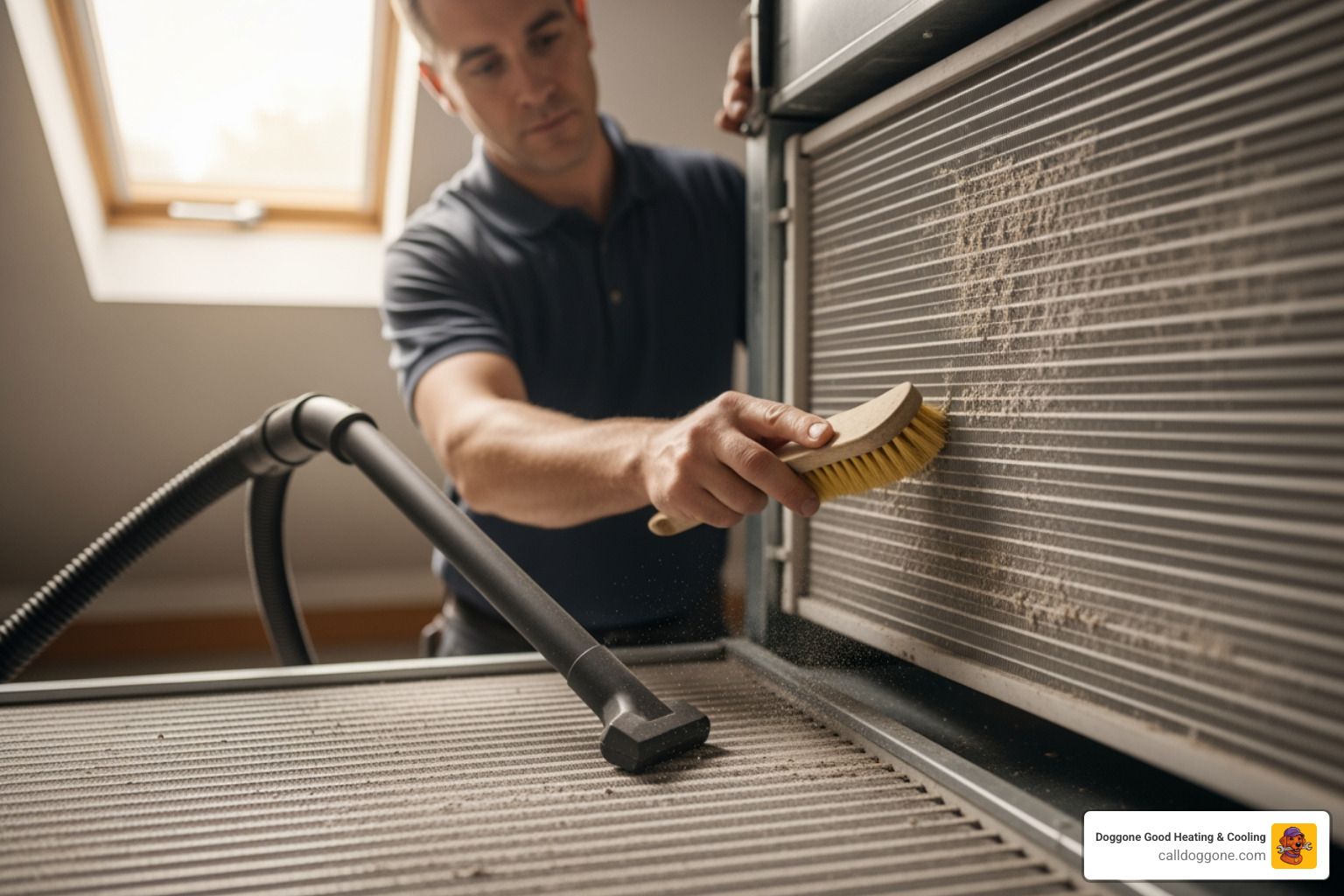
The evaporator coil is where the actual cooling (and dehumidifying) happens. In our humid environment, these coils stay damp for most of the year. This dampness acts like a magnet for dust and pollen.
Research shows that just 0.1 inches of dirt accumulation on these coils can reduce your system’s cooling capacity by 5-15%. In heavily fouled environments, that efficiency loss can jump to 30% or more. When coils are dirty, they can’t effectively transfer heat or remove moisture, leaving you with a home that feels warm and sticky despite the AC running constantly.
Airflow and Filtration: Why Spring AC Maintenance for Humid Climates Requires Monthly Filter Changes
One of the most common mistakes we see in Denham Springs and Zachary is homeowners following the “change every 3 months” rule found on filter packaging. In a humid climate, that rule simply doesn’t apply.
Moist air makes dust and pet dander “sticky.” Instead of passing through or bouncing off the filter, these particles bond to the fibers, clogging the filter up to three times faster than in dry climates. We recommend checking your filter every 30 days. If you have pets or live in a high-pollen area, you might even need to change it every two weeks during the peak of spring.
For the best balance of air quality and system health, aim for MERV 8 to MERV 11 pleated filters. These are excellent at catching pollen and mold spores without putting too much “static pressure” on your blower motor. Avoid ultra-high MERV ratings (like MERV 13+) unless your system was specifically designed for them, as they can restrict airflow so much that your coils might actually freeze over. For more tips on saving money through filtration, check out our AC Maintenance Checklist to Lower Energy Bills.
Clearing the Outdoor Unit: Debris and Coastal Air Protection
Your outdoor condenser unit needs to “breathe” to release the heat it gathered from inside your home. During a Louisiana spring, the outdoor unit often gets bombarded by oak tassels, pine needles, and heavy pollen.
- Maintain Clearance: Ensure there is at least a 2-foot (24-inch) radius of clear space around the unit. Trim back shrubs, remove tall grass, and clear away any mulch that has piled up against the base.
- The Gentle Rinse: Pollen can create a sticky film on the condenser fins that acts like an insulating blanket, trapping heat. Use a garden hose to gently rinse the fins from the top down. Never use a pressure washer, as the high pressure will permanently bend the delicate aluminum fins and block airflow.
- Fin Care: If you notice bent fins, a tool called a “fin comb” can be used to straighten them out. This restores proper airflow and helps the unit dump heat more effectively.
Advanced Solutions for Indoor Humidity Control
Sometimes, even a perfectly maintained AC struggles against 90% humidity. If your home still feels “clammy” or you notice musty odors, it might be time to look at advanced indoor air quality (IAQ) solutions.
The 40-50% Humidity Target
The ideal indoor relative humidity is between 40-50%. When it climbs above 55%, dust mites thrive and mold begins to grow. You can monitor this easily with a digital hygrometer (a small, inexpensive device available at most hardware stores). If your AC is running but the hygrometer stays above 60%, your system isn’t dehumidifying effectively.
Whole-Home Dehumidifiers and UV Purifiers
In many Baton Rouge homes, a whole-home dehumidifier is the ultimate solution. These systems work alongside your HVAC to remove up to 100 pints of moisture per day without over-cooling your home. This allows you to raise your thermostat by a few degrees while feeling significantly more comfortable, which can reduce AC runtime by 15-25%.
Additionally, installing a UV air purifier inside your air handler can prevent biological growth on the damp evaporator coils. This keeps your air cleaner and ensures your system maintains its efficiency throughout the season. Learn more about how these upgrades fit into your home’s health in our guide on Spring HVAC Tune-Up Benefits.
Frequently Asked Questions about Spring AC Maintenance for Humid Climates
Why does my house feel sticky even when the AC is running?
This is often caused by “short-cycling.” During the mild but humid days of a Louisiana spring, your AC might reach the temperature setpoint very quickly and turn off. However, it takes a longer run cycle to effectively remove moisture. If the system turns off too soon, the air is cool but still saturated with water.
Another culprit is the thermostat fan setting. If your fan is set to “On,” it continues to blow air over the wet evaporator coils even after the cooling cycle ends. This evaporates the water sitting on the coils right back into your home. Always set your fan to “Auto” to allow the moisture to drain away. If the problem persists, you may have an oversized unit or a blower speed that needs adjustment. Check for other Warning Signs Your AC Can’t Handle the Louisiana Humidity to see if a professional needs to step in.
How do I prevent my AC drain line from clogging in the spring?
The combination of warmth and moisture in the spring creates a “perfect storm” for algae blooms in your drain line. The best defense is a monthly treatment. Pouring a cup of white vinegar into the line every 30 days is usually enough to keep it clear.
You should also check your safety float switch. This is a small device located near your indoor unit that will shut the AC off if water starts to back up. If you find your thermostat screen is blank and the AC won’t turn on, a clogged drain line is often the reason. For more local tips, see our Gonzales AC Maintenance Secrets to Keep You Chilling All Summer.
When is the best time to schedule a professional tune-up in Baton Rouge?
The “sweet spot” for scheduling is between late February and early April. Once May hits and the first true heatwave arrives, HVAC companies become flooded with emergency repair calls. By scheduling early, you get more flexibility with appointment times and ensure that any small issues — like a failing capacitor or a tiny refrigerant leak — are fixed before they turn into a total system failure in July. Knowing How Often Should You Service Your HVAC in Louisiana is key to long-term savings.
Conclusion: Trust the Local Experts at Doggone Good Heating & Cooling
When it comes to spring ac maintenance for humid climates, local expertise matters. A technician from a drier part of the country might not realize how quickly a Louisiana drain line can clog or how “sticky” our dust can be. At Doggone Good Heating & Cooling, we live and work in the same humidity you do. We know exactly what it takes to keep homes in Baton Rouge, Prairieville, Denham Springs, Zachary, and Gonzales cool and dry.
Our team provides honest, reliable service with a focus on preventative care. We offer 24/7 emergency response because we know a broken AC in July isn’t just an inconvenience — it’s an emergency.
To make maintenance even easier, we offer our Pack Perks Membership. This affordable program includes seasonal tune-ups, priority scheduling, and discounts on repairs, ensuring your system is always ready for whatever the Louisiana weather throws its way.
Don’t wait until your home feels like a sauna. Explore our HVAC Maintenance Programs today and schedule your spring tune-up to ensure a “doggone good” summer of comfort!
About the Author
Doggone Good Heating and Cooling
Doggone Good Heating and Cooling — your local HVAC experts in Baton Rouge, LA.
Need HVAC Service?
Get a free estimate or schedule your service today. Our team is ready to help.
Recent Posts


Related Articles
Ready to Get Started?
Prefer to Call?
Talk with a local technician and get clear next steps for your home.
Call Now(225) 230-9784