Sweating Indoors? How to Fix a Muggy House When the AC Is On
Doggone Good Heating and Cooling

Fix “AC running but house still warm and muggy” in Baton Rouge! Discover thermostat tips, sizing fixes, and pro solutions for humid homes.
Why Your AC Is Running But Your House Still Feels Warm and Muggy
If your ac running but house still warm and muggy, you are dealing with one of the most common — and most frustrating — comfort problems homeowners in Baton Rouge face, especially as we move deeper into the sweltering heat of May 2026.
Here are the most common reasons this happens:
- Thermostat fan set to “On” instead of “Auto” — the fan runs constantly and blows moisture back into your air
- Oversized AC unit short-cycling — the system cools too fast and shuts off before pulling humidity out of the air
- Dirty air filter — restricted airflow prevents proper moisture removal and can freeze the evaporator coil
- Low refrigerant levels — reduces the system’s ability to absorb heat and humidity
- Clogged condensate drain line — trapped moisture has nowhere to go
- Leaky ductwork — your system is pulling hot, damp attic air into your living space
- Aging HVAC system — units over 10–15 years old lose efficiency and struggle with dehumidification
- Extreme outdoor humidity — Baton Rouge’s subtropical climate can simply overwhelm a system that is not up to the task
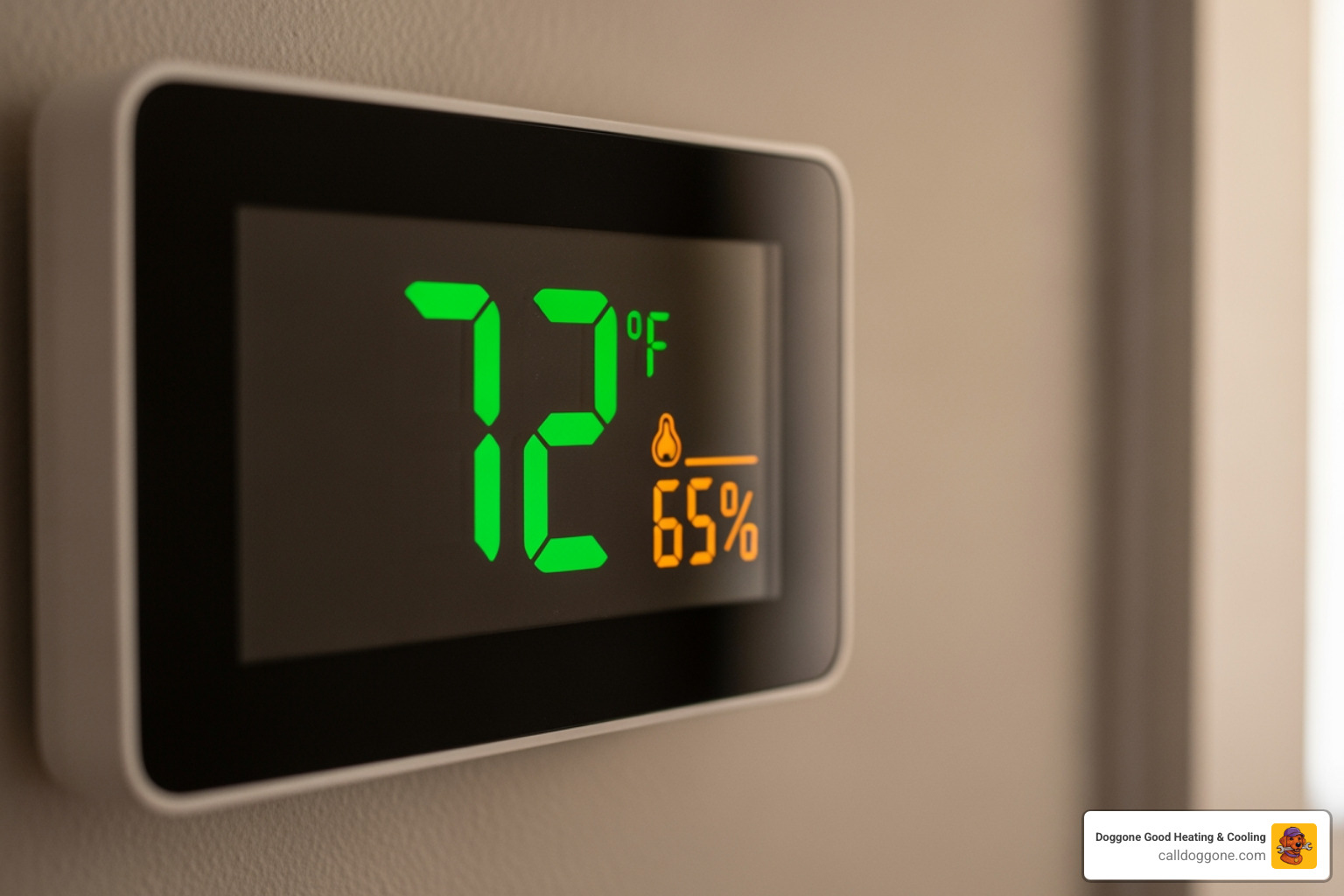
Your air conditioner has two jobs: cooling the air and removing moisture from it. When something goes wrong — whether it is a mechanical issue, a sizing problem, or a setting you may not have noticed — the system can keep running without actually making your home feel comfortable. Temperature on the thermostat and how the air feels are two very different things. A room at 72°F with 65% humidity still feels heavy, sticky, and miserable.
This guide breaks down every major cause and gives you clear steps to fix it — starting with the simplest checks you can do right now.
Why is my house still warm and muggy even when the AC is running?
It is a scenario we see all too often in Prairieville and Denham Springs: the outdoor unit is humming, the vents are blowing, but you are still peeling your shirt off your back. When your ac running but house still warm and muggy, the system is likely failing at its “dehumidifying duties.”
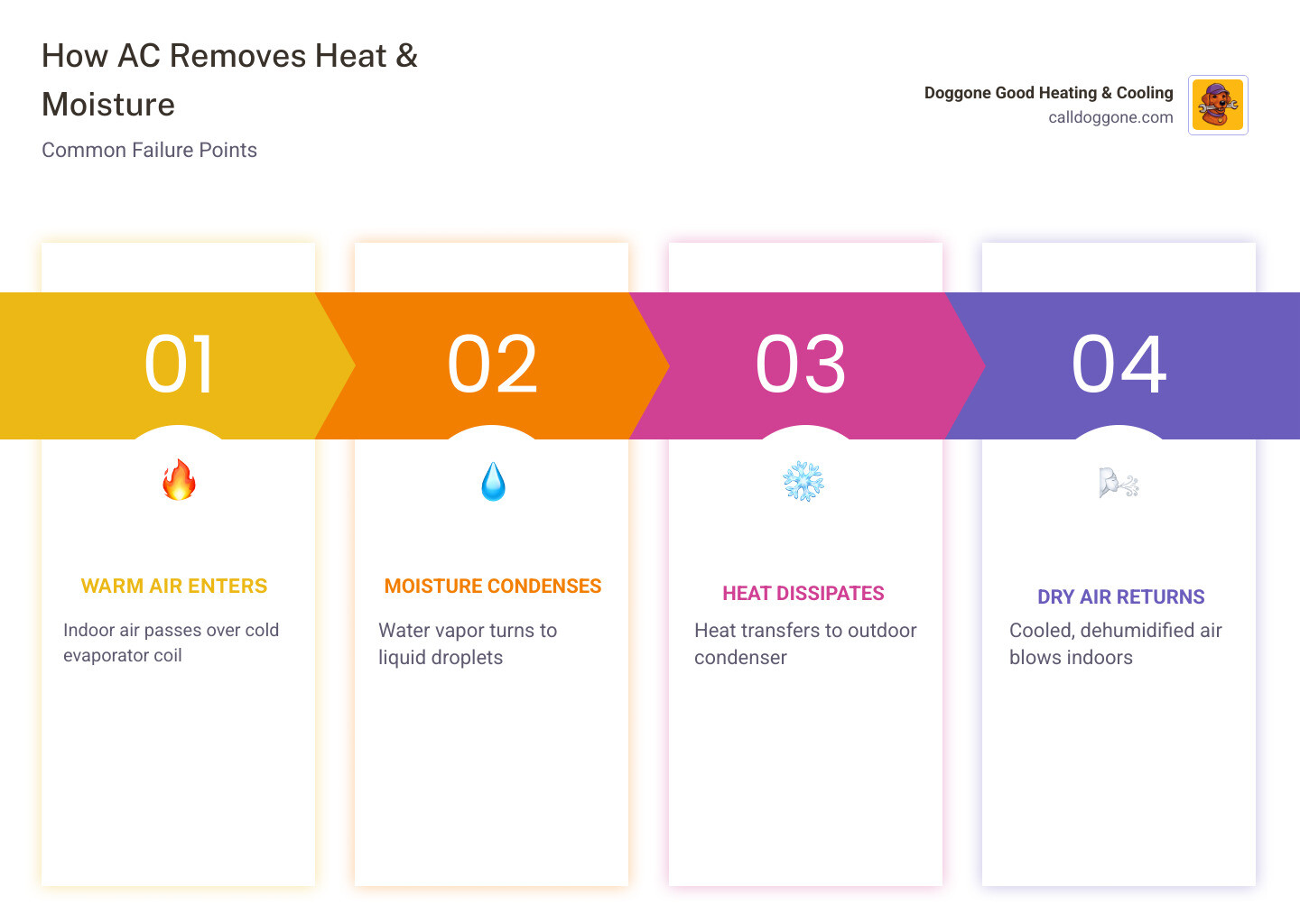
An air conditioner removes moisture by blowing warm indoor air over a very cold evaporator coil. As the air cools, the moisture in it condenses into liquid water—much like beads of sweat on a cold glass of sweet tea on a July afternoon. This water drips into a pan and drains away. If this process is interrupted, the temperature might drop slightly, but the “sticky” feeling remains.
Why is my AC running but not cooling? Explained
One of the first things we check is the thermostat. If your thermostat says 72°F but you feel like you’re walking through an invisible marsh, the humidity level is likely well above the healthy 50% threshold.
The “Auto” vs. “On” thermostat setting mistake
This is the “low-hanging fruit” of HVAC troubleshooting. Most thermostats have a fan setting with two options: Auto and On.
When set to On, the indoor fan runs 24/7, regardless of whether the cooling cycle is active. This might seem like a good idea for circulation, but it’s a recipe for a muggy house. When the cooling cycle ends, the evaporator coil is still soaking wet with the moisture it just pulled from your air. If the fan keeps blowing, it picks that moisture right back up and sends it straight back into your living room.
Switching to Auto ensures the fan only runs when the system is actively cooling and dehumidifying, allowing that collected moisture to actually drain out of your home.
Why your ac running but house still warm and muggy might be a sizing issue
In the HVAC world, bigger is not always better. If your AC unit is too large for your home’s square footage, it will engage in a process called “short-cycling.”
An oversized unit is so powerful that it blasts the house with cold air and hits the target temperature in just 5 to 8 minutes. However, it takes at least 10 to 15 minutes of continuous running for an AC to effectively begin pulling moisture out of the air. Because the oversized unit shuts off too soon, it leaves the air cold but clammy. You end up with a “refrigerator” feel—cold, damp, and uncomfortable.
AC Troubleshooting: When Your Unit Can’t Keep Up with the Humidity
Common Mechanical Culprits for High Indoor Humidity
If your settings are correct but the air remains thick, it is time to look under the hood. Mechanical failures often prevent the heat exchange process that is vital for both cooling and drying the air.
Clogged air filters and restricted airflow
A dirty air filter is the number one cause of HVAC service calls in Zachary and Gonzales. When a filter is coated in dust and pet dander, airflow is restricted. Without enough air passing over the evaporator coil, the system can’t remove enough moisture. This lack of airflow can also cause the coil to get too cold, leading to ice formation.
Clogged condensate drains and moisture buildup
Every drop of water your AC pulls from the air has to go somewhere. It collects in a condensate pan and travels through a drain line to the outside. Over time, algae and debris can clog this line.
In some cases, a clogged drain will trigger a float switch that shuts the system down to prevent a flood. In other cases, the water just sits in the pan, re-evaporating into your ductwork and keeping your home feeling like a swamp.
Frozen coils and low refrigerant leaks
Refrigerant is the lifeblood of your AC. It doesn’t get “used up”—if it’s low, you have a leak. Low refrigerant levels cause the pressure to drop, which makes the evaporator coil freeze over. A block of ice on your coil acts as an insulator; it prevents the system from absorbing heat or moisture. If you see ice on the copper lines outside or the indoor unit, turn the system off immediately and call us.
Top Reasons Your AC is Not Cooling Properly
Warning Signs Your AC Can’t Handle the Louisiana Humidity
How Louisiana Humidity Overwhelms Your Cooling System
Let’s be honest: Baton Rouge weather is a different beast. In May 2026, we have already seen record-breaking dew points. Standard air conditioners are designed to maintain about a 20-degree difference between the outdoor and indoor temperatures. When it is 98°F outside with 90% humidity, your system is fighting an uphill battle.
| Humidity Level | Comfort & Health Impact |
|---|---|
| 30% – 50% | Ideal Range: Comfortable, prevents mold, protects wood furniture. |
| 50% – 60% | The Sticky Zone: Air feels heavy; skin feels clammy. |
| Above 60% | The Danger Zone: Promotes mold growth, dust mites, and structural damage. |
When outdoor conditions exceed system design limits
During extreme heatwaves, your AC may run all day without reaching 72°F. This isn’t necessarily a sign of a broken unit; it’s simply the physical limit of the machine. However, if the air feels “wet” while it’s running, the system isn’t processing the moisture load correctly. In our subtropical climate, even a perfectly functioning AC might need help from a whole-home dehumidifier to keep things crisp.
Louisiana Humidity vs. Your AC: A Survival Guide
Dealing with an ac running but house still warm and muggy in Baton Rouge
Because our air is so heavy with moisture, any “envelope” leaks in your home act like an open window. If your house isn’t properly sealed, humid air is constantly infiltrating through gaps in doors, windows, and even electrical outlets.
Structural Issues: Leaky Ducts and Poor Insulation
Sometimes the AC is working fine, but the “delivery system” is failing. Your ductwork is the highway for your cold air. If that highway has cracks, you are losing money and comfort.
Pulling in damp air from attics and crawl spaces
Duct leakage can account for 20% to 30% of your cooling loss. If your return ducts have leaks in a 140°F Baton Rouge attic, the system is literally sucking in hot, humid attic air and trying to cool it. This negates the dehumidification work the AC just did. We often find disconnected ducts or gaps that can be sealed with mastic to instantly improve indoor comfort.
The impact of aging systems on comfort
According to the National Association of Home Builders, the average lifespan of an AC unit is 10 to 15 years. As a system ages, its components wear down. The evaporator coil might become pitted and less effective at heat transfer, or the compressor might lose its “oomph.” If your unit is over a decade old and struggling with the mugginess, it might be nearing the end of its lifespan.
The Ultimate Guide to Knowing When Your AC is Toast
Long-Term Solutions for a Humid Home
If you’ve tried the DIY fixes and you’re still sweating, it’s time to look at long-term solutions that tackle humidity at the source.
Whole-home dehumidifiers and variable-speed upgrades
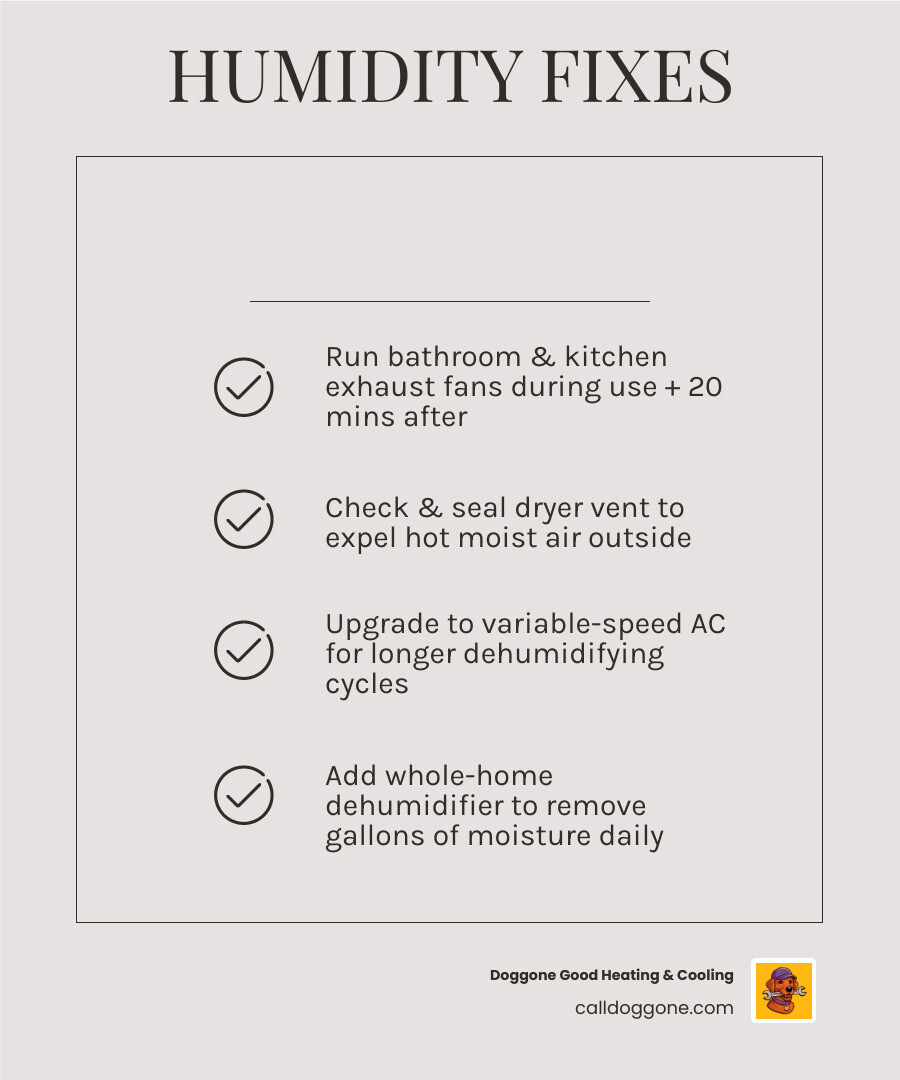
For many homes in Prairieville and Zachary, a whole-home dehumidifier is the “gold standard.” These units work alongside your HVAC system to pull gallons of water out of the air every day without lowering the temperature.
Alternatively, upgrading to a variable-speed AC system can be a game-changer. Unlike standard units that are either “all on” or “all off,” variable-speed systems can run at lower speeds for longer periods. This allows for constant, steady dehumidification that keeps your home’s air feeling much lighter and cooler.
DIY steps to reduce indoor moisture
Before you call for a system overhaul, try these simple steps to lower the moisture load in your home:
- Run exhaust fans: Always use the fan in the bathroom when showering and the kitchen hood when boiling water. Leave them running for 20 minutes after you finish.
- Check your dryer vent: Ensure it is properly sealed and venting all that hot, moist air directly outside.
- Manage indoor plants: A “literal jungle” in your living room releases significant moisture through transpiration.
- Weatherstripping: Seal gaps around doors and windows to keep the Louisiana swamp air where it belongs—outside.
When to call a professional HVAC technician
While we love a proactive homeowner, some things require a pro. You should call Doggone Good Heating & Cooling if you notice:
- Unusual Noises: Hissing (refrigerant leak) or banging (mechanical failure).
- Water Pooling: Moisture around your indoor unit or dripping from the ceiling.
- Persistent Mugginess: If you’ve changed the filter and set the fan to “Auto” but it’s still sticky.
- Electrical Issues: If your system is tripping the breaker or the lights flicker when it kicks on.
More info about air conditioning repair services
Frequently Asked Questions about Indoor Humidity
What is the ideal indoor humidity level for a Baton Rouge home?
The “sweet spot” is between 30% and 50%. Once you cross the 60% mark, you are in the danger zone for mold growth and dust mite infestations. High humidity also makes it harder for your body to cool itself through sweat, which is why 75°F at 45% humidity feels great, but 75°F at 65% humidity feels miserable.
Why does my AC turn off before the house feels less muggy?
This is almost always due to short-cycling. Whether the unit is oversized or there is a thermostat placement issue (like being located right under a cold air vent), the system thinks its job is done before it has had enough time to remove the moisture.
Can a dirty outdoor coil cause indoor humidity?
Yes. If the outdoor condenser coil is coated in grass clippings and dirt, it can’t release the heat it gathered from inside. This causes the whole system to run inefficiently, leading to longer run times and poor moisture removal. A quick rinse with a garden hose (with the power off!) can often help.
Conclusion: Get Your Comfort Back with Doggone Good Heating & Cooling
Living with an ac running but house still warm and muggy is more than just an inconvenience—it’s a threat to your home’s air quality and your family’s comfort. From simple thermostat adjustments to professional duct sealing and system upgrades, there is always a way to beat the Baton Rouge humidity.
At Doggone Good Heating & Cooling, we are proud to be the honest, reliable, and locally attuned experts for Baton Rouge, Prairieville, Denham Springs, and beyond. Whether you need a quick repair or you’re interested in our Pack Perks Membership for year-round peace of mind, we are here to help.
Don’t spend another “sticky” night wondering why your AC isn’t doing its job. Let us get your system back in top shape so you can enjoy a cool, crisp, and comfortable home all summer long.
About the Author
Doggone Good Heating and Cooling
Doggone Good Heating and Cooling — your local HVAC experts in Baton Rouge, LA.
Need HVAC Service?
Get a free estimate or schedule your service today. Our team is ready to help.
Recent Posts


Related Articles
Ready to Get Started?
Prefer to Call?
Talk with a local technician and get clear next steps for your home.
Call Now(225) 230-9784